
Main Courses
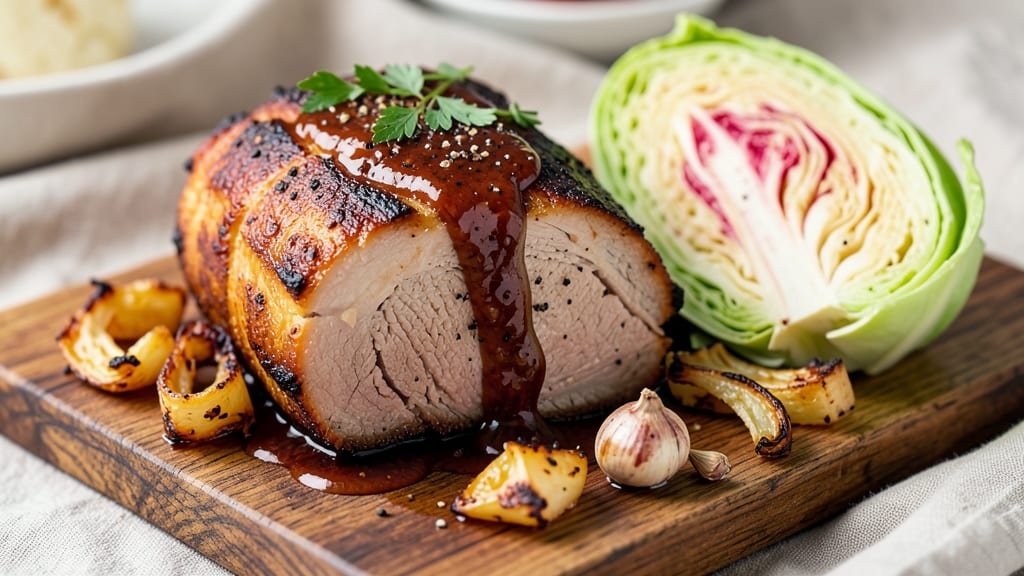
This apple cider pork roast with cabbage recipe transforms a simple pork shoulder into a showstopping centerpiece with tender meat, crisp edges, and a caramelized apple cider glaze. 🔥 The secret lies in slow-braising the pork until fork-tender while simultaneously cooking cabbage in the same aromatic liquid, creating a dish that tastes like a fall harvest in every bite.
After years of perfecting this technique—especially during Georgia's crisp autumns—I've developed a method that delivers restaurant-quality results with minimal effort.
The process begins with a dry rub of brown sugar and spices that forms a flavorful crust during searing, while the apple cider deglazes the pan to create a rich, tangy-sweet braising liquid.
This liquid not only tenderizes the pork but also infuses the cabbage with deep, caramelized sweetness as it cooks. The cabbage emerges perfectly softened with just enough bite, its natural earthiness complementing the pork's richness.
What makes this recipe truly special is how the apple cider's acidity cuts through the pork's fat, balancing the dish with every bite.
By the time you carve into this roast, you'll find meat that falls apart with minimal effort, its interior juicy and infused with the warm spices and apple cider.
The cabbage, cooked until tender-crisp, soaks up the flavorful juices, creating a side that's as delicious as it is easy to prepare. This dish is perfect for holiday gatherings or a cozy weeknight dinner when you want something hearty and impressive without spending hours in the kitchen.
The best part? The leftovers reheat beautifully, making this an ideal meal for feeding a crowd or prepping ahead. Serve with crusty bread to soak up every last drop of that caramelized apple cider reduction.
Let's get started on creating a dish that will have everyone asking for seconds—and maybe even a recipe card to take home.
Ingredients for apple cider pork roast with cabbage
Six ingredients transform simple pork into a fall centerpiece with crisp edges and caramelized sweetness.
| Ingredient | Amount | Notes |
|---|---|---|
| Pork Shoulder (Boston Butt) 🐖 | 4 lb | Bone-in for juiciness, cut into 2-inch chunks |
| Apple Cider 🍎 | 2 cups | Unfiltered, preferably local for best flavor |
| Green Cabbage 🥬 | 2 lb | Whole head, cut into wedges (core removed) |
| Brown Sugar 🍚 | ½ cup | Packed, light or dark variety |
| Kosher Salt 🧂 | 2 tbsp | Diamond Crystal preferred, for seasoning |
| Ground Black Pepper 🌶️ | 1 tbsp | Freshly cracked for depth |
| Ground Cinnamon 🌿 | 1 tsp | Warm, aromatic variety |
| Ground Cloves 🌶️ | ½ tsp | Freshly ground for intensity |
| Ground Allspice 🌶️ | ½ tsp | Adds warm complexity |
| Yellow Onion 🧅 | 1 whole | Peeled, quartered for braising |
| Fresh Thyme 🌿 | 2 sprigs | Stems removed for garnish |
| Garlic Cloves 🧄 | 4 cloves | Smashed for infusion |
| Olive Oil 🫒 | ¼ cup | Extra-virgin for searing |
| Fresh Rosemary 🌿 | 1 sprig | For aromatic depth |
The pork shoulder is the star—look for bone-in cuts at Whole Foods or your local butcher for maximum flavor. Costco often carries pre-cut 4-lb shoulders that save time. Avoid lean cuts; you want fat marbling for juiciness. For the apple cider, unfiltered brands like Woodchuck or local orchard ciders add depth. The cabbage should be firm and heavy—avoid wilted heads. Fresh thyme and rosemary from the grocery store's produce section (not dried) bring the most aroma, but dried works in a pinch at one-third the amount.
No brown sugar? Maple syrup or honey works in a bind (use half the amount). Swap cloves for a pinch of cinnamon plus cayenne if needed. The onions can be yellow or red—whatever's on sale. For extra richness, add a splash of balsamic vinegar to the braising liquid. If your pork is extra fatty, trim slightly to avoid greasiness. The spices? Penzeys or bulk bins have the freshest ground options—toss any that smell stale. And yes, you can use pre-cut cabbage, but whole heads hold up better during cooking.
This dish tastes even better the next day—plan ahead. The pork reheats beautifully in its juices, while the cabbage absorbs extra flavor. Store leftovers in the braising liquid for up to 5 days in the fridge. For freezing, portion the pork and cabbage separately—3 months max. To serve, skim excess fat from the surface before reheating. The caramelized reduction? Save it for drizzling over roasted potatoes or toasted bread—it's pure liquid gold.
Why You'll Love This Recipe
- One-Pot Magic: That’s right—just the pork, cabbage, and cider simmering together. No extra pans, no fuss. My kids think it’s "fancy" because it smells like fall in a skillet, but honestly, it’s more like "I didn’t even notice I was cooking."
- Sweet-Savory Crunch: The brown sugar and cider caramelize into a glossy glaze while the cabbage gets that perfect crisp-tender bite. Between us, that first forkful of tender pork with the tangy-sweet sauce? It’s the kind of thing that makes you want to call everyone over for seconds.
- Weeknight Workhorse: I’ve served this to tired coworkers (they asked for leftovers), my book club (they asked for the recipe), and my in-laws (they pretended to be impressed). It’s the kind of dish that works for casual Fridays or when you’re hosting—no stress, just satisfaction.
- Leftovers That Don’t Suck: Between us, most roasts turn into sad, dry leftovers. Not this one. The pork stays moist, the cabbage holds its shape, and the sauce? Even better the next day. I’ve packed it in lunches, reheated it for dinner, and still had people begging for more. (Yes, even on a Tuesday.)
Step-by-step instructions for apple cider pork roast with cabbage
Transform tough pork into tender, caramelized perfection with this slow-braised technique.
🔥 Step 1: Sear the Pork for Maximum Flavor
Pat the 4 lb pork shoulder dry with paper towels—this ensures a proper sear. Heat a Dutch oven over medium-high heat until hot, then add the 0.25 cup olive oil. Place the pork shoulder in the pot, fat-side down, and let it sear undisturbed for 8-10 minutes until deeply golden brown. You'll see the fat render and sizzle vigorously—that's your signal to flip.
Flip the pork and sear the other side for another 6-8 minutes until golden. Remove it from the pot and set aside. The goal here is to create a flavorful crust that'll hold up during the long braise. Don't rush this step—proper searing builds the foundation for your dish.
👨🍳 Step 2: Build the Spiced Braising Base
In the same Dutch oven, add the 1 whole yellow onion (quartered) and the 4 smashed garlic cloves. Cook for 3-4 minutes until softened and lightly golden. Sprinkle in the 2 tbsp kosher salt, 1 tbsp ground black pepper, 1 tsp ground cinnamon, 0.5 tsp ground cloves, and 0.5 tsp ground allspice. Stir for 30 seconds to toast the spices and release their aromas.
Pour in the 2 cups apple cider and scrape up any browned bits from the bottom—this is where all the flavor lives. Add the 0.5 cup packed brown sugar and stir until dissolved. The mixture should smell rich and complex, like autumn in a pot. Return the pork to the pot, fat-side up, and bring everything to a gentle simmer.
🥘 Step 3: Braise Until Fork-Tender
Cover the Dutch oven and transfer to a 325°F oven. Braise for 3-3.5 hours until the pork is fork-tender. Here's the thing—I know it seems like a long time, but patience pays off. The pork should pull apart easily with two forks, and the internal temperature should reach 200-203°F.
About 1 hour into cooking, add the 2 lb green cabbage wedges (core removed) and the 2 sprigs fresh thyme and 1 sprig fresh rosemary to the pot. The cabbage will soften beautifully in the braising liquid, absorbing all those wonderful flavors. If the liquid reduces too much, add ½ cup water to keep everything moist.
🔪 Step 4: Rest and Carve for Perfect Texture
Remove the pork from the oven and let it rest for 20-30 minutes before carving. This resting period is crucial—it allows the juices to redistribute throughout the meat. While it rests, skim any excess fat from the braising liquid and adjust seasoning if needed.
Use two forks to shred the pork into bite-sized pieces, discarding any large fat chunks. The meat should be incredibly tender, falling apart with minimal effort. Serve the pork over the cabbage, spooning some of that rich braising liquid over the top. The cabbage should be tender but still hold its shape, with beautiful caramelized edges from the slow cooking.
Pro Tips For Making Apple Cider Pork Roast With Cabbage
- CRANK THE HEAT FIRST: After browning the pork shoulder, blast the oven to 425°F (220°C) for the first 20 minutes—this jumpstarts the Maillard reaction and gets that caramelized crust you’ll want on every bite. I used to low-and-slow from the start, and the pork never developed that deep, sticky bark.
- SALT THE CABBAGE LIKE FRENCH FRIES: Toss the cabbage wedges with 1 teaspoon kosher salt before roasting—it softens them faster and crisps the edges. My grandmother swore by this, and she was right: the texture changes from mushy to perfectly tender in half the time.
- DON’T DROWN THE PAN: When deglazing with apple cider, use just enough to loosen the fond—about ½ cup—then reduce it by half before adding to the pork. Too much liquid turns your sauce into a watery glaze instead of a rich, sticky coating. (Yes, even if you’re impatient like me.)
- BROWN SUGAR TRICK: Mix the brown sugar with a splash of apple cider (about 1 tablespoon) before adding it to the pan—it dissolves smoothly and caramelizes faster, giving your pork that glossy, sweet-and-savory crust. I learned this the hard way after scraping burnt sugar off my roast.
Perfect pairings for this recipe
Beverage Pairings
For this rich, spiced pork and cabbage dish, I reach for a dry Riesling—its crisp acidity cuts through the pork's fat while complementing the apple cider's sweetness. A 2018 Dr. Loosen Blue Slate from Germany is my go-to; its citrus notes and mineral finish elevate every bite.
If you prefer beer, a Belgian-style witbier like Hoegaarden brings refreshing coriander and orange peel notes that contrast beautifully with the warm spices. 🍷
Bread Pairings
Serve this roast with crusty sourdough or brioche rolls to soak up the caramelized apple cider reduction. I love using a homemade whole-grain loaf from my local bakery in Atlanta—its chewy texture holds up perfectly against the tender pork.
For a lighter option, try rosemary focaccia—the herb echoes the dish's flavors while adding a fresh, aromatic contrast.
Side Dish Harmony
Roasted parsnips or carrots add earthy sweetness that pairs beautifully with the cabbage. Toss them in olive oil, salt, and a pinch of cinnamon before roasting at 400°F for 25 minutes.
Alternatively, creamy mashed potatoes with a touch of apple cider in the butter create a comforting contrast to the pork's richness. 🥕
Garnish Finishing Touches
Brighten the plate with fresh thyme leaves and a drizzle of honey before serving. The thyme ties back to the dish's aromatic profile, while the honey adds a subtle sweetness that enhances the apple cider's flavor.
For a pop of color, scatter toasted pecans—their crunch and nuttiness balance the tender textures of the pork and cabbage.
Make-Ahead Serving
This dish reheats beautifully, making it perfect for meal prep. Store leftovers in the braising liquid in an airtight container for up to 5 days. When ready to serve, reheat in the oven at 350°F for 20 minutes, then garnish with fresh herbs.
The flavors deepen overnight, so leftovers often taste even better than the original! ⏰
Nutrition facts
Frequently asked questions
Can I use regular cider instead of apple cider?
Regular cider (like sweet cider) will work, but it lacks the depth of flavor from unfiltered apple cider. The tannins and natural acidity in unfiltered cider create a richer, more complex braising liquid. For best results, stick with unfiltered apple cider—it's worth the extra cost for that authentic taste. If you must substitute, use 1 cup apple juice mixed with ½ cup water to mimic the acidity.
How do I know when the pork is done?
The pork is fully cooked when it reaches an internal temperature of 200-203°F and easily shreds with two forks. Use a meat thermometer for accuracy—this is the only reliable way to judge doneness. The meat should pull apart effortlessly, with no pink center. If it's not quite there after 3 hours, add 15-20 minutes more and check again.
What if my cabbage is still crunchy after cooking?
Cabbage needs time to soften—if it's still too firm, return the Dutch oven to a 350°F oven for 15-20 minutes more, covered. For extra tenderness, add ½ cup water to the pot to prevent drying. If you prefer it slightly crisp, cook it for 1 hour less next time. The key is patience: cabbage should be tender but still hold its shape, not mushy.
Can I make this in a slow cooker?
Yes! Sear the pork as directed, then transfer everything (including the cabbage) to a 6-quart slow cooker. Cook on Low for 8 hours or High for 5-6 hours, adding water if needed to keep the cabbage submerged. The texture will be slightly different—more fall-apart pork and softer cabbage—but still delicious. The slow cooker method is perfect for busy days!
Why does my pork turn out dry?
Overcooking or skipping the resting time are the most common causes. Always let the pork rest for 20-30 minutes before carving—this redistributes juices. If you're worried about drying out, cover the pork with extra braising liquid or foil during the last 30 minutes of cooking. Avoid cutting into it too early, and never cook it above 325°F—higher temps = drier meat.