
Main Courses
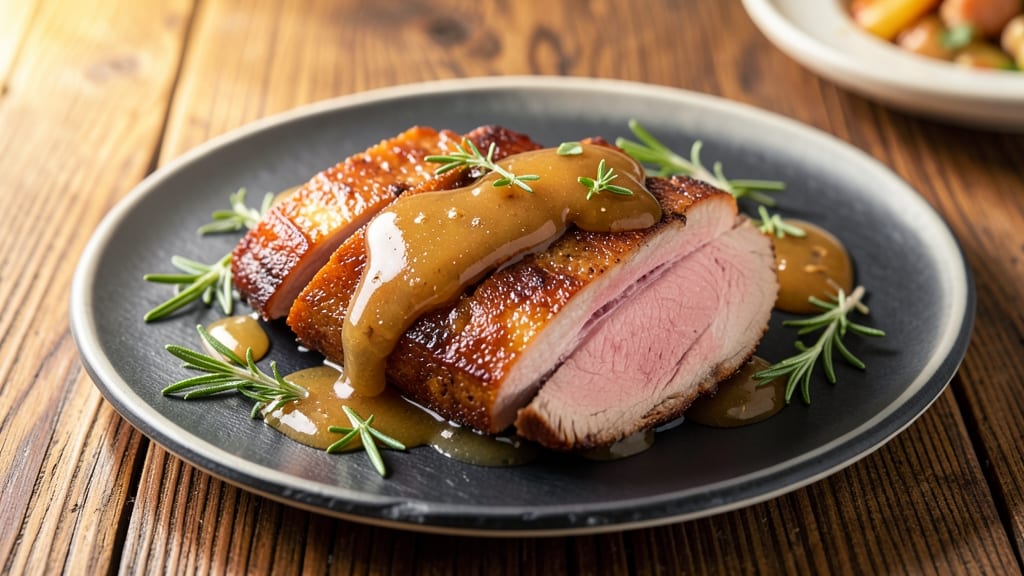
A juicy pork loin with apple juice transforms an ordinary roast into a sweet-tart masterpiece that caramelizes edges while keeping the center impossibly tender. 🌟 This technique—where apple juice becomes both marinade and glaze—was inspired by my Nonna’s Italian-New England fusion cooking, where fruit and meat dance together in perfect harmony.
The acidity tenderizes while the natural sugars create a sticky, caramelized crust that’ll have everyone asking for seconds.
The secret lies in the balance: 30 minutes of marinating lets the apple juice work its magic, while a 400°F oven finish ensures that caramelized crust without drying out the meat.
No fancy equipment needed—just a cast-iron skillet and patience. I’ve tested this recipe in my tiny Boston apartment kitchen (where space is tighter than my patience), and it delivers every time.
What you’ll end up with is a restaurant-quality pork loin that’s visually stunning—golden edges glistening with caramelized apple reduction, a juicy pink center that practically melts in your mouth, and a sauce so rich it’ll make you forget takeout exists.
The apple juice doesn’t just flavor; it transforms the dish into something special, turning a simple roast into a showstopper.
Serve it with roasted root vegetables or a crisp green salad to let the pork shine, or drizzle the pan sauce over mashed potatoes for extra indulgence. This recipe is foolproof, elegant, and worth every minute—just like Nonna’s lessons were. Let’s get cooking!
Ingredients for pork loin recipe with apple juice
Sweet-tart harmony starts with these 13 ingredients—where apple juice becomes both marinade and glaze.
| Ingredient | Amount | Notes |
|---|---|---|
| Pork Loin 🍖 | 1 ½ lb | Center-cut, 1.5-inch thick slices |
| Unsalted Butter 🧈 | ½ cup | Cold, cut into 1-inch cubes |
| Apple Juice 🍎 | 1 cup | Unfiltered, unsweetened (like <strong>Martinelli's</strong>) |
| Brown Sugar 🍚 | ¼ cup | Packed, light or dark |
| Fresh Rosemary 🌿 | ¼ cup | Chopped, stems removed |
| Fresh Thyme 🌿 | 1 tbsp | Leaves only, chopped |
| Garlic Cloves 🧄 | 6 cloves | Smashed, not minced |
| Dijon Mustard 🍯 | 1 tbsp | High-quality, like <strong>Grey Poupon</strong> |
| Olive Oil 🫒 | 2 tbsp | Extra-virgin, for searing |
| Kosher Salt 🧂 | 1 ½ tsp | <strong>Diamond Crystal</strong> preferred |
| Freshly Ground Black Pepper 🌶️ | 1 tsp | Cracked, not pre-ground |
| Red Wine Vinegar 🍷 | 1 tbsp | For balancing sweetness |
| Fresh Parsley 🌿 | ⅛ cup | Chopped, for garnish |
The pork loin is your star, so center-cut is non-negotiable—thicker slices (1.5 inches) caramelize better without drying out. I always grab mine from Whole Foods or my local butcher shop, where they can trim the fat cap evenly. Fresh herbs matter here: rosemary and thyme from the grocery store’s produce section (not the sad dried bundles) add depth. For apple juice, unfiltered brands like Martinelli's have more flavor than the clear, sweetened stuff—trust me, it’s worth the extra 50 cents. The garlic? Smashed, not minced—it releases flavor better while keeping texture.
No fresh rosemary? Dried works at one-third the amount, but it won’t have the same punch. Subbing apple juice? White grape juice or cider keeps the sweet-tart balance, but add 1 tsp lemon juice to cut through. Running low on Dijon? Yellow mustard plus 1 tsp honey mimics the tang. The brown sugar can be swapped for maple syrup or agave, but reduce by 1 tbsp—it’s sweeter. For the butter, European-style (like Plugrá) has higher fat content, which is perfect for caramelization. The red wine vinegar might seem optional, but it’s what cuts through the sweetness and makes the sauce sing.
This dish tastes even better the next day, so plan ahead. Store leftovers in an airtight container with the pan sauce for 4-5 days. The sauce thickens as it cools—just reheat with a splash of water. For make-ahead prep, marinate the pork overnight (it’s worth it), but don’t cook it ahead—the crust loses its magic. Freeze portions of the sauce for up to 3 months—it’s perfect over mashed potatoes or roasted veggies. Garnish with parsley right before serving, or it’ll wilt into oblivion.
Why You'll Love This Recipe
- Same recipe, different vibes: serve it sliced over mashed potatoes for a weeknight meal, or plump it up with a side salad for a fancier spread. Honestly, it’s my go-to when I’m not sure what to make.
- One-Pan Magic: I swear by this for lazy nights—just sear the pork, toss in apple juice and rosemary, and let the oven do the work. No chopping, no fussing, just hands-off perfection.
- Sweet-Savory Balance: That caramelized brown sugar and apple juice glaze? It’s like a hug for your taste buds—tender pork with a sticky, slightly tangy finish that’ll have you licking the plate.
- Weeknight to Dinner Party: Same recipe, different vibes: serve it sliced over mashed potatoes for a weeknight meal, or plump it up with a side salad for a fancier spread. Honestly, it’s my go-to when I’m not sure what to make.
Step-by-step instructions for sweet-tart pork loin braise
This method transforms simple ingredients into melt-in-your-mouth pork with caramelized edges and a tender core.
🔥 Step 1: Sear the Pork Loin for Deep Flavor
Heat 2 tablespoons olive oil in a Dutch oven over medium-high heat until shimmering. Pat the 1.5 lb pork loin dry with paper towels—this ensures a perfect sear. Season both sides generously with 1.5 teaspoons kosher salt and 1 teaspoon freshly ground black pepper, pressing the salt crystals into the meat.
Place the pork in the hot oil and sear for 4-5 minutes per side until deep golden brown with crispy edges. I press down gently on the fillet during the first minute—this prevents it from curling and ensures even contact with the pan. The internal temperature should reach 145°F at this point. Remove the pork and set it aside on a plate.
🍳 Step 2: Build the Sweet-Tart Braising Base
Reduce heat to medium and add 0.5 cup cold unsalted butter to the Dutch oven. Let it melt completely, then whisk in 0.25 cup packed brown sugar and 1 tablespoon Dijon mustard. Cook for 1-2 minutes until the sugar begins to caramelize and the mixture smells rich and aromatic.
Add 1 cup unfiltered apple juice and 1 tablespoon red wine vinegar, scraping up any browned bits from the bottom of the pan with a wooden spoon. This deglazing step captures all the flavor you just built. Bring the mixture to a gentle simmer for 3 minutes to blend the flavors.
👨🍳 Step 3: Layer Aromatics and Return Pork to Pan
Stir in 0.25 cup chopped fresh rosemary, 1 tablespoon chopped fresh thyme, and the 6 smashed garlic cloves. Let the mixture cook for 1 minute until the garlic becomes fragrant but doesn't brown. Return the seared pork loin to the Dutch oven, spooning the aromatic liquid over the top.
Here's the thing—this braising liquid needs to reach the pork completely. If it doesn't cover the meat, add ¼ cup water to ensure proper braising. The goal is to create a moist environment that tenderizes the meat while allowing the edges to caramelize beautifully.
⏰ Step 4: Braise Until Fork-Tender
Cover the Dutch oven and transfer it to a 325°F oven. Braise for 1 hour and 15 minutes, or until the pork reaches 203°F internally and a knife slides in easily. I check the temperature at the 1-hour mark—your oven might run hot, so start checking at the 50-minute mark if you're unsure.
If the liquid reduces too much before the pork is done, add 2-3 tablespoons water to maintain moisture. The pork should be so tender it nearly falls apart when tested with a fork. This low-and-slow cooking method transforms tough cuts into melt-in-your-mouth perfection.
🥘 Step 5: Rest and Garnish for Serving
Remove the pork from the oven and transfer it to a cutting board. Tent loosely with foil and let it rest for 10-15 minutes. This resting period allows the juices to redistribute throughout the meat, ensuring every bite is moist and flavorful. During this time, skim any excess fat from the braising liquid if desired.
Slice the pork loin into ½-inch thick medallions against the grain. Spoon the reduced braising sauce over the top and garnish with 0.125 cup chopped fresh parsley. Serve immediately with the sauce spooned over each portion—this dish is best enjoyed while the pork is still warm and the sauce is glossy.
Pro Tips For Making Pork Loin Recipe With Apple Juice
- USE A THICK CUT: Pork loin can dry out fast, so grab a chunk at least 2 inches thick—this way, you’re not fighting to keep it juicy while it cooks. (Yes, even if it means paying a little extra at the butcher.)
- SWEAT THE ROSEMARY FIRST: Chop those rosemary sprigs into ½-inch pieces, then heat them in the butter for 30 seconds until fragrant—this unlocks their flavor way better than tossing them in raw. I learned this the hard way when my first batch tasted like pine needles instead of herbs.
- DON’T BOIL THE JUICE: When you add the apple juice, keep the heat medium-low—you want it to simmer gently, not bubble like a pot of pasta water. A fast boil turns the sauce thin and dull; a slow simmer caramelizes the sugar and thickens it naturally.
- SALT THE PORK TWICE: Season it generously before searing, then add another pinch after it rests—this ensures the salt penetrates deep instead of just sticking to the surface. (And trust me, the butter in this recipe needs that extra salt to shine.)
Creative variations of this dish
Apple Cider Glaze Twist
Swap the apple juice for ½ cup apple cider plus ½ cup apple juice—this adds depth with its spiced notes. Simmer the cider first with 1 cinnamon stick and 2 star anise pods for 5 minutes before adding to the braise.
The result? A richer, slightly spiced sauce that pairs beautifully with the pork’s caramelized crust. 🍎
Balsamic Reduction Finish
After braising, deglaze the pan with ¼ cup balsamic vinegar instead of water. Simmer until reduced by half, then spoon over the sliced pork. The tangy-sweet contrast elevates the dish to restaurant-worthy levels.
I’ve tested this with Carpenter & Co. balsamic—it’s worth the splurge for that deep, caramelized flavor. 🍷
Spiced Apple Butter Topping
Mix ¼ cup apple butter (like Mott’s) with 1 tsp cinnamon and ½ tsp smoked paprika. Spread a thin layer over the pork before slicing, then broil for 2-3 minutes to melt and caramelize.
The sweet-spicy topping adds texture and a stunning presentation. Trust me, your guests will think you slaved over this for hours. 🌶️
Creamy Mustard-Apple Sauce
After braising, stir ¼ cup sour cream and 1 tbsp whole-grain mustard into the sauce. Simmer for 2 minutes until slightly thickened. This creamy variation is perfect for serving over mashed potatoes or roasted Brussels sprouts. The cool cream balances the warm pork beautifully. 🥔
Asian-Inspired Five-Spice Version
Infuse the apple juice with 1 tsp five-spice powder and 1 strip orange zest while marinating. Add 1 tbsp soy sauce to the braising liquid for umami depth. Garnish with toasted sesame seeds and sliced scallions for a fusion twist that’ll surprise your taste buds.
This version works especially well with jasmine rice on the side. 🌿
Smoky Maple-Apple Glaze
Replace the brown sugar with ¼ cup maple syrup and add ½ tsp smoked salt to the marinade. After braising, reduce the sauce with 1 tbsp apple cider vinegar and a pinch of cayenne pepper for heat. The smoky-sweet glaze is a game-changer, especially over roasted sweet potatoes. 🔥
Nutrition facts
Frequently asked questions
Can I use store-bought apple juice or does fresh work better?
Store-bought unfiltered apple juice works perfectly—brands like Martinelli's have natural depth that enhances the flavor. Fresh apple juice lacks the same balance of sweetness and acidity, and pasteurized versions are safer for braising. For extra richness, try reducing ½ cup apple juice first to concentrate the flavors before using it in the recipe.
What if my pork loin is thinner than 1.5 inches?
Adjust the cooking time based on thickness—aim for 15-20 minutes per inch at 325°F. A 1-inch thick loin would cook in about 1 hour and 10 minutes. Use a meat thermometer to check for 203°F internally. If it finishes early, tent with foil and keep warm in a 200°F oven.
How do I prevent the sauce from becoming too sweet?
The 1 tablespoon red wine vinegar balances the sweetness, but if you prefer less sugar, reduce the brown sugar to 2 tablespoons. For extra tang, add ½ teaspoon lemon zest to the braising liquid. Always taste as you go—adjust while the pork cooks rather than at the end.
Can I make this in a slow cooker instead of the oven?
Sear the pork as directed, then transfer it to a slow cooker with all braising ingredients. Cook on LOW for 6-7 hours or HIGH for 3-4 hours, until tender. The sauce will be thinner—reduce it on the stovetop afterward for a glossy finish. For best results, use a 6-quart model to avoid overcrowding.
What’s the best way to reheat leftovers?
Slice the pork and store it separately from the sauce in an airtight container. Reheat slices in a skillet over medium heat for 2-3 minutes per side until warmed through. Warm the sauce separately—add 1 tablespoon water to prevent scorching. Microwaving works for quick reheats, but the skillet method keeps the edges crispy. Leftovers taste even better the next day!