
Main Courses
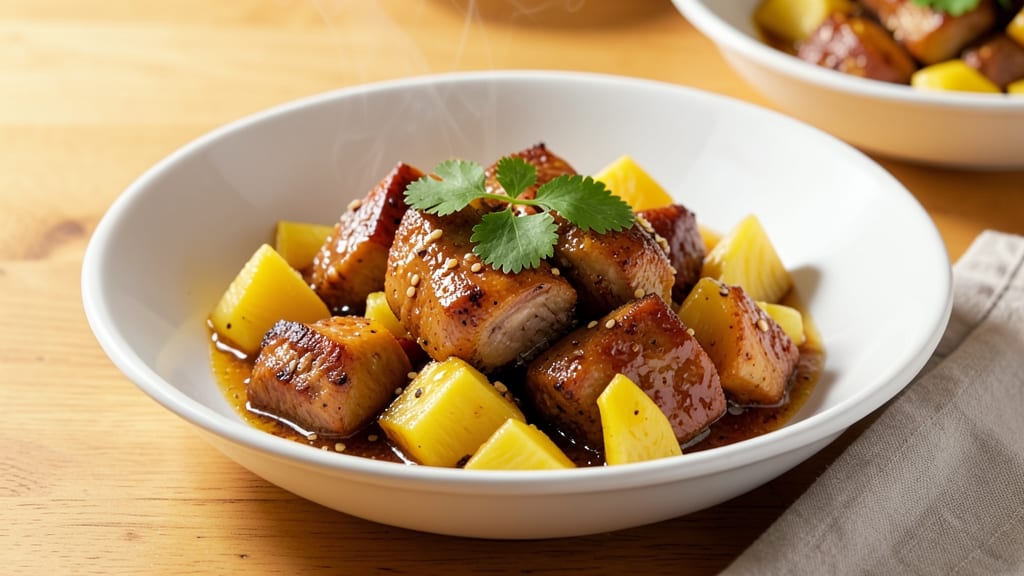
Chef James Beard's sweet and sour pork pineapple recipe delivers that perfect balance of tangy, sweet, and savory flavors we all love. 💛 I remember the first time I tasted this dish—it was a revelation, transforming simple ingredients into something restaurant-worthy.
The secret lies in the sauce, where vinegar and sugar play off each other to create that signature tangy-sweet harmony.
This recipe stays true to Beard's approach while making it accessible for home cooks. You'll start with tender pork that gets crispy edges from the pan, then comes together with juicy pineapple pieces in a sauce that's both vibrant and complex.
The key is patience when building the sauce—letting the flavors meld creates depth that store-bought versions can't match.
What you'll end up with is a dish that's equally at home at family dinners or dinner parties. The pork stays juicy and tender, the pineapple adds just the right amount of sweetness, and the sauce coats everything perfectly.
It's the kind of recipe that feels special but doesn't require fancy techniques or ingredients.
Ready in about 45 minutes, this recipe delivers restaurant-quality results with simple pantry staples. The best part? It tastes even better the next day when the flavors have time to develop fully. Let's get cooking!
Ingredients for sweet and sour pork pineapple recipe chef james beard
Simple pantry staples transform into Chef James Beard's iconic tangy-sweet pork pineapple dish.
| Ingredient | Amount | Notes |
|---|---|---|
| Boneless Pork Shoulder 🥩 | 1 ½ lb | Cut into 1-inch cubes, boneless skinless preferred |
| Fresh Pineapple 🍍 | 2 cups | Cubed, 1/2-inch pieces (fresh or frozen works) |
| White Vinegar 💧 | ½ cup | Distilled preferred for tangy balance |
| Brown Sugar 🍯 | ½ cup | Packed firmly, light or dark variety |
| Soy Sauce 🍶 | ⅓ cup | Low-sodium preferred for balanced flavor |
| Fresh Garlic Cloves 🧄 | 4 cloves | Minced finely for aromatic depth |
| Fresh Ginger Root 🌿 | 1 tbsp | Grated finely, fresh preferred |
| Green Bell Pepper 🧅 | 1 whole | Diced small, any color works |
| Red Onion 🧅 | 1 whole | Thinly sliced, white onion works too |
| Vegetable Oil 🫒 | 2 tbsp | High smoke point for crispy pork |
| Cornstarch 🌾 | 2 tbsp | For sauce thickening (or arrowroot) |
| Sesame Oil 🫒 | 1 tsp | Toasted, for finishing aroma |
| Kosher Salt 🧂 | 1 ½ tsp | Diamond Crystal preferred for balance |
| Ground Black Pepper 🌶️ | ½ tsp | Freshly ground for best flavor |
The pork shoulder is where this dish starts. Look for well-marbled cuts at the butcher counter—the fat renders beautifully and keeps the meat juicy. I always grab mine from Whole Foods or my local Costco for the best quality. Fresh pineapple is ideal, but frozen works perfectly if you're short on time—just thaw and drain it first. For the sauce, white vinegar makes all the difference—it's sharper than apple cider and cuts through the sweetness beautifully. Trader Joe's has a great affordable bottle if you want to stock up.
No fresh ginger? Ground ginger at half the amount works in a pinch, but fresh is worth the zest. Running low on soy sauce? Coconut aminos gives a similar umami punch. The cornstarch is crucial for that perfect sauce consistency—don't skip it. Want extra color? Add a pinch of turmeric or paprika to the sauce. For the pork, pat it dry before cooking—this helps create those beautiful crispy edges. The bell pepper can be any color you like, but green stays closest to the original recipe's vibrancy.
This dish tastes even better the next day as the flavors meld together. Store leftovers in an airtight container for up to 3 days in the fridge. The sauce thickens as it cools, so you might need to add a splash of water when reheating. For make-ahead prep, marinate the pork in the sauce for up to 12 hours before cooking—this infuses incredible flavor. Freeze portions for up to 3 months if you want to prep for busy weeks ahead.
Why You'll Love This Recipe
- One-Pan Magic: I swear by this recipe for lazy nights—the pork and pineapple cook together, so you’re not juggling pots. Just toss everything in one skillet, and let the vinegar and sugar work their magic while you stir occasionally.
- Tangy-Sweet Balance: That first bite? The crispy pork meets the bright, juicy pineapple, and the vinegar’s sharp kick cuts through the richness. Honestly, the brown sugar caramelizes just enough to make it dangerously addictive—no one ever leaves food on their plate.
- Leftover Goldmine: This dish actually improves the next day. The flavors meld even better, and it reheats like a dream. I pack half for lunch the following day, and my coworkers beg me to share the recipe.
- Budget-Friendly Feast: Pork shoulder is affordable, and pineapple’s seasonal sales make this a steal. Between us, I’ve fed six people for under $15 using this recipe—no fancy ingredients, just pure satisfaction.
Step-by-step instructions for sweet and sour pork pineapple
Master this classic Asian-inspired dish with perfectly balanced sweet, sour, and savory flavors.
🔥 Step 1: Sear the Pork for Maximum Flavor
Heat 2 tablespoons vegetable oil in a large skillet over medium-high heat until shimmering. Add the 1.5 lb boneless pork shoulder cut into 1-inch cubes, working in batches if needed to avoid crowding. Let each piece sear undisturbed for 2-3 minutes until golden brown on all sides.
Here's the thing—this searing step builds deep flavor through the Maillard reaction. I press down gently on the pork cubes during the first minute to prevent curling, ensuring even contact with the pan. Once all pieces are browned, transfer them to a plate and set aside. The pork should be cooked through but still slightly firm to the touch—it'll finish cooking in the sauce.
🍳 Step 2: Build the Flavor Base
In the same skillet (no need to clean it—those browned bits are pure flavor), add 1 whole red onion sliced thinly and 1 whole green bell pepper diced small. Cook for 4-5 minutes until softened and slightly caramelized. Add 4 cloves fresh garlic cloves (minced) and 1 tablespoon fresh ginger root (grated) and cook for 30 seconds until fragrant.
I like to keep the heat at medium-high during this stage to maintain the aromatics' intensity. The onions should be translucent with just a hint of color, and the garlic should smell pungent but not burnt. This aromatic base forms the foundation of the sauce's complex flavor profile.
🥘 Step 3: Create the Signature Sauce
Pour in 0.5 cup white vinegar and 0.33 cup soy sauce, scraping up any browned bits from the bottom of the pan. Add 0.5 cup brown sugar and bring to a simmer over medium heat. Cook for 3-4 minutes until the sugar dissolves completely and the mixture thickens slightly.
Here's where the magic happens: the vinegar provides the tang, the soy sauce adds umami depth, and the brown sugar balances everything with sweetness. You'll notice the sauce reduce slightly and become glossy—this is exactly what we want. If it looks too thick, add 1 tablespoon water to loosen it to your desired consistency.
🍳 Step 4: Combine and Simmer to Perfection
Return the seared pork to the skillet and add 2 cups fresh pineapple (cubed). Stir gently to combine, then bring the mixture to a simmer. Cover and cook on low heat for 15-20 minutes, stirring occasionally, until the pork is tender and the sauce has thickened to a glossy consistency.
I check for doneness by piercing a pork cube with a fork—it should slide in easily with no resistance. The pineapple should be heated through but still retain its shape. If the sauce is too thin at this point, mix 2 tablespoons cornstarch with 2 tablespoons water and stir it into the pan. Simmer for another 2-3 minutes until thickened to your liking.
🍽️ Step 5: Finish and Serve with Authentic Flair
Remove from heat and stir in 1 teaspoon sesame oil and 1.5 teaspoons kosher salt. Taste and adjust seasoning with ground black pepper if needed. The dish should have a perfect balance of sweet, sour, and savory flavors with a subtle nutty aroma from the sesame oil.
Serve immediately over steamed rice or noodles. The pork should be fork-tender with crisp edges, and the sauce should coat everything beautifully. For extra presentation, garnish with fresh cilantro or green onions. This dish tastes even better the next day as the flavors meld further!
Pro Tips For Making Sweet And Sour Pork Pineapple Recipe Chef James Beard
- CUT PORK INTO EVEN STRIPS: I learned this the hard way—uneven pork cooks at wildly different rates in the stir-fry. Aim for ½-inch-wide strips, all the same length. Use a sharp knife and don’t be shy about slicing against the grain for tenderness. (Yes, even if you’re impatient like me.)
- USE FROZEN PINEAPPLE, THEN THAW: Fresh pineapple is great, but frozen chunks save time and prevent soggy sauce. Just thaw them overnight in the fridge—no need to chop. The texture holds up better in the sauce, and you skip the sticky mess of fresh core prep.
- DEGLAZE WITH THE VINEGAR FIRST: After browning the pork, pour in the white vinegar immediately while the pan is still hot. Let it bubble for 30 seconds before adding anything else. This cuts through the fond and sharpens the sauce’s tang—way more effective than dumping it in later.
- STIR-FRY IN BATCHES: Crowding the pan steams the pork instead of searing it. Work in two batches if needed—even if it means an extra minute. The difference in texture? Night and day. (Your future self will thank you.)
Essential equipment for perfect results
Skillet Essentials
You'll need a 12-inch cast iron skillet or heavy stainless steel pan for this recipe—I swear by my Lodge cast iron because it retains heat beautifully and creates those perfect crispy edges on the pork.
A non-stick skillet works too, but you'll miss out on the deep flavor development from the fond (browned bits). If you're cooking for a crowd, a 14-inch pan handles larger batches without crowding. 🔥
Sauce Thickening Tools
For the sauce, I recommend a whisk to combine the cornstarch slurry smoothly. A small bowl for mixing the cornstarch with water is essential—this prevents lumps that can ruin your sauce.
If you're making this ahead, a fine-mesh strainer helps remove any pineapple chunks if you prefer a smoother texture. Keep a measuring spoon set handy for precise ingredient ratios.
Pineapple Prep Gear
A sharp chef's knife and cutting board are must-haves for cubing pineapple efficiently. I like to use a mandoline for even ½-inch cubes if you're feeling fancy, but a knife works perfectly fine.
For frozen pineapple, a colander helps drain excess liquid before cooking. Pro tip: Wear cut-resistant gloves if you're not comfortable handling pineapple—those cores can be tricky!
Heat Control Helpers
Invest in a kitchen thermometer to monitor your skillet's temperature—aim for medium-high heat (375°F) for searing. A heat-resistant spatula helps flip the pork without losing those precious browned bits.
For the sauce simmering, a small saucepan works if you prefer to thicken it separately, but I find the skillet method builds more flavor. Keep a timer nearby to track the 15-20 minute simmering phase.
Finishing Touches
For the final presentation, grab tongs to transfer the pork to plates and a small bowl for sesame oil. Fresh cilantro or green onions add color—use scissors to chop them quickly. A serving spoon helps portion the dish neatly over rice or noodles.
The best part? This recipe comes together in one pan, so cleanup is minimal. Just a skillet, a cutting board, and a whisk to wash! ✨
Nutrition facts
Frequently asked questions
Can I substitute pork shoulder with another cut for this recipe?
Yes! For similar results, use pork tenderloin (trimmed and cut into cubes) or pork loin. These leaner cuts will cook faster, so reduce the simmering time to 10-12 minutes instead of 15-20. Avoid fatty cuts like ribs—they may become too greasy. For extra tenderness, marinate the pork in the sauce for 30 minutes before cooking.
How can I make this recipe vegetarian?
Swap the pork for extra-firm tofu (pressed and cubed) or mushrooms (like shiitake or portobello). For tofu, pan-fry until golden before adding to the sauce. For mushrooms, cook them with the onions and peppers to develop flavor. The sauce will still shine—just reduce soy sauce to 0.25 cup to balance the umami.
Why did my sauce turn out too thin or too thick?
Sauce consistency depends on timing and cornstarch. For a thinner sauce, simmer uncovered for 5-10 extra minutes to reduce naturally. For thicker sauce, mix 1 tablespoon cornstarch with 1 tablespoon water and stir in while simmering. If it's still too thick, add 1 tablespoon water at a time. The key is patience—Chef Beard's method relies on gradual thickening.
Can I make this dish ahead of time?
This dish tastes even better the next day. Cook the pork and sauce as directed, then refrigerate in an airtight container for up to 3 days. Reheat gently on low heat, adding 1 tablespoon water if the sauce thickens too much. For freezing, portion into containers and freeze for up to 3 months. Thaw overnight in the fridge before reheating.
What's the secret to balancing the sweet and sour flavors?
Chef Beard's magic lies in the ratios: equal parts vinegar and sugar (½ cup each) create perfect balance. Taste as you go—if it's too sour, add 1 teaspoon more sugar; if too sweet, add 1 teaspoon vinegar. The soy sauce and ginger add depth, while pineapple's natural sweetness ties everything together. Adjust gradually to avoid overpowering the dish.