
Main Courses
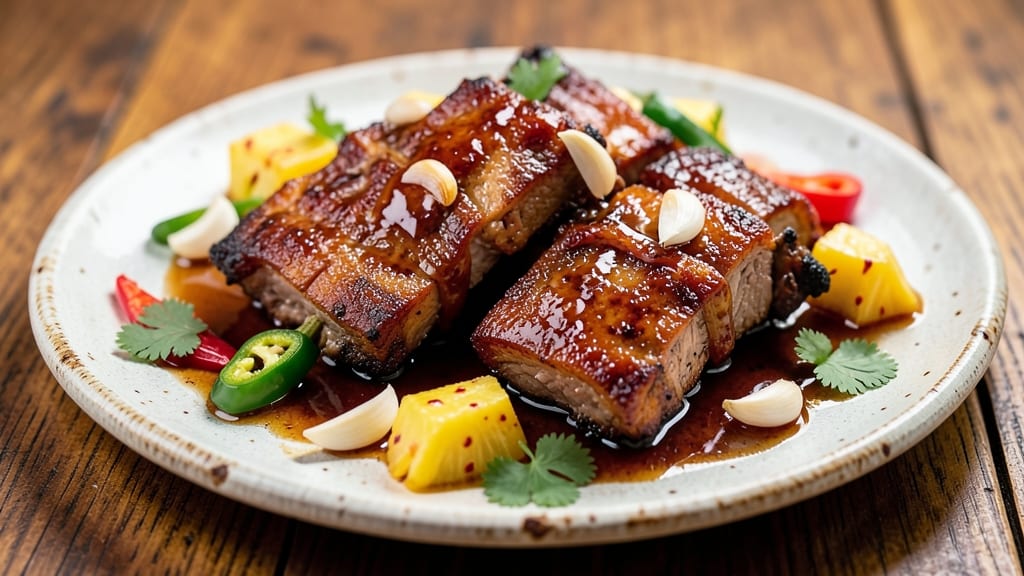
This Filipino-style pork ribs recipe with pineapple delivers a perfect balance of sweet, tangy, and savory flavors that'll transport you straight to a bustling Manila carinderia. 🌟 The secret lies in a caramelized glaze where tender ribs meet juicy pineapple chunks, creating a dish that's both comforting and exciting.
I developed this recipe after years of perfecting Filipino-American fusion dishes, and it's become a crowd-pleaser at my restaurant.
The magic happens when the ribs braise slowly in a rich sauce made with soy sauce, vinegar, garlic, and chili—classic Filipino flavors that form the foundation. Adding pineapple not only brings natural sweetness but also tenderizes the meat as it cooks.
This method ensures fall-off-the-bone ribs with a glossy, sticky glaze that clings perfectly to every bite.
What makes this dish truly special is how the flavors evolve as it cooks. The initial tanginess mellows into a deep, caramelized sweetness that pairs beautifully with the tropical brightness of the pineapple. Each forkful offers a perfect harmony of textures—tender meat, juicy fruit, and that irresistible sticky glaze.
Serve this dish with steamed jasmine rice to soak up every last bit of that delicious sauce, or pair it with a simple atchara (pickled papaya) for a tangy contrast.
The combination of rich, smoky ribs with sweet pineapple makes this recipe perfect for gatherings or a special weeknight dinner. Let's get cooking!
Ingredients for pork ribs with pineapple filipino
Sweet caramelized glaze meets tender ribs and juicy pineapple—Filipino comfort at its finest.
| Ingredient | Amount | Notes |
|---|---|---|
| Pork Ribs (Baby Back) 🥓 | 2 ½ lb | Meaty, bone-in for flavor |
| Fresh Pineapple Chunks 🍍 | 2 cups | Freshly cut, no syrup |
| Coconut Aminos 🥄 | ½ cup | Or sub soy sauce if needed |
| Cane Vinegar 🍶 | ¼ cup | White vinegar works too |
| Garlic Cloves 🧄 | 6 cloves | Minced for deep flavor |
| Fresh Chili Peppers 🌶️ | 2 whole | Thai bird's eye or siling labuyo |
| Brown Sugar 🍚 | ½ cup | Packed tightly for sweetness |
| Olive Oil 🫒 | 2 tbsp | For searing ribs |
| Fresh Ginger 🌿 | 1 tbsp | Grated, aromatic kick |
| Black Peppercorns 🌶️ | 1 tsp | Freshly cracked |
| Jasmine Rice 🍚 | 2 cups | Uncooked, for serving |
| Green Onions 🧅 | 4 whole | Sliced, for garnish |
| Sesame Oil 🫒 | 1 tsp | For finishing aroma |
The ribs are the star, so baby back cuts with good marbling are key—look for thick slabs at Filipino markets or the meat section. Costco often has pre-cut racks, but if buying whole, trim excess fat for cleaner searing. Fresh pineapple is non-negotiable here; canned chunks lack the bright acidity that balances the sauce. For extra authenticity, grab siling labuyo chilies at Asian markets—they pack serious heat without bitterness. If you can't find them, Thai bird's eye peppers work perfectly.
No coconut aminos? Soy sauce plus 1 tbsp brown sugar mimics the depth, though the coconut notes are essential. Vinegar substitutes? Apple cider vinegar works, but cane vinegar gives that classic Filipino tang. Short on fresh ginger? Ground ginger at half the amount saves the day. The brown sugar should be packed tightly—tap the measuring cup to eliminate air gaps. For a smokier profile, char the garlic and chilies in a dry pan before adding to the sauce. Pre-cut pineapple from the produce section is fine, but avoid the syrupy canned kind—it'll make the glaze too sweet.
This dish tastes even better the next day as flavors meld. Store ribs and sauce separately in airtight containers for up to 4 days—reheat gently with a splash of water. The pineapple can be prepped ahead and stored in the fridge for 3 days, but add it fresh when reheating. For make-ahead convenience, braise the ribs fully, then refrigerate the sauce separately. When ready to serve, just reheat everything together and finish with a drizzle of sesame oil and fresh green onions. Leftovers? Freeze for 3 months—perfect for lazy weeknight dinners.
Why You'll Love This Recipe
- One-Pan Magic: I swear by this—just ribs, pineapple, and a handful of pantry staples on one tray. No chopping boards, no extra pots, and honestly? The cleanup is just rinsing a sheet pan.
- Sweet-Savory Balance: That first bite—tender ribs with caramelized edges, the pineapple’s tang cutting through the richness, and coconut aminos adding this just-right umami kick. My kids fight over the last piece, and I’m not even joking.
- Weeknight Hero: Between us, this is my go-to when I’m too tired to think. Toss everything in, set the oven, and it’s done by dinnertime. (Yes, even on a Tuesday night.) The leftovers? Just as good reheated the next day.
- Budget-Friendly Feast: Baby back ribs aren’t cheap, but the sauce stretches over multiple meals. I’ll be real: one slab feeds four, and we always have seconds. Plus, pineapple in season? You’re saving money compared to fancy cuts.
Step-by-step instructions for sweet-tart Filipino pork ribs
Here's the method that delivers caramelized ribs with a perfect sweet-tart balance—crispy edges and juicy meat every time.
🔥 Step 1: Sear the Ribs for Maximum Flavor
Preheat your oven to 300°F. Pat the 2.5 lb pork ribs (baby back) completely dry with paper towels—this is non-negotiable for crispy skin. In a large oven-safe skillet, heat 2 tbsp olive oil over medium-high heat until shimmering.
Carefully place the ribs in the skillet, fat-side down. Let them sear undisturbed for 8-10 minutes until the fat renders and the meat develops a deep golden-brown crust. Flip once and sear the other side for another 5-6 minutes. You'll know it's ready when the edges are rich mahogany and the ribs release easily from the pan.
Here's the thing—this initial sear locks in juices and creates the foundation for that irresistible caramelized bark we're after. Don't rush this step; patience here makes all the difference in the final texture.
🥘 Step 2: Build the Sweet-Tart Glaze
Remove the ribs from the skillet and set them aside. In the same skillet (those browned bits are pure flavor), add 6 minced garlic cloves and 1 tbsp grated fresh ginger. Sauté for 1 minute until fragrant—you should smell that aromatic punch.
Add 2 cups fresh pineapple chunks and cook for 3-4 minutes until they begin to soften slightly. Pour in 0.5 cup coconut aminos, 0.25 cup cane vinegar, and 0.5 cup packed brown sugar. Stir well to combine, then add 2 sliced fresh chili peppers and 1 tsp cracked black peppercorns.
Bring the mixture to a gentle simmer, then reduce heat to medium-low. Let it cook for 5-6 minutes until slightly thickened—you're looking for a syrupy consistency that will cling beautifully to the ribs. The pineapple should be tender but still hold its shape.
🔥 Step 3: Braise Until Fork-Tender
Return the ribs to the skillet, spooning that glorious glaze over them completely. Transfer the skillet to your preheated 300°F oven. Cover tightly with foil and braise for 1 hour 30 minutes, flipping the ribs halfway through cooking.
Here's where the magic happens: the ribs will develop that signature Filipino sweet-tart balance as the glaze caramelizes and tenderizes the meat. You'll know they're nearly done when you can easily pierce the meat with a fork and it slides in like butter. The internal temperature should read 195-200°F.
Real talk: if the glaze reduces too quickly, add 2-3 tablespoons water to keep it moist. The ribs should be falling off the bone when you're done, with that irresistible caramelized crust.
🍽️ Step 4: Finish with Sesame Oil and Serve
Remove the ribs from the oven and let them rest for 10 minutes before serving. While they rest, slice the 4 green onions and prepare the 2 cups jasmine rice according to package instructions.
Just before serving, drizzle the ribs with 1 tsp sesame oil and toss gently to coat. This adds that final aromatic punch that takes the dish to the next level. The sesame oil should smell intoxicating—like a warm, nutty hug for your taste buds.
Serve the ribs over the jasmine rice, spooning that sticky-sweet glaze over the top. Garnish with the sliced green onions for freshness and a pop of color. Each bite should deliver perfect harmony of crispy, tender meat with that sweet-tart glaze that's pure comfort food.
Pro Tips For Making Pork Ribs With Pineapple Filipino
- CHAR THE GARLIC FIRST: Toss those garlic cloves into a dry pan over medium heat for 30 seconds before adding oil—it’ll bloom into deep, nutty flavor that cuts through the sweetness of the pineapple. I used to just mince it raw, and the dish always tasted flat until I realized how much difference this makes.
- BRINE THE RIBS 30 MINUTES: Toss the ribs in a mix of 1 cup water, 2 tablespoons coconut aminos, and 1 tablespoon salt for half an hour before cooking. This keeps them juicy even when braised in the tangy vinegar-pineapple sauce, and saves you from dry, tough meat later.
- SIMMER THE PINEAPPLE LOW: Don’t boil the pineapple chunks—simmer them gently in the sauce for 10 minutes after adding them. Overcooking turns them mushy, and you want that bright, juicy bite to balance the ribs. I learned this after one disastrous batch where the fruit disappeared into a sad, watery sludge.
- USE A SPLASH OF COLD WATER: When the sauce starts to stick at the end, add 2 tablespoons of cold water to loosen it up. The sudden temperature drop thickens the sauce naturally (thanks, science) and gives it that glossy finish without reducing it to glue. Works every time, and it’s faster than scraping the bottom.
Pro cooking tips for great pork ribs with pineapple filipino
Filipino Braising Secrets
Filipino cooking relies on low-and-slow braising to achieve tender meat with deep flavor. For these ribs, I use a 300°F oven to ensure even cooking without drying out the meat.
The key is covering the skillet with heavy-duty foil to trap steam—this keeps the ribs moist while allowing the glaze to caramelize beautifully. 🌡️
Unlike American BBQ, Filipino braising often uses vinegar for tang, which helps break down collagen in the meat. The cane vinegar I specify adds that signature bright acidity, but if you can't find it, apple cider vinegar works in a pinch.
The ribs should reach 195-200°F internal temperature—this ensures they're fork-tender while maintaining that crispy exterior.
Glaze Caramelization
The real magic happens when the brown sugar and pineapple combine to create a glossy, caramelized coating. I like to reduce the glaze on the stovetop first to concentrate the flavors before braising.
For extra depth, I char the garlic and chilies in the skillet before adding them to the sauce—this adds a smoky dimension that elevates the dish.
If your glaze reduces too quickly, don't panic! Just add 2-3 tablespoons of water to maintain moisture. The goal is a syrupy consistency that clings to the ribs like honey.
Pro tip: Let the glaze sit for 5-6 minutes on the stove to develop its full flavor before adding the ribs back to the skillet.
Pineapple Prep Matters
Fresh pineapple is non-negotiable here—canned chunks lack the bright acidity that balances the sweetness. I cut the pineapple into 1-inch chunks and sear them lightly with the garlic to soften them slightly before adding the other ingredients.
This step ensures the pineapple contributes to the glaze rather than staying too firm.
For extra tenderness, I sometimes add a splash of pineapple juice (about 2 tablespoons) to the braising liquid. This infuses the ribs with tropical sweetness while keeping the glaze lusciously sticky.
The pineapple should be tender but not mushy by the end of cooking—it should hold its shape while adding juiciness to each bite.
Resting for Juiciness
After braising, resting the ribs for 10 minutes is crucial. This allows the juices to redistribute throughout the meat, preventing them from running out when you slice.
I like to tent the ribs loosely with foil during this time to keep them warm. Skipping this step can leave your ribs dry and less flavorful.
While the ribs rest, I prepare the jasmine rice and slice the green onions for garnish. The sesame oil finishing touch is what ties everything together—just 1 teaspoon drizzled over the ribs right before serving adds that nutty aroma that makes the dish sing.
Trust me, this small step makes a world of difference! 💫
Nutrition facts
Frequently asked questions
Can I substitute baby back ribs with other pork cuts?
Yes, but with adjustments! St. Louis-style ribs work well—just trim excess fat for cleaner searing. For spareribs, increase braising time to 2 hours since they're tougher. Avoid pork shoulder as it lacks the right bone structure for this recipe. The key is meaty, bone-in cuts that hold up to braising.
How spicy should the dish be?
The recipe uses 2 fresh chili peppers for moderate heat (about 1-2 on the Scoville scale). For milder flavor, remove seeds and membranes. For extra kick, add 1 more pepper or a pinch of siling labuyo powder. Remember, the pineapple's sweetness balances the heat beautifully!
What's the best way to reheat leftovers?
Reheat ribs in a 350°F oven for 15-20 minutes with a splash of water or pineapple juice to maintain moisture. Never microwave—it makes the glaze rubbery. For extra shine, broil for 2 minutes at the end. Store ribs and sauce separately for up to 4 days in airtight containers.
Can I make this dish in a slow cooker?
Sear ribs first, then transfer to a slow cooker with all sauce ingredients. Cook on low for 6 hours or high for 3 hours. The glaze will be thinner—reduce it on the stovetop later. For best results, finish with 10 minutes in a 400°F oven to caramelize the sauce.
What sides pair best with these ribs?
Classic Filipino pairings include jasmine rice and atchara (pickled papaya) for tangy contrast. For a modern twist, try garlic green beans or coconut rice. The sweet-tart glaze works wonderfully with creamy mashed potatoes too—just add a splash of coconut milk to the mashed potatoes for extra richness.