
Main Courses
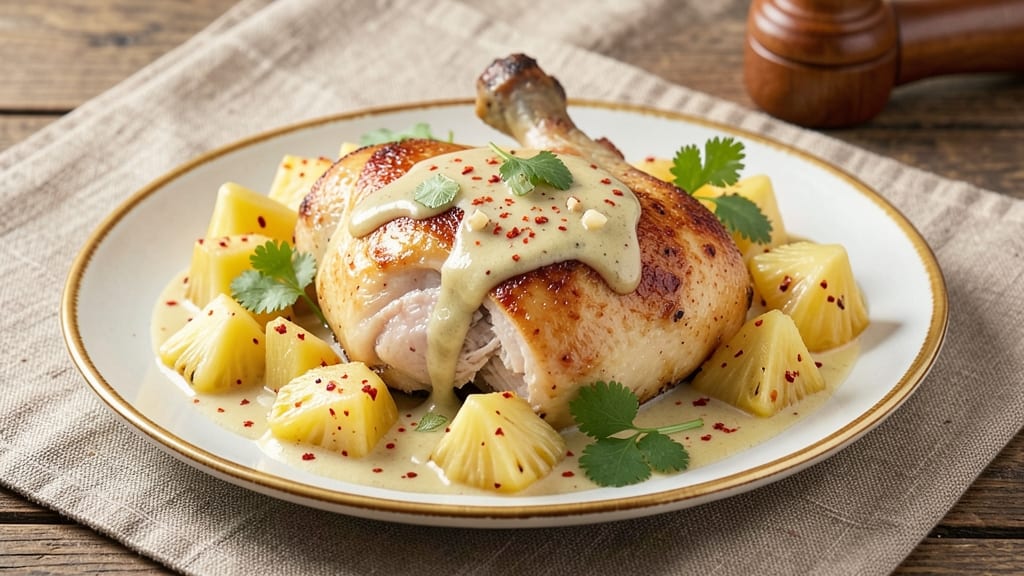
This chicken coconut milk pineapple recipe transforms a simple one-pan meal into a tropical masterpiece—creamy, sweet, and packed with flavor. 🌴 I developed it after years of perfecting balance between rich coconut milk and bright pineapple, ensuring every bite delivers that perfect harmony of textures and tastes.
The secret lies in simmering the chicken just enough to keep it tender while letting the coconut milk and pineapple meld into a luscious, slightly caramelized sauce.
The beauty of this dish is its simplicity: just a few ingredients, one pan, and 30 minutes of hands-off cooking time. You'll start with juicy chicken pieces that absorb the aromatic flavors of ginger, garlic, and chili, then finish with tender meat swimming in a velvety coconut-pineapple sauce.
The pineapple adds natural sweetness that cuts through the richness, while the coconut milk creates that signature creamy texture we all love.
What makes this recipe truly special is how versatile it is. Serve it over steamed jasmine rice for a comforting meal, alongside roasted sweet potatoes for added heartiness, or even as a filling for tacos or wraps.
The sauce is rich enough to stand alone but light enough to complement other dishes. Each bite offers a perfect balance—tender chicken, sweet pineapple, and that luxurious coconut creaminess that makes it impossible to stop eating.
This tropical-inspired dish is perfect for weeknight dinners, family gatherings, or even a special occasion when you want something that feels indulgent but doesn't require hours in the kitchen.
The combination of flavors and textures is so satisfying that it'll quickly become a staple in your recipe rotation. Let's get cooking!
Ingredients for chicken coconut milk pineapple
Tropical flavors come together in this one-pan masterpiece—juicy chicken, velvety coconut, and bright pineapple create a symphony of textures.
| Ingredient | Amount | Notes |
|---|---|---|
| Boneless Chicken Thighs 🍗 | 1 ½ lb | Cut into 2-inch pieces |
| Full-Fat Coconut Milk 🥥 | 13 ½ oz | One 13.5 oz can preferred |
| Fresh Pineapple 🍍 | 1 cup | Diced, fresh or frozen |
| Garlic Cloves 🧄 | 4 cloves | Minced for aromatic base |
| Fresh Ginger 🌿 | 1 tbsp | Grated, for zesty kick |
| Red Chili Flakes 🌶️ | 1 tsp | Adjust for heat preference |
| Olive Oil 🫒 | 2 tbsp | Extra-virgin for richness |
| Jasmine Rice 🍚 | 1 cup | Uncooked, for serving |
| Lime Juice 🍋 | 2 tbsp | Freshly squeezed |
| Salt 🧂 | 1 tsp | Kosher or sea salt |
| Black Pepper 🌶️ | ½ tsp | Freshly ground preferred |
| Fresh Cilantro 🌿 | ¼ cup | Chopped, for garnish |
| Honey 🍯 | 1 tbsp | Optional for balance |
| Vegetable Oil 🫒 | 1 tbsp | For searing chicken |
The coconut milk is non-negotiable—full-fat canned coconut milk gives that luxurious creaminess, while light versions won't cut it. Thai Kitchen or Goya brands are my go-tos for consistent results. Fresh pineapple is ideal, but frozen works in a pinch—just drain it well. For the ginger, buy fresh and grate it yourself; pre-grated loses its punch fast. Chicken thighs stay juicier than breasts during the long simmer, but if you prefer white meat, use boneless, skinless breasts and reduce cooking time by 5 minutes.
No fresh pineapple? Frozen chunks work perfectly—just thaw and drain. Running short on coconut milk? Substitute with 1/2 cup coconut cream plus 1/2 cup water for similar texture. The honey adds balance if your pineapple is tart, but skip it if you prefer it tart. Chili flakes can be swapped for 1/2 tsp cayenne or 1 tsp sriracha for different heat profiles. For the rice, jasmine rice absorbs the sauce beautifully, but basmati works too if that's what you have.
Store leftovers in airtight containers for 4-5 days—the flavors actually improve overnight. Freeze for up to 3 months if you want to prep ahead. I always make extra sauce to drizzle over rice or use as a marinade for grilled shrimp. The dish reheats beautifully—just warm gently on the stove with a splash of water to prevent drying. Garnish with fresh cilantro right before serving to keep it vibrant.
Why You'll Love This Recipe
- One-Pan Magic: I swear by this recipe when I’m too tired to scrub pots—just brown the chicken, toss in the pineapple chunks and coconut milk, and let it simmer. The garlic and ginger melt into the sauce while you’re doing laundry, and by the time you sit down, dinner’s ready.
- Tropical Comfort: That first bite of tender chicken swimming in thick, creamy coconut milk with bright pineapple? It’s like a hug in a bowl—warm, sweet, and just spicy enough from the ginger. Honestly, I’ve made it for lazy Sundays and it still feels special.
- Leftover Hero: This dish actually improves the next day. The coconut milk thickens into a luscious sauce, and the chicken stays juicy. I freeze portions for busy nights, and it reheats like it was just made—no dryness, no fuss.
- Budget Bright Spot: Full-fat coconut milk makes it rich without breaking the bank, and chicken thighs are cheaper than breasts but just as flavorful. Plus, pineapple’s seasonal deals mean you can upgrade this meal without guilt. My wallet and taste buds both win.
Step-by-step instructions for chicken coconut milk pineapple
Here's how to create a lusciously creamy, tropical one-pan masterpiece that's bursting with flavor.
🍳 Step 1: Sear the Chicken for Maximum Flavor
Heat the 1 tablespoon vegetable oil in a large skillet over medium-high heat until shimmering. Pat the 1.5 lb boneless chicken thighs dry with paper towels and cut them into 2-inch pieces. Season each piece generously with ½ teaspoon salt and ¼ teaspoon black pepper.
Working in batches to avoid crowding, add the chicken to the hot oil and sear for 4-5 minutes per side until golden brown and cooked through to 165°F internally. The chicken should release easily from the pan when ready—this means the crust is set and won't fall apart during cooking. Transfer the seared chicken to a plate and set aside.
👨🍳 Step 2: Build the Tropical Coconut Base
In the same skillet (no need to clean it—the browned bits add depth), add the 2 tablespoons olive oil and reduce heat to medium. Add the 4 minced garlic cloves and 1 tablespoon grated fresh ginger, cooking for 1 minute until fragrant and just beginning to color. Stir in the 1 teaspoon red chili flakes for a subtle heat kick.
Pour in the 1 cup diced fresh pineapple and cook for 2 minutes until slightly softened and caramelized. Then add the 13.5 oz full-fat coconut milk, scraping up any browned bits from the bottom. Bring to a gentle simmer and let it cook for 5 minutes until slightly thickened—this creates the creamy foundation for your dish.
🥘 Step 3: Combine and Simmer the Creamy Sauce
Return the seared chicken to the skillet and stir gently to coat in the coconut-pineapple mixture. Add the 2 tablespoons lime juice and 1 tablespoon honey (if using), then bring everything to a gentle simmer. Cover and cook for 10-12 minutes on low heat, stirring occasionally, until the chicken is fully tender and the sauce has thickened into a velvety consistency.
Here's the thing—if the sauce looks too thick, add 2-3 tablespoons water to loosen it. The perfect texture should coat the back of a spoon but still be light enough to drizzle. Taste and adjust seasoning with more salt or lime juice if needed—balance is everything in this tropical harmony.
⏰ Step 4: Prepare the Jasmine Rice
While the chicken simmers, prepare the 1 cup jasmine rice according to package instructions. I like to use the absorption method: rinse the rice until the water runs clear, then combine with 1½ cups water and ¼ teaspoon salt in a separate pot. Bring to a boil, then reduce heat to low, cover, and simmer for 15 minutes off the heat.
The rice should be tender with no liquid remaining. Fluff with a fork and let it sit covered while you finish the chicken. The residual steam keeps it warm and prevents drying—this is crucial for perfect texture.
🍽️ Step 5: Finish and Serve with Fresh Garnishes
Once the chicken is fully cooked, remove from heat and let it rest for 2 minutes. Stir in the ¼ cup chopped fresh cilantro just before serving to maintain its vibrant color and fresh flavor. The cilantro brightens the dish with a citrusy note that cuts through the richness of the coconut.
Divide the creamy chicken mixture over the steaming jasmine rice and serve immediately. Each bite should deliver tender chicken, sweet pineapple, creamy coconut, and a hint of spicy warmth. For extra presentation, garnish with additional cilantro and a squeeze of lime—it's the perfect finishing touch that makes this dish feel truly special.
Pro Tips For Making Chicken Coconut Milk Pineapple
- SEAR THE CHICKEN FIRST: Skip the slow start—hit the chicken thighs with a quick sear in a hot pan (no oil needed, their fat will render) for 3-4 minutes per side until golden. This locks in flavor and prevents the coconut milk from turning greasy later. I used to braise straight away, and the sauce always tasted flat by comparison.
- PEEL THE GINGER THINLY: No, don’t grate it—use a knife to slice off the skin in one long strip, then chop it finely. Fresh ginger loses its bite when grated too much, and you’ll end up with a mushy paste that blends unevenly into the coconut milk. Thin slices keep the texture sharp and the aroma bright.
- DON’T BOIL THE PINEAPPLE: Toss fresh pineapple chunks in a pinch of salt and let them sit for 10 minutes before adding to the coconut milk. This draws out excess juice, so the sauce doesn’t dilute into a watery mess. I learned this after making a batch where the pineapple turned the coconut milk into soup—annoying, but easy to fix now.
- SIMMER LOW AND LONG: After combining everything, drop the heat to a bare simmer (tiny bubbles, maybe 150°F/65°C) and walk away for 30 minutes. Rushing it leaves the chicken dry and the coconut milk separating. Sounds boring, but it’s the only way to get that creamy, fall-apart texture without curdling.
Storing and reheating your leftovers
Refrigerator Storage
Store leftovers in an airtight container for up to 4-5 days—the flavors actually deepen as the coconut milk and pineapple meld together. I like using glass Pyrex containers because they preserve the dish's tropical aroma better than plastic.
Let the dish cool completely before sealing to prevent condensation, which can make the sauce watery. 🌴
Freezer Storage
Freeze this dish for up to 3 months in quart-sized freezer bags or airtight containers. Leave ½-inch headspace for expansion, and press out excess air to prevent freezer burn. When reheating, thaw overnight in the fridge for best texture—microwaving straight from frozen can make the coconut milk separate.
I often freeze just the sauce separately to use later on rice or grilled shrimp.
Stovetop Reheating
My preferred method is gentle stovetop reheating. Transfer the dish to a skillet over low heat and add 2-3 tablespoons water to prevent drying. Cover and heat for 5-7 minutes, stirring occasionally, until warmed through to 165°F.
The sauce should return to its creamy consistency—if it looks too thick, add a splash more water. Stir in fresh cilantro at the end to revive its bright flavor. 🔥
Microwave Reheating
For quick reheating, use microwave-safe containers and heat on 50% power in 1-minute intervals, stirring between each interval. Start with 2 minutes total, then add 30-second increments until heated through.
The coconut milk can separate if microwaved too long, so keep an eye on it. If the sauce splits, stir vigorously to re-emulsify before serving.
Sauce Separation Fix
If your coconut milk separates after reheating, don't panic! Simply stir in 1 tablespoon cold water and blend with an immersion blender until smooth again. For extra richness, add 1 teaspoon coconut cream while reheating.
This trick works like magic for restoring that velvety texture. The key is gentle heat—never boil the sauce after reheating, or it'll curdle. 💫
Make-Ahead Tips
Prep the sauce ahead of time and store it separately from the chicken. Cook the chicken fresh, then combine with the pre-made sauce just before serving. This keeps the meat juicy and prevents it from drying out during storage.
I also like to make a double batch of sauce—it freezes beautifully and becomes my go-to for quick meals. Just thaw and heat gently before using. ⏰
Nutrition facts
Frequently asked questions
Can I use chicken breasts instead of thighs?
Yes, but adjust the cooking time! Chicken breasts cook faster and can dry out in the coconut sauce. Use 1 lb boneless, skinless breasts instead of thighs, cut them into 1-inch pieces, and reduce simmering time to 8-10 minutes (instead of 10-12). Keep an eye on them—they're done when they reach 165°F internally.
How do I make this dish spicier?
For a serious heat kick, increase the chili flakes to 1½ teaspoons and add 1 teaspoon sriracha or ½ teaspoon cayenne pepper when building the coconut base. For extra depth, stir in 1 tablespoon fish sauce or 1 teaspoon smoked paprika at the end. Pro tip: Toast the chili flakes in the oil for 30 seconds before adding other aromatics to intensify the flavor.
What if my pineapple is too sweet?
Balance the sweetness by adding 1 extra tablespoon lime juice and ½ teaspoon salt to the sauce. For a tangier profile, stir in 1 teaspoon rice vinegar or ½ teaspoon turmeric (which also adds color). If your pineapple is very ripe, reduce the honey to ½ tablespoon or omit it completely.
Can I make this recipe gluten-free?
This recipe is naturally gluten-free as written. Just double-check your coconut milk can for hidden additives (some brands may contain trace amounts). For extra assurance, use certified gluten-free coconut milk. The jasmine rice is also typically gluten-free, but verify the package label if you're highly sensitive.
Why did my coconut milk separate?
This usually happens from too much heat or rapid temperature changes. To fix it, whisk in 1 tablespoon cold water or 1 teaspoon coconut cream while gently reheating on low heat. For prevention, avoid boiling the sauce and always reheat gently on low-medium heat. The sauce should never simmer vigorously after initial cooking.