
Main Courses
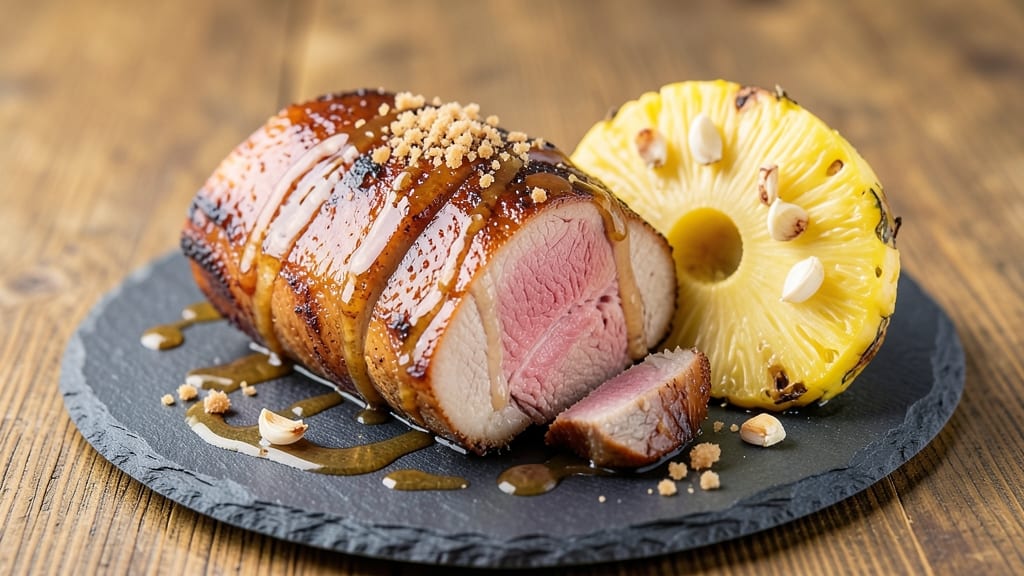
This pork loin roast with pineapple recipe delivers restaurant-quality results with a caramelized glaze that balances sweet and savory perfectly. 🌟 I developed it after years of perfecting pork roasts for large gatherings, where the tropical brightness of pineapple elevates the rich, tender meat.
The secret lies in a slow roast followed by a quick glaze that locks in juices while creating that coveted caramelized crust.
What sets this recipe apart is the harmony between the pork's natural richness and the pineapple's tangy sweetness. You'll start with a simple marinade that tenderizes the meat, then roast it to medium-rare before finishing with a pineapple-honey glaze that caramelizes beautifully.
This method ensures your pork stays juicy and flavorful, while the glaze adds a glossy, appetizing finish that guests will rave about.
The result is a tender, golden-brown roast with a sticky-sweet glaze that pairs perfectly with roasted vegetables or a bed of jasmine rice. The pineapple not only enhances the flavor but also adds a beautiful contrast in texture and color.
This dish is elegant enough for dinner parties but simple enough for a weeknight dinner that feels special.
Whether you're serving a crowd or treating yourself to a luxurious meal, this pork loin roast with pineapple delivers restaurant-quality results at home. The technique is straightforward, but the flavor impact is undeniable—just like the roasts I've been perfecting for years at The Smoky Pig. Let's get cooking!
Ingredients for pork loin roast with pineapple
Sixteen ingredients for a showstopping roast that balances rich pork with tropical pineapple sweetness.
| Ingredient | Amount | Notes |
|---|---|---|
| Pork Loin Roast 🐷 | 3 lb | Bone-in, center-cut preferred |
| Fresh Pineapple 🍍 | 1 whole | Juicy variety, peeled/cored |
| Honey 🍯 | ½ cup | Wildflower or clover preferred |
| Soy Sauce 🍶 | ¼ cup | Low-sodium preferred |
| Brown Sugar 🍚 | ¼ cup | Light or dark works |
| Garlic Cloves 🧄 | 6 cloves | Minced, fresh preferred |
| Fresh Ginger 🌿 | 1 tbsp | Grated, young ginger best |
| Olive Oil 🫒 | ¼ cup | Extra-virgin for richness |
| Fresh Rosemary 🌿 | 2 sprigs | Freshly chopped leaves |
| Salt 🧂 | 1 ½ tsp | Diamond Crystal preferred |
| Black Peppercorns 🌶️ | 1 tsp | Freshly cracked preferred |
| Balsamic Vinegar 🍷 | 1 tbsp | Aged 25 years or more |
| Jasmine Rice 🍚 | 2 cups | Uncooked, long-grain |
| Vegetable Oil 🫒 | 2 tbsp | For roasting pan |
The pork loin is your canvas here—bone-in, center-cut stays juicier than boneless. Grab one from Whole Foods or your butcher shop if they have it; the marbling makes all the difference. Fresh pineapple is non-negotiable for that bright, juicy contrast—Costco's fresh-cut is perfect, but if you're buying whole, pick one that's heavy for its size. The honey should be raw or wildflower for depth of flavor. I always double-check the soy sauce label for low-sodium, especially since we're using it in the marinade where it'll concentrate during roasting. For the ginger, grab the young, tender stalks—they're milder and more aromatic than the fibrous older ones.
No fresh ginger? Powdered works at half the amount, but trust me, fresh is worth the peel-and-grate. Running low on balsamic? Red wine vinegar plus a pinch of sugar mimics that depth. The jasmine rice is there for pairing—Day-O brand if you're at Trader Joe's, or any long-grain variety. For the glaze, I like toasting the brown sugar slightly in the pan first—it deepens that caramel flavor. If you're prepping ahead, marinate the pork overnight, but no longer than 24 hours or it'll get mushy. The pineapple can be prepped the day before too, just store it covered in the fridge.
This roast reheats like a dream—350°F for 10 minutes with a splash of water in the pan keeps it moist. The glaze sets up beautifully when chilled, so it's perfect for make-ahead dinner parties. Store leftovers in the fridge for 4 days, or freeze the roast (without glaze) for 3 months. I always save a cup of the glaze separately—it's amazing drizzled over grilled shrimp or as a marinade for chicken. The rice? Cook it fresh for the best texture, but you can reheat leftovers with a splash of water and cover tightly for 3 minutes.
Why You'll Love This Recipe
- Sweet-Savory Glaze Magic: Honestly, the honey-soy glaze with brown sugar caramelizing on that pork? It’s the kind of flavor that makes you pause mid-bite. The pineapple’s tang cuts through the richness, and the crust? Chef’s kiss—crispy enough to satisfy, tender enough to melt.
- One-Pan, Zero Stress: Between us, this recipe is my go-to when I’ve had a long day. Toss the pork in the glaze, nestle pineapple chunks around it, and let the oven do the work. No flipping, no basting—just 45 minutes of hands-off perfection.
- Leftovers That Beg for Seconds: I swear, this roast tastes even better the next day. The pork stays juicy, the pineapple softens into sweetness, and the glaze thickens just enough to make sandwiches or fried rice ridiculously good. (Yes, I’ve tested this.)
- Budget-Friendly Crowd-Pleaser: A single pork loin feeds six, and pineapple’s seasonal deals make this a steal. Skip the fancy cuts—this recipe turns simple ingredients into a dish that feels special, whether it’s a weeknight dinner or your in-laws’ favorite. (No one will guess it’s not from a restaurant.)
Step-by-step instructions for pork loin roast with pineapple glaze
Here's how to transform simple ingredients into a showstopping main course with caramelized glaze and sweet-tangy pineapple.
🍳 Step 1: Prepare the Pineapple Glaze Base
In a medium saucepan, combine the 0.5 cup honey, 0.25 cup brown sugar, 0.25 cup soy sauce, 1 tbsp balsamic vinegar, and 1 tbsp grated fresh ginger. Place over medium heat and bring to a gentle simmer, stirring constantly to dissolve the sugars completely. You'll notice the mixture bubble and thicken slightly as it heats.
While the glaze simmers, peel and core the 1 whole fresh pineapple, then cut it into ½-inch chunks. Add these to the saucepan along with the 6 minced garlic cloves and 2 sprigs chopped rosemary. Reduce heat to low and let the pineapple cook for 10-12 minutes until it softens and releases its juices. The mixture should reduce to a thick, syrupy consistency with visible caramelization at the edges.
👨🍳 Step 2: Season and Sear the Pork Loin
While the glaze cooks, pat the 3 lb pork loin roast completely dry with paper towels—this is crucial for achieving crispy skin. In a small bowl, mix the 1.5 tsp salt and 1 tsp cracked black peppercorns, then rub this generously over all sides of the pork, pressing the seasoning into the meat so it adheres well.
Heat a large oven-safe skillet over medium-high heat and add the 2 tbsp vegetable oil. Once the oil shimmers, carefully add the pork loin and sear on all sides for 3-4 minutes per side until golden brown. You'll see the fat begin to render and the skin develop a beautiful crust. Real talk: don't rush this step—proper searing locks in flavors and creates that perfect bark.
🔥 Step 3: Roast the Pork to Perfect Medium-Rare
Preheat your oven to 375°F. Once the pork is seared on all sides, transfer the skillet to the oven and roast for 20-25 minutes for medium-rare (or until the internal temperature reaches 145°F when measured with an instant-read thermometer). The pork should feel firm to the touch but still yield slightly when pressed gently with your finger.
Here's the thing—pork continues cooking as it rests, so it's better to pull it out slightly underdone. If you prefer medium doneness, aim for 150°F internal temperature. The pineapple glaze can finish cooking while the pork rests, so keep the saucepan on the stovetop over low heat during this time.
🥘 Step 4: Glaze and Rest the Pork
Remove the pork from the oven and let it rest on a cutting board for 10-15 minutes (this is non-negotiable—resting redistributes the juices). While it rests, return the pineapple glaze to the stovetop and simmer for another 5 minutes to thicken further. If the glaze becomes too thick, add 1-2 tablespoons water to loosen it.
Carefully spoon the pineapple glaze over the resting pork, making sure to coat all sides. The residual heat will help the glaze caramelize slightly as it sits. Here's a pro tip: if you want extra shine and depth of flavor, brush on another thin layer of glaze right before serving.
🍽️ Step 5: Serve with Jasmine Rice and Garnish
Slice the pork loin into ½-inch thick slices against the grain for maximum tenderness. Arrange the slices on a platter and spoon any remaining glaze over the top. Serve immediately with the 2 cups cooked jasmine rice (cooked according to package instructions) and additional pineapple chunks on the side for that tropical crunch.
Each bite delivers perfectly balanced flavors: tender, caramelized pork with sweet-tangy pineapple glaze cutting through the richness. The rosemary and garlic in the glaze add an aromatic depth that ties everything together beautifully. Don't forget to garnish with extra chopped rosemary leaves for that restaurant-quality presentation!
Pro Tips For Making Pork Loin Roast With Pineapple
- SEAR FIRST, THEN BASTE: The pork loin needs a proper crust—don’t skip the initial sear in a hot pan with a splash of oil. After browning, pull it out and let the pan cool for 30 seconds before deglazing with soy sauce and honey. I used to rush this, and the sauce never stuck right.
- USE COLD PINEAPPLE CHUNKS: Fresh pineapple releases more juice when raw, which caramelizes beautifully with the brown sugar and honey during roasting. Toss the chunks in a little soy sauce before adding them to the pan—this keeps them tender and adds depth. (Yes, even if you’re impatient like me.)
- DON’T OVERCOOK THE PINEAPPLE: Pineapple turns mushy when over-roasted, and that’s a crime in this dish. Aim for 15-20 minutes at the end of cooking—just enough to soften slightly and caramelize. If the pork finishes early, tent it with foil and let it rest while the pineapple cooks.
- BRUSH, DON’T DROWN: The glaze should coat, not pool. After searing the pork, brush the honey-soy-brown sugar mix on in thin layers—two or three times, letting it absorb between coats. I learned this the hard way when my first batch ended up sticky and sad.
Common mistakes when making your pork loin roast with pineapple
Skipping the Rest
I can't emphasize this enough—never skip the rest after roasting your pork loin. That 10-15 minute rest lets the juices redistribute throughout the meat, ensuring each slice stays moist and flavorful.
I've seen home cooks cut into pork immediately, and it's a game-changer for tenderness. Trust me, the wait is worth it for that perfect texture. 💪
Overcooking the Glaze
Watch that pineapple glaze like a hawk—it can go from perfect to burnt in seconds. Once it reaches a thick, syrupy consistency with caramelized edges, remove it from heat immediately. I've ruined more glazes than I'd admit by letting them simmer too long.
If it starts to darken too much, add a splash of water to loosen it and restore balance. The glaze should coat the back of a spoon but still flow smoothly.
Uneven Searing
Uneven searing leads to patchy browning and inconsistent doneness. Heat your skillet until it's smoking hot before adding the pork, and let it sear undisturbed for the full 3-4 minutes per side. I've learned the hard way that flipping too soon results in pale spots.
Use tongs to handle the pork—forks pierce the meat and let juices escape. A properly seared pork loin develops that beautiful Maillard reaction crust that locks in flavor.
Using Cold Pork
Never pull your pork loin straight from the fridge to sear—it needs to be room temperature for even cooking. I always let it sit on the counter for 30-45 minutes before searing. Cold pork steams instead of sears, leading to gray, unappetizing results.
Pro tip: Wrap it loosely in plastic wrap while it comes to temperature to keep it safe from bacteria while warming up.
Ignoring Internal Temp
Guessing doneness leads to dry, overcooked pork. Always use a meat thermometer to check the internal temperature—145°F for medium-rare is ideal. I've seen pork pulled at 160°F+ just because it looked done, only to be dry and tough.
The thermometer never lies, and it's the only way to get consistently perfect results every time. Invest in a good one—it's a game-changer. 🌡️
Overcrowding the Pan
Don't try to sear multiple pieces of pork in the same pan—it steams instead of browns. If you're cooking for a crowd, work in batches. I've made this mistake too many times, especially when hosting large gatherings.
Use a large enough skillet (I prefer 12-inch cast iron) and only sear one piece at a time. The extra effort ensures that beautiful caramelized crust we all crave.
Nutrition facts
Frequently asked questions
Can I substitute pineapple juice for fresh pineapple in the glaze?
Fresh pineapple adds that essential texture and depth of flavor that juice simply can't match. However, if you must use juice, combine 1 cup pineapple juice with ½ cup diced fresh pineapple to maintain some texture. The glaze will be thinner, so reduce it longer to achieve the same syrupy consistency. For best results, stick with fresh pineapple—it makes all the difference in the final dish.
How do I adjust this recipe for a larger crowd?
Double the recipe for 6 servings, but work in batches for searing—never overcrowd the pan. For 12 servings, use two 3 lb pork loins and increase the glaze ingredients by 50%. Cook one at a time, keeping the first roast warm in a 200°F oven while you finish the second. The pineapple glaze can be made in advance and reheated gently before serving.
What's the best way to reheat leftovers?
Slice the roast and reheat in a 350°F oven for 10-12 minutes with a splash of water or broth in the pan to keep it moist. For extra flavor, brush with a thin layer of fresh glaze before reheating. Never microwave—it turns the pork rubbery. Leftovers keep well in the fridge for 4 days or frozen for 3 months (without the glaze).
Can I make this recipe with a different fruit?
Try peaches or plums for a summer variation—simmer them with the glaze ingredients for 8-10 minutes until soft. For a richer flavor, use apricots with a splash of brandy in the glaze. Just remember that tropical fruits like pineapple provide that bright acidity that cuts through the pork's richness, so adjust sweetness accordingly.
What's the ideal doneness for pork loin?
Medium-rare (145°F internal temp) is my recommendation—it's tender with just a hint of pink. For medium (150°F), pull it out slightly earlier. Never go past 155°F or the pork becomes dry. The key is using a meat thermometer and letting the pork rest 10-15 minutes before slicing—this ensures perfect juiciness every time.