
Main Courses
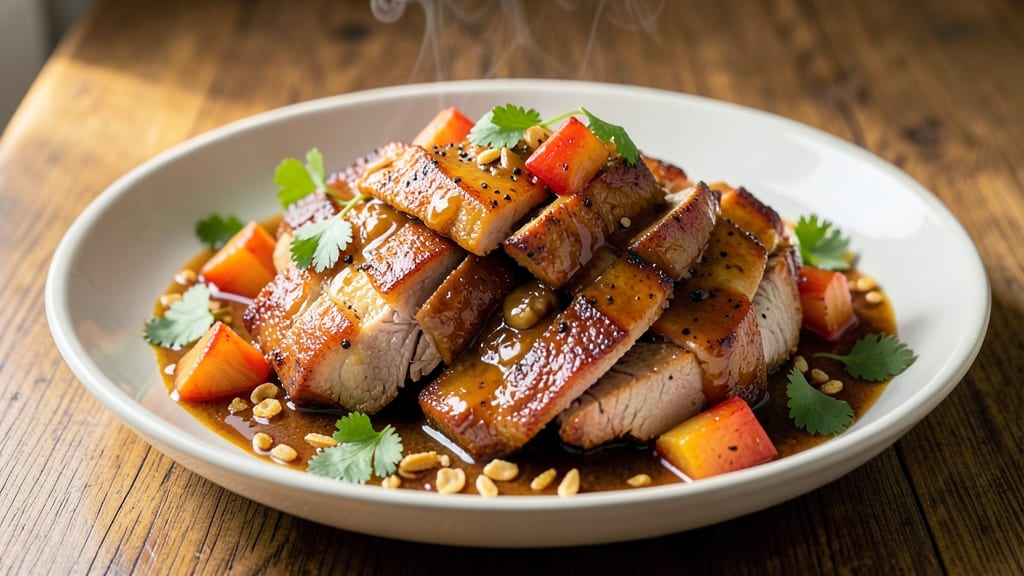
This pork belly pineapple adobo recipe transforms humble ingredients into a masterpiece of texture and flavor—crispy crackling that snaps like autumn leaves meets tender pork belly bathed in tangy-sweet vinegar magic. 🔥 After years of perfecting adobo techniques in my Atlanta kitchen, I discovered that pineapple's acidity and sweetness elevate the dish beyond traditional versions, creating a balance that's both nostalgic and innovative.
The secret lies in slow braising and precise caramelization, ensuring every bite delivers that perfect contrast of textures and flavors.
The process begins with marinating thick-cut pork belly in a blend of vinegar, soy sauce, and garlic, allowing the flavors to penetrate deeply. As it braises, the pork belly becomes fork-tender while developing that coveted crackling exterior.
The pineapple isn't just an afterthought—it's simmered with the pork, infusing the sauce with tropical sweetness that cuts through the richness. This isn't your average adobo; it's a dish that marries tradition with a modern twist, proving that Filipino comfort food can be both comforting and exciting.
What you'll end up with is a dish that's impossible to resist—golden-brown pork belly slices with crispy crackling that shatters at every bite, served atop a glossy sauce that's perfectly balanced between sweet, tangy, and savory.
The aroma alone will have everyone gathering around your table, and the first taste will have them asking for seconds. This recipe is designed to impress, whether you're cooking for family gatherings or treating yourself to a special meal.
Ready to master this technique? The key is patience—letting the pork belly braise slowly and the pineapple caramelize just enough to create that perfect harmony of flavors.
With each step, you're not just making a dish; you're creating an experience that brings the warmth of Filipino home cooking to your own table. Let's get started on this flavor adventure—your taste buds will thank you.
Ingredients for pork belly pineapple adobo
Pork belly's rich marbling meets pineapple's tropical sweetness in this tangy-sweet adobo masterpiece.
| Ingredient | Amount | Notes |
|---|---|---|
| Pork Belly 🐖 | 2 lb | Thick-cut, skin-on preferred |
| Fresh Pineapple 🍍 | 1 whole | Fresh, ripe, peeled and chopped |
| White Vinegar 💧 | 1 cup | White or cane vinegar |
| Soy Sauce 🥫 | ½ cup | Light or dark preferred |
| Garlic Cloves 🧄 | 8 cloves | Peeled, smashed |
| Brown Sugar 🍚 | ¼ cup | Packed |
| Black Peppercorns 🌶️ | 1 tsp | Freshly cracked |
| Bay Leaves 🌿 | 2 whole | Dried or fresh |
| Fresh Ginger 🧅 | 2 tbsp | Finely grated |
| Olive Oil 🫒 | 2 tbsp | For searing |
| Salt 🧂 | 1 ½ tsp | Diamond Crystal preferred |
| Honey 🍯 | 1 tbsp | For caramelizing |
The pork belly is non-negotiable here—thick-cut with skin-on for that legendary crackling. Look for well-marbled cuts at your local butcher or the meat department at Whole Foods or Kroger. If you can't find thick-cut, ask for a 1-inch thick slice. The pineapple should be ripe but firm—Costco's fresh pineapple is perfect for this, or grab a small whole one from Trader Joe's. Fresh ginger and garlic are essential for that bright, aromatic base—don't use powdered versions. For the vinegar, Heinz white vinegar is my go-to, but cane vinegar adds a subtle sweetness if you prefer.
No soy sauce? Coconut aminos work in a pinch—just know the flavor will be slightly different. Running out of brown sugar? White sugar plus a pinch of molasses mimics the depth. Fresh ginger too spicy? Reduce to 1 tbsp and add 1/2 tsp ground ginger. The honey is optional but helps caramelize the sauce beautifully—Manuka honey adds an extra floral note if you're feeling fancy. For the crackling, pat the pork belly dry before searing—this is the secret to that perfect crisp. If you're short on time, you can skip the honey entirely and just use extra brown sugar.
This dish tastes even better the next day—plan ahead. Store the pork belly and sauce separately in airtight containers for 3-4 days in the fridge. The sauce can be frozen for up to 3 months, though the texture changes slightly when reheated. For serving, I like to reheat the pork belly in the sauce over low heat for about 10 minutes—just until warmed through. The crackling stays crispy if you reheat it carefully. Leftovers make amazing sandwiches or fried rice—don't waste a bite
Why You'll Love This Recipe
- One-Pan Magic: I swear by this for lazy nights—the pork belly renders its own fat, the pineapple caramelizes in the same pan, and you’re left with zero dishes. Honestly, that crispy skin? It peels right off like it’s begging to be eaten.
- Sweet-Savory Balance: The vinegar and soy sauce cut through the pork’s richness while the fresh pineapple adds bright, juicy contrast. Between us, that first bite of tender meat with tangy-sweet glaze? It’s the kind of flavor that makes you pause mid-chew.
- Meal Prep Hero: This keeps perfectly for days—reheat the pork belly slices with a splash of water, and the sauce thickens into a sticky, crave-worthy glaze. My lunchbox gets packed with these leftovers every week.
- Budget Stretch: Pork belly feels fancy, but the adobo sauce stretches it into multiple meals. I’ll be real: one slab feeds my family for three lunches, and the pineapple’s acidity keeps it from getting bland. Smart spending, delicious eating.
Step-by-step instructions for pork belly pineapple adobo
Here's how to transform simple ingredients into a dish with irresistible crackling and vibrant flavors.
🔥 Step 1: Render the Pork Belly Fat for Maximum Crisp
Place the 2 lb pork belly skin-side down in a large, heavy pot or Dutch oven. I use a Dutch oven for even heat distribution and maximum crispiness. Preheat the oven to 425°F while you work.
Add the 2 tbsp olive oil to the pot and place it over medium-low heat. The goal is to render the fat slowly and evenly—this prevents burning while building layers of flavor. Let it cook undisturbed for 45-60 minutes, spooning the rendered fat over the pork occasionally to ensure even cooking. You'll know it's ready when the skin turns deep golden brown and the fat underneath is crispy enough to crackle when you press it gently with tongs.
🍳 Step 2: Build the Tangy-Sweet Adobo Marinade
While the pork belly renders, prepare the marinade by combining the 1 cup white vinegar, 0.5 cup soy sauce, 0.25 cup packed brown sugar, 1 tbsp honey, 2 tbsp finely grated fresh ginger, 8 smashed garlic cloves, 2 whole bay leaves, and 1 tsp freshly cracked black peppercorns in a large bowl. Mix well until the sugar and honey dissolve completely.
Next, peel and chop the 1 whole fresh pineapple into ½-inch chunks, reserving the juices. Add the pineapple and its juices to the marinade and stir. The pineapple's natural acidity will help tenderize the pork while adding sweetness to balance the tang. Let this mixture sit at room temperature for 10 minutes to allow the flavors to meld.
🥘 Step 3: Braise the Pork for Tender Perfection
Once the pork belly is crispy, carefully flip it skin-side up and increase the heat to medium-high. Pour the marinade and pineapple mixture over the pork, making sure it's fully submerged. Bring to a simmer, then reduce heat to low and cover with a tight-fitting lid. Here's the thing—braising at this stage ensures the pork becomes fork-tender while absorbing all those delicious flavors.
Transfer the pot to the preheated 425°F oven and braise for 1 hour and 30 minutes, or until the pork is fork-tender. You'll know it's done when a knife slides in easily and the internal temperature reaches 205°F. The skin should remain crispy, and the pork should pull apart effortlessly.
⏰ Step 4: Finish with Crispy Skin and Glazed Pineapple
Remove the pork belly from the oven and transfer it to a cutting board. Let it rest for 10 minutes while you reduce the braising liquid. Strain the liquid through a fine-mesh sieve into a saucepan, discarding the bay leaves and pineapple chunks (or save them for garnish if you prefer). Simmer the liquid over medium-high heat for 5-7 minutes until it thickens slightly and coats the back of a spoon.
Slice the pork belly into ½-inch thick pieces, keeping the crispy skin intact. Arrange the slices on a serving platter and spoon the reduced sauce over the top. Garnish with the reserved pineapple chunks and serve immediately. The contrast of crispy pork belly, tender meat, and sweet-tangy sauce is what makes this dish truly special.
Pro Tips For Making Pork Belly Pineapple Adobo
- CHAR THE PINEAPPLE FIRST: Fresh pineapple releases its sweetness and softens when charred—don’t skip this. Cut into chunks, toss with 1 tablespoon oil, and sear over high heat for 3-4 minutes until blackened in spots. I used to just slice it raw, and the dish tasted flat until I tried this.
- SIMMER LOW AND SLOW: After the initial sear, reduce heat to medium-low and let the adobo bubble gently. Rushing this step makes the pork belly tough—aim for 45-60 minutes until it’s fork-tender. I learned this the hard way when my first batch turned out chewy.
- USE LESS SOY SAUCE: Start with just 2 tablespoons and taste as you go—too much overpowers the pork. The vinegar and pineapple already pack enough umami. My grandmother swore by this, and she was right: balance is everything.
- SKIP THE PEEL ON GARLIC: Minced garlic burns fast and ruins the dish. Smash the cloves with the flat side of your knife first, then finely chop—this keeps the flavor without the bitterness. Sounds weird, but it works every time.
Best sauces and condiments for these flavors
Tangy Vinegar Sauce
This dish's signature sauce is all about balance—1 cup white vinegar cuts through the pork's richness while ½ cup soy sauce adds umami depth. I like to use Heinz white vinegar for consistency, but cane vinegar adds subtle sweetness.
The ¼ cup brown sugar and 1 tbsp honey create that caramelized glaze that makes every bite irresistible. 💛
Don't skip the ginger and garlic—they're the aromatic backbone. I always use fresh ginger (about 2 tbsp grated) and 8 smashed garlic cloves for maximum flavor impact.
The black peppercorns add a subtle heat that rounds out the sauce beautifully. Pro tip: Let the sauce reduce slightly at the end for a thicker, more concentrated flavor.
Sweet Pineapple Glaze
The 1 whole fresh pineapple transforms this into something special. I chop it into ½-inch chunks and simmer them right in the braising liquid, which infuses the sauce with tropical sweetness.
The pineapple's natural juices help tenderize the pork while balancing the tangy vinegar. For extra richness, I sometimes add 1 tbsp pineapple juice from a can to the marinade before braising.
If you're short on time, you can use ½ cup canned pineapple chunks (drained), but fresh is always better. The pineapple also adds beautiful color contrast when served—golden pork belly against bright yellow chunks makes the dish visually stunning. Save some chunks for garnishing to add freshness with every bite.
Umami Boosters
For an extra umami kick, I sometimes add 1 tbsp fish sauce to the marinade—it deepens the savory notes without overpowering. If you're avoiding fish sauce, 1 tsp mushroom powder works as a great alternative.
The bay leaves contribute earthy notes that disappear during cooking but enhance the overall depth of flavor. Don't remove them until after braising.
Another trick I learned from my time in Charleston is to add 1 tsp toasted sesame oil to the finished sauce just before serving. It adds a nutty aroma that pairs perfectly with the pork belly's richness.
Just a few drops are enough—too much can overpower the delicate balance of flavors.
Spicy Variations
Want to add some heat? Toss in 1 tbsp gochujang (Korean chili paste) with the marinade for a smoky-spicy kick. For a milder heat, ½ tsp red pepper flakes or 1 tsp sriracha work beautifully.
I've also experimented with 1 tbsp chili crisp for a crispy, spicy garnish that adds texture and heat all at once.
If you love Thai flavors, try adding 1 tbsp fish sauce and 1 tsp palm sugar to the marinade. The combination creates a perfect bridge between Filipino adobo and Thai-inspired sweet-spicy profiles. The pineapple's acidity helps balance the heat beautifully, making it a crowd-pleaser for spice lovers.
Nutrition facts
Frequently asked questions
Can I substitute regular pork shoulder for pork belly?
The texture will be completely different! Pork belly's fat content creates that legendary crispy crackling and tender meat. If you must substitute, use bone-in pork shoulder and increase cooking time by 30-45 minutes—but you'll miss the crackling magic. For best results, stick with pork belly or look for thick-cut pork loin with skin.
How do I get the pork belly skin extra crispy?
Pat the skin completely dry with paper towels before cooking—moisture prevents crispiness. After rendering the fat, place the pork belly skin-side up on a wire rack over a baking sheet in a 425°F oven for 15-20 minutes before braising. This double-crisping technique guarantees that perfect shatter.
What if I don't have fresh pineapple?
Use ½ cup pineapple juice plus ½ cup canned pineapple chunks (drained) instead of fresh. For extra sweetness, add 1 tbsp extra brown sugar. The texture won't be identical, but the flavor will still shine. If you're really short on time, ½ cup mango chunks work as a decent substitute.
Can I make this in a slow cooker?
Yes! After searing the pork belly, transfer it to your slow cooker with the marinade. Cook on low for 6-8 hours or high for 4-5 hours. The skin may not be as crispy, but the meat will be incredibly tender. For extra crispiness, broil for 5 minutes before serving to restore some of that crackling texture.
Why does my sauce taste too vinegary?
This usually happens if the sauce reduces too much. Balance it by adding 1 tbsp honey or 1 tsp brown sugar to sweeten, or ½ cup coconut milk to mellow the acidity. For extra depth, stir in 1 tsp fish sauce or ½ tsp soy sauce to add umami. Always taste as you reduce!