
Main Courses
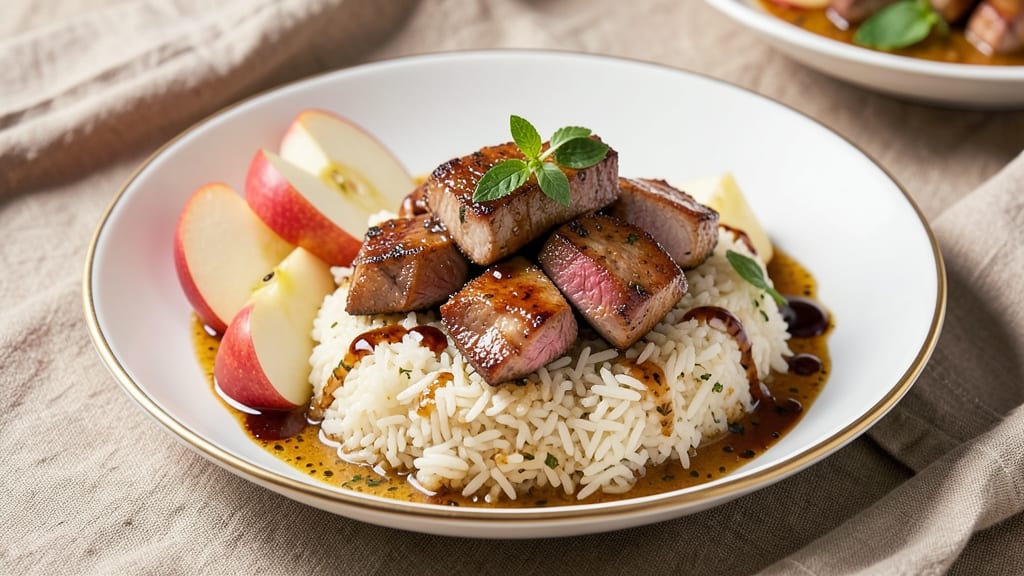
This one-pot pork apple rice recipe transforms simple ingredients into a harmonious blend of sweet and savory flavors that’ll have everyone asking for seconds.
The secret lies in slow-braising tender pork with apples until they caramelize into a rich, sticky glaze, then simmering it all with fragrant jasmine rice for a single-pan meal that’s impossible to resist.
The beauty of this dish is its balance—sweet apples mellow the richness of the pork, while aromatic spices and a touch of soy sauce add depth. I’ve perfected this technique to ensure the rice absorbs all the flavors without turning mushy, and the pork stays fork-tender.
It’s the kind of recipe that feels like a restaurant-quality meal but comes together in just one pot.
By the time you’re done, you’ll have golden-brown pork slices, tender apples that’ve melted into the sauce, and perfectly fluffy rice all in one dish. The aroma alone will have your kitchen smelling like a cozy autumn dinner, and the first bite delivers that perfect harmony of textures and flavors.
This is comfort food at its finest—warm, satisfying, and effortless.
Serve it with a crisp green salad to cut through the richness or pair it with a glass of dry Riesling to complement the apple’s natural sweetness. The leftovers reheat beautifully, making this an ideal meal for busy weeknights or when you’re feeding a crowd. Let’s get cooking!
Ingredients for pork apple rice
Sweet apples and savory pork meet fragrant jasmine rice in this one-pot masterpiece.
| Ingredient | Amount | Notes |
|---|---|---|
| Boneless Pork Loin 🥩 | 1 ½ lb | Cut into 1-inch cubes |
| Honeycrisp Apples 🍎 | 2 medium | Peeled and sliced into wedges |
| Jasmine Rice 🌾 | 1 cup | Uncooked, long-grain preferred |
| Chicken Broth 💧 | 2 cups | Low-sodium preferred |
| Dry Sherry 🍷 | ¼ cup | Substitute with apple juice |
| Apple Cider Vinegar 🍋 | 2 tbsp | For brightness |
| Brown Sugar 🍚 | ¼ cup | Packed measurement |
| Ginger Root 🌿 | 1 tbsp | Freshly grated |
| Garlic Cloves 🧄 | 3 cloves | Minced finely |
| Soy Sauce 🍜 | 2 tbsp | Low-sodium preferred |
| Olive Oil 🫒 | 2 tbsp | For searing pork |
| Salt 🧂 | 1 ½ tsp | Kosher or sea salt |
| Black Pepper 🌶️ | ½ tsp | Freshly ground |
| Ground Cinnamon 🍃 | ¼ tsp | For warmth |
| Star Anise 🌟 | 1 whole | Optional aromatic |
The pork cut matters here—boneless loin stays tender and absorbs flavors beautifully. Costco or Trader Joe's often have pre-cut pork loin at great prices, but if buying whole, ask the butcher to trim it for you. Honeycrisp apples are ideal—they hold their shape while caramelizing, but Fuji or Gala work too. Look for apples that are firm but yield slightly when pressed. The jasmine rice should be uncooked, long-grain—any brand works, but Lotus Foods or Tilda are reliable. For the broth, low-sodium is key to balancing the dish's sweetness.
No sherry? Apple juice or white wine works perfectly—just reduce the amount by half to keep the dish balanced. Fresh ginger is non-negotiable here—it adds that bright, zesty kick that dried just can't match. Penzeys or the bulk section at Whole Foods are great for quality spices. Star anise is optional but adds a subtle licorice note that pairs beautifully with the apples. If you're short on time, pre-minced garlic from a jar is fine, but fresh is always better. The soy sauce should be low-sodium to avoid over-salting the dish, especially since the broth already contains salt.
This dish reheats beautifully—honestly tastes better the next day as flavors meld. Store leftovers in an airtight container in the fridge for up to 5 days. For freezing, portion into individual containers and it'll keep for 3 months. The rice absorbs all the flavors, so don't skip the initial simmer time—it's what makes this one-pot magic. Double the recipe for a crowd; the flavors only get better when scaled up. And if you're serving with salad, toss it with a light vinaigrette to cut through the richness.
Why You'll Love This Recipe
- One-Pan Magic: I swear by this—just toss the pork, apples, and rice into one pot with the broth, and let it simmer. No chopping boards, no extra pans, and honestly? The cleanup is just rinsing a single pot.
- Sweet-Savory Balance: That Honeycrisp apple caramelizing into the pork? It’s like a hug in your mouth—tender, slightly tangy, with a touch of sherry depth that makes every bite feel special. The rice soaks up all the juices, so you’re basically eating a flavor bomb.
- Weeknight to Weekend: Between us, this feeds a crowd without stress. Double the batch on Sunday, and you’ve got lunch for Monday and Tuesday. (Yes, even on a Tuesday night.) The apples add freshness, but it still feels hearty enough for company—just garnish with a sprinkle of parsley.
- Budget-Friendly Luxury: Pork loin stretches far, and Honeycrisp apples last forever if you store them right. The sherry and broth elevate it, but you’re not breaking the bank. Leftovers? Even better cold the next day—packed lunches, anyone? This is comfort food that doesn’t guilt you.
Step-by-step instructions for pork apple rice
A harmonious blend of sweet and savory flavors comes together in this one-pot dish.
Sear the Pork for Maximum Flavor
Heat the 2 tablespoons olive oil in a large Dutch oven over medium-high heat until shimmering. Add the 1.5 lb boneless pork loin cut into 1-inch cubes, working in batches to avoid crowding. Sear each side for 2-3 minutes until the pork develops a deep golden crust and releases easily from the pan.
This initial searing creates a flavorful crust that prevents the pork from drying out during the long cook. I like to press down gently on the pork cubes during the first minute—this prevents them from curling and ensures even contact with the pan. Once all pork is browned, transfer it to a plate and set aside.
Build the Sweet-Savory Base
In the same Dutch oven, reduce heat to medium and add the 3 cloves minced garlic and 1 tablespoon freshly grated ginger root. Sauté for 30 seconds until fragrant—you should smell the aromatic oils wafting up. Add the 2 tablespoons soy sauce, 1.5 teaspoons salt, and 0.5 teaspoon black pepper, stirring to combine.
Next, pour in the 0.25 cup dry sherry and scrape up any browned bits from the bottom of the pan. These flavorful bits, called fond, add depth to the dish. Let the sherry simmer for 2 minutes until slightly reduced. This step forms the flavor foundation that will carry through the entire recipe.
Add Apples and Sweet Components
Add the 2 medium peeled and sliced Honeycrisp apples, 0.25 cup packed brown sugar, 2 tablespoons apple cider vinegar, and 1 whole star anise (if using). Stir well to coat the apples in the sweet-savory mixture. Cook for 3-4 minutes until the apples begin to soften slightly and release their juices.
The apple cider vinegar brightens the dish while the brown sugar caramelizes slightly, creating a beautiful contrast with the savory pork. The star anise adds subtle warmth—remove it after cooking if you prefer a cleaner flavor profile. This is where the sweet and savory elements begin to marry perfectly.
Combine All Ingredients for One-Pot Cooking
Return the seared pork to the Dutch oven. Add the 1 cup uncooked jasmine rice, 2 cups chicken broth, and 0.25 teaspoon ground cinnamon. Stir everything together gently, ensuring the rice is evenly distributed. Bring the mixture to a gentle boil over medium-high heat, then immediately reduce heat to low. Cover tightly with a lid.
Simmer for 20 minutes without lifting the lid. This allows the rice to absorb the liquid gradually and develop its characteristic texture. After 20 minutes, check the rice—it should be tender but still have a slight bite. If the liquid has mostly absorbed but the rice isn't fully cooked, add 2-3 tablespoons hot chicken broth and continue cooking for another 5 minutes.
Rest and Serve with Perfect Texture
Once the rice is tender and the pork is fork-tender (internal temperature should reach 160°F), remove the dish from heat and let it rest for 10 minutes covered. This resting period allows the flavors to meld and the rice to finish absorbing any remaining liquid, resulting in a perfectly balanced one-pot meal.
Gently fluff the rice with a fork before serving. The dish should have tender pork cubes, sweet caramelized apples, and perfectly cooked rice all infused with the aromatic flavors of ginger, garlic, and star anise. Serve immediately while still hot, as the flavors continue to develop even after cooking.
Pro Tips For Making Pork Apple Rice
- CUT PORK INTO EVEN SLICES: After slicing the pork loin, take 2 minutes to eyeball the pieces—aim for ½-inch thickness. Thicker slices stay chewy; thinner ones dry out. If your knife skills are rusty, freeze the meat for 15 minutes first—it’s less likely to tear.
- PEEL APPLES AFTER COOKING: Honeycrisp apples turn mushy when prepped raw, but they hold shape beautifully if added whole and peeled after simmering. Just slice them thick (½-inch) and drop them in the last 10 minutes—no one wants sad, mealy fruit.
- SIMMER THE SHERRY FIRST: Pour the dry sherry directly into the hot pan before adding pork—this burns off the alcohol faster. Skip the "deglaze later" step; the aroma locks in immediately, and you’ll taste the depth instead of just the rice soaking up raw booze.
- STIR THE RICE ONCE: Jasmine rice needs minimal fuss. After adding broth, stir once to distribute grains, then cover and walk away. Peeking or stirring later turns it gummy—trust the steam to do the work. (Yes, even if you’re impatient like me.)
Common mistakes when making this recipe
Overcooking the Pork
One of the biggest mistakes is letting the pork dry out during the long cook. Since we're braising, the pork should be tender but still juicy—not tough or stringy. I’ve seen people walk away from the stove and forget about it, only to come back to rubbery meat.
Always check the internal temperature with a meat thermometer—remove the pork when it hits 160°F, not higher. If you're unsure, cut into a piece: it should be fork-tender with just a slight resistance. 🌡️
Skipping the Sear
Some cooks rush the searing step or skip it entirely, thinking the long braise will handle everything. But that golden crust is what locks in flavor and moisture. I’ve tried this dish without searing, and the pork ends up bland and watery.
Take your time with 2-3 minutes per side on medium-high heat—don’t crowd the pan, or the pork will steam instead of brown. Work in batches if needed, and press down gently to prevent curling.
Underestimating the Rice Time
The rice needs patience—don’t peek or stir too often, or you’ll disrupt the cooking process. I’ve seen people lift the lid after 10 minutes to check, only to find the rice half-cooked and the liquid boiling off.
Once you add the rice and broth, cover and simmer for the full 20 minutes without lifting the lid. Only then check for doneness. If it’s not quite there, add a splash of hot broth and give it another 5 minutes—no need to rush.
Ignoring the Resting Period
After cooking, many people dive right into serving without letting the dish rest. This is a big mistake—the flavors need time to meld, and the rice needs to finish absorbing any remaining liquid. I always let my pork apple rice rest for 10 minutes covered before serving.
This also helps redistribute the juices, ensuring every bite is moist and flavorful. Skipping this step can leave you with dry rice and uneven textures.
Overcrowding the Pot
Using a Dutch oven is perfect for this recipe, but it’s easy to overcrowd it with all the ingredients at once. When you add the rice, broth, and pork back together, make sure everything has room to breathe.
Overcrowding can lead to uneven cooking—some pork might stay undercooked while the rice gets mushy. If your pot looks packed, consider cooking the pork and apples first, then adding the rice separately in a second layer if needed. A well-distributed pot ensures even heat circulation. 🔥
Balancing Sweet and Savory
The magic of this dish lies in the harmony between sweet apples and savory pork. Some people add too much sugar or vinegar, throwing off the balance. I recommend tasting the sauce before adding the rice—it should be sweet but not cloying, with a bright tang from the vinegar.
If it’s too sweet, add a splash of broth or a pinch of salt to balance. Trust your taste buds: the flavors should complement, not overpower, each other.
Nutrition facts
Frequently asked questions
Can I substitute chicken or beef for the pork?
Chicken thighs work beautifully—they stay tender during the long cook and absorb flavors well. For beef, use chuck roast cut into 1-inch cubes and increase cooking time by 15-20 minutes to ensure tenderness. The apple and rice components remain the same, but adjust the broth quantity by ½ cup if using beef to account for its denser texture.
What's the best way to store leftovers?
Transfer leftovers to an airtight container and refrigerate for up to 5 days. For freezing, portion into individual containers and store for 3 months. Reheat gently in a skillet with 1 tablespoon broth to restore moisture—never microwave directly from the fridge, as it can make the rice dry. The flavors actually improve overnight!
How do I adjust this for a rice cooker?
Use the same ingredients but reduce the broth to 1.5 cups—rice cookers need less liquid. Sear the pork and apples as directed, then combine everything in the rice cooker. Cook on high for 25 minutes, then switch to keep-warm for 5 minutes to finish. The rice cooker's steam helps tenderize the pork while keeping the rice perfectly fluffy.
Can I make this dish spicier?
Add ½ teaspoon red pepper flakes or 1 teaspoon gochujang when building the sweet-savory base. For heat lovers, include 1 sliced Thai chili with the apples. Balance the spice with an extra ½ teaspoon salt to enhance all flavors. Start with small amounts—spice builds during the long cook!
Why does my rice turn out mushy?
Mushy rice usually means either too much liquid or lifting the lid too soon. Use 1 cup uncooked rice with 2 cups broth—no more. After adding rice, simmer covered for the full 20 minutes without peeking. If your rice cooker has a "white rice" setting, use that instead of manual adjustments. The rice should be tender but still slightly firm—it'll finish cooking while resting.