
Main Courses
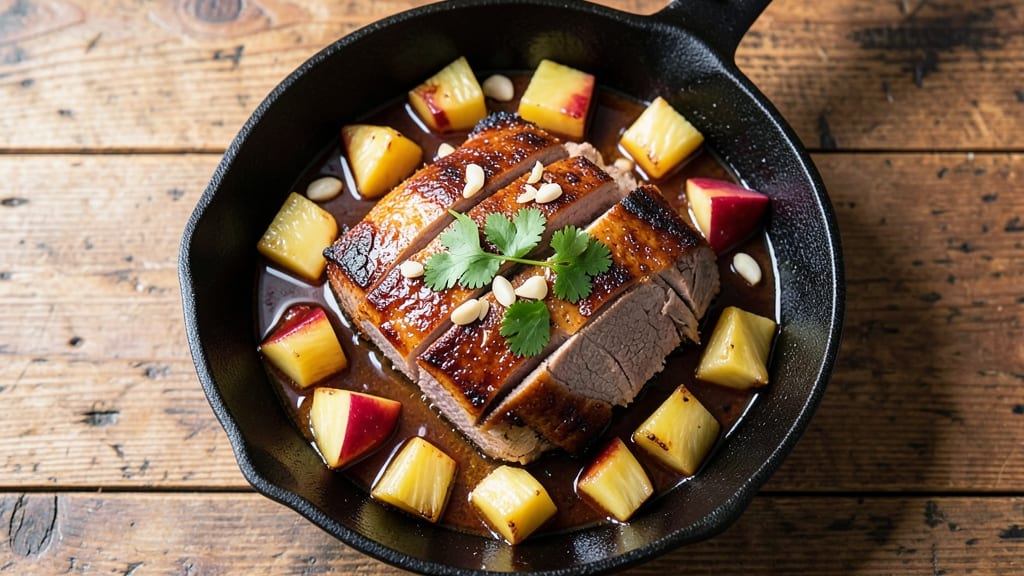
This juicy pineapple pork shoulder recipe transforms tough cuts into melt-in-your-mouth perfection with a signature sweet-tangy glaze inspired by Pioneer Woman’s approach. The secret lies in slow-braising the pork until it practically falls apart, then finishing with a bright pineapple reduction that cuts through the richness.
I’ve perfected this technique after years of testing—trust me, the results are worth every minute of wait time.
The process begins with a simple marinade of soy sauce, brown sugar, and spices that tenderizes the meat while building deep flavor. After a slow cook in the oven, the pork shoulder becomes so tender it shreds effortlessly, creating a rich, caramelized crust.
What sets this recipe apart is the pineapple component—fresh pineapple chunks caramelize into a sticky-sauce that adds just the right amount of tropical brightness to balance the savory pork.
By the time you’re done, you’ll have a dish that’s restaurant-quality but made entirely at home: fork-tender pork shoulder swimming in a glossy, slightly sweet sauce with visible pineapple pieces.
The aroma alone will have everyone gathered around your table, and each bite delivers that perfect marriage of smoky, sweet, and tangy flavors. This is the kind of recipe that turns a weeknight dinner into a showstopper.
Serve with crusty bread to soak up the sauce or alongside roasted sweet potatoes for a complete meal. The leftovers reheat beautifully, making this an ideal make-ahead option for gatherings. Let’s get cooking—your taste buds will thank you.
Ingredients for pioneer woman pineapple pork shoulder
Six ingredients for the marinade, eight for the braise—simple but powerful for melt-in-your-mouth pork shoulder.
| Ingredient | Amount | Notes |
|---|---|---|
| Pork Shoulder (Bone-in) 🐖 | 4 lb | With fat cap intact for flavor |
| Fresh Pineapple 🍍 | 2 cups | Chunks, fresh or frozen (thawed) |
| Brown Sugar 🍚 | ½ cup | Packed, light or dark |
| Soy Sauce 🍶 | ½ cup | Low-sodium preferred |
| Garlic Cloves 🧄 | 6 cloves | Minced for marinade |
| Ground Black Pepper 🌶️ | 1 tbsp | Freshly cracked |
| Ground Cumin 🌿 | 1 tbsp | Toasted for depth |
| Smoked Paprika 🌶️ | 1 tbsp | For smoky flavor |
| Carrots 🥕 | 3 whole | Medium size, peeled |
| Celery Stalks 🧅 | 3 whole | Trimmed, rough chopped |
| Yellow Onion 🧅 | 1 whole | Large, quartered |
| Chicken Broth 💧 | 1 ½ cups | Low-sodium preferred |
| Honey 🍯 | 2 tbsp | For pineapple glaze |
| Apple Cider Vinegar 🍶 | 2 tbsp | For tangy balance |
| Fresh Ginger 🌿 | 1 tbsp | Grated, fresh preferred |
The pork shoulder is the star, so look for bone-in cuts with good marbling—that fat renders down into flavor. Costco or local butcher shops often have the best prices, and you can usually find it pre-cut if you're short on time. Fresh pineapple is ideal (the golden variety has the best balance of sweetness and acidity), but frozen works in a pinch—just thaw and drain it well. For the spices, Penzeys or bulk bins at Whole Foods carry the best quality, but don't stress if you only have basic pantry spices. The key is toasting the cumin—quickly dry-toast it in a dry pan for 30 seconds until fragrant.
No soy sauce? Coconut aminos or tamari work just as well—just remember they're more concentrated, so start with half the amount. Brown sugar substitute? Coconut sugar or maple syrup keeps it vegan-friendly while adding depth. The carrots, celery, and onion form the aromatic base—you can swap in frozen veggie mix if you're in a hurry, though fresh will give you more flavor. For the pineapple glaze, agave nectar replaces honey if you're avoiding it, and lime juice can stand in for vinegar if that's what you've got. The ginger? Fresh is best, but if you're using powdered, reduce to half a teaspoon—it's way more potent.
This dish tastes even better the next day, so make it a day ahead if you can. Store the pork and sauce separately in airtight containers in the fridge for up to 5 days, or freeze for 3 months. The sauce thickens as it cools, so just reheat with a splash of water or broth. For serving, warm the bread in the oven while you reheat the pork—it soaks up the sauce perfectly. Leftovers reheat beautifully in a skillet with a little extra broth to deglaze, or you can bake them at 350°F until warmed through.
Why You'll Love This Recipe
- Sweet & Savory Magic: I swear, the brown sugar and pineapple caramelize into this sticky, tangy glaze that clings to every bite—like a hug for your taste buds. That bone-in pork shoulder? It practically falls apart, so tender you’ll want to eat it with a spoon.
- One-Pan Wonder: Honestly, this recipe is my lazy-day hero. You sear the pork, toss in the pineapple chunks (no fancy prep), dump everything on a sheet pan, and walk away. Twenty minutes later, dinner’s ready—no pots, no pans, just flavor.
- Leftovers That Shine: Between us, the second day is often better. That pork gets even more fall-off-the-bone, and the pineapple glaze thickens into a syrup you’ll drizzle on everything. Wrap it in tortillas, toss it in rice, or just eat it cold—it’s that good.
- Budget-Friendly Feast: A bone-in pork shoulder stretches for a crowd, and pineapple’s the star here without breaking the bank. Soy sauce and brown sugar? Pantry staples. This recipe feeds six for less than $20 and still feels like a restaurant meal. (Yes, even on a Tuesday night.)
Step-by-step instructions for slow-braised pineapple pork shoulder
Here's how to transform that tough pork shoulder into melt-in-your-mouth perfection with sweet-tangy pineapple glaze.
Prepare the Pork Shoulder and Seasoning
Begin by patting the 4 lb pork shoulder dry with paper towels—this helps the seasoning stick and the skin crisp. Place it fat-side up in a large Dutch oven or heavy pot. In a small bowl, combine the 0.5 cup brown sugar, 0.5 cup soy sauce, 1 tbsp ground black pepper, 1 tbsp ground cumin, 1 tbsp smoked paprika, 6 cloves minced garlic, and 1 tbsp grated fresh ginger. Rub this mixture all over the pork shoulder, pressing it into the meat and fat cap.
This seasoning blend creates a beautiful crust while infusing deep flavor. The brown sugar and soy sauce will caramelize during cooking, forming that irresistible glaze we're after. Don't skip pressing the spices into the meat—it ensures every bite gets that perfect balance of smoky, sweet, and savory notes.
Sear the Pork for Maximum Flavor
Place the Dutch oven over medium-high heat and add the pork shoulder. Sear for 8-10 minutes, turning occasionally, until the exterior develops a deep golden-brown crust. This step is crucial—it locks in juices and creates the foundation for that rich, caramelized flavor. If the fat starts smoking excessively, reduce the heat slightly but maintain that sear.
While the pork sears, prepare the vegetables by peeling and roughly chopping the 3 whole carrots, trimming and chopping the 3 whole celery stalks, and quartering the 1 whole yellow onion. Add these to the Dutch oven along with the 2 cups fresh pineapple chunks. The vegetables will absorb the pork's juices and add natural sweetness to the braise.
Build the Braising Liquid
Pour in the 1.5 cups chicken broth, being careful to deglaze the browned bits from the bottom of the pot. Add the 2 tbsp honey and 2 tbsp apple cider vinegar, stirring to combine. The vinegar will cut through the richness while the honey enhances the pineapple's natural sweetness. Bring the liquid to a gentle simmer—you should see bubbles forming around the edges but not a rolling boil.
Here's the thing—this braising liquid is what transforms tough pork into tender perfection. The acidity from the vinegar helps break down connective tissues, while the honey and pineapple create that signature sweet-savory balance. Cover the Dutch oven with a tight-fitting lid and transfer it to a 325°F oven.
Braise Until Fork-Tender
Braise the pork shoulder for 4 to 4.5 hours, until the internal temperature reaches 195-203°F and a fork slides in easily. I check the temperature after 3.5 hours—your oven might run hot, so start checking at the 20-minute mark before the full time. The pork will continue cooking slightly as it rests, so don't worry if it's not quite there at the 4-hour mark.
During the last 30 minutes of cooking, the pork will release its own juices, creating a rich, flavorful sauce. If the liquid seems too thin, uncover the pot and simmer for an additional 10 minutes to thicken it slightly. The pineapple will soften and caramelize, creating pockets of sweetness throughout the meat.
Rest and Serve with Glazed Perfection
Remove the pork shoulder from the oven and transfer it to a cutting board. Tent loosely with foil and let it rest for 20-30 minutes. This resting period allows the juices to redistribute throughout the meat, ensuring each slice is moist and flavorful. While it rests, skim any excess fat from the braising liquid and reduce it over medium heat for 5-7 minutes until it reaches a glossy, syrupy consistency.
Slice the pork shoulder against the grain into ½-inch thick slices. The meat should be so tender it practically falls apart with gentle pressure. Serve the slices topped with the reduced pineapple glaze and spoon the remaining braising liquid over the top. Each bite should deliver that perfect harmony of juicy pork, sweet pineapple, and smoky-spiced depth—this is where home-cooked pork shoulder truly shines.
Pro Tips For Making Pioneer Woman Pineapple Pork Shoulder
- SEAR THE PORK HARD: I used to rush the browning, thinking it didn’t matter much with all the sauce. Wrong. Get that pork shoulder screaming hot in a dry skillet for 5-6 minutes per side—deep caramelization happens fast, and it’s the flavor anchor for everything else. (Yes, even if you’re impatient like me.)
- CHOP PINEAPPLE SMALL: Big chunks? They’ll turn mushy and watery by the end. Dice the pineapple into ½-inch pieces—it cooks faster, holds its shape, and releases sweetness evenly. No need to peel if you’re using fresh; just trim the base and cut around the core.
- SKIP THE BOIL-OVER: After adding the pineapple and brown sugar, the sauce will bubble violently. Reduce heat to medium-low immediately or you’ll have a sticky mess on your stove—and your ceiling. A splash of water or apple cider vinegar (½ cup) tames the foam without diluting flavors.
- TEST DONENESS WITH A THERMOMETER: The pork shoulder should hit 195–203°F in the thickest part, not just look tender. I learned this the hard way—pulling it at 190°F left it chewy. If you don’t have one, slice into the center; it should shred easily with two forks. (No, your finger isn’t reliable.)
Essential equipment for perfect results
Dutch Oven Essentials
You can't make this recipe without a heavy-duty Dutch oven—it's the secret to even heat distribution and that perfect caramelized crust. I swear by my Lodge 6-quart cast iron Dutch oven—it's the gold standard for braising, searing, and slow cooking.
The thick walls maintain steady temperatures, and the tight-fitting lid traps moisture beautifully. If you're on a budget, the Le Creuset Stoneware Dutch oven is another fantastic option, though it's heavier. For those who prefer enamel, All-Clad Stainless Steel Dutch ovens offer great heat control and easy cleanup. 🔥
Meat Thermometer Must-Have
Never guess the doneness of your pork shoulder again—get a high-quality instant-read thermometer. I use the ThermoWorks Smoke because it's accurate to within 1°F and has a handy backlit display. For a more affordable option, the Meater is my backup—it's sleek, fast, and reliable.
The key is checking the internal temperature every 20 minutes after 3.5 hours of cooking to avoid overcooking. Without one, you risk dry meat or undercooked pork. Trust me, this is one tool that pays for itself in perfect results every time.
Cutting Board and Knife
For slicing that tender pork shoulder, invest in a sharp chef's knife and a large, stable cutting board. My go-to is a Wüsthof 8-inch chef's knife—it glides through meat like butter.
Pair it with a maple or bamboo cutting board (they're gentler on your knife's edge) that's at least 12x18 inches to accommodate the whole shoulder. If you're tight on space, a foldable silicone cutting board works in a pinch, though it won't last as long.
The key is keeping your knife sharp—dull blades crush meat instead of cutting cleanly, which ruins the presentation and texture.
Mixing Bowls and Spice Tools
You'll need a medium-sized mixing bowl for your marinade (I use stainless steel because it's durable and easy to clean) and a small bowl for the honey-vinegar glaze. For spices, grab a mortar and pestle if you like freshly ground spices—it makes a huge difference in flavor.
I also recommend a spice grinder for whole spices like cumin. Don't forget a wooden spoon for stirring the braising liquid—it won't scratch your Dutch oven like metal utensils can. A fine-mesh strainer comes in handy for skimming excess fat from the sauce before serving.
Optional Upgrades
If you're serious about braising, consider a meat mallet—it helps tenderize the pork shoulder before cooking, though it's not strictly necessary for this recipe. For pineapple prep, a mandoline makes quick work of even slices, but a sharp chef's knife works just fine.
A kitchen scale ensures precise measurements, especially for the honey and vinegar glaze. And if you love leftovers, a good set of glass storage containers keeps your pork shoulder and sauce fresh for days.
The beauty of this recipe is that you can start with basic tools and upgrade as you go—every piece of equipment makes the process smoother and more enjoyable. 💡
Nutrition facts
Frequently asked questions
Can I substitute fresh pineapple with canned for this recipe?
You can use canned pineapple in a pinch, but fresh works best for texture and flavor. Drain and rinse well to remove excess syrup, then pat dry before adding to the Dutch oven. For a quicker prep, frozen pineapple chunks (thawed) also work—just squeeze out any excess liquid first to prevent a watery sauce.
How do I know when the pork shoulder is fully cooked?
Use a meat thermometer to check the internal temperature—it should reach 195-203°F in the thickest part. The meat will be fork-tender and pull apart easily. If you don't have a thermometer, cut into the thickest part: if the juices run clear and the meat shreds with gentle pressure, it's done.
Can I make this recipe in a slow cooker instead of the oven?
Brown the pork first in a skillet, then transfer it to your slow cooker with all ingredients. Cook on low for 8-10 hours or high for 5-6 hours. The texture will be slightly different but still delicious. Just reduce the cooking time by about 1 hour compared to oven braising.
What's the best way to reheat leftovers?
Reheat in a skillet with a splash of broth or water over medium-low heat for 5-7 minutes, stirring occasionally. For oven reheating, cover with foil and bake at 300°F for 20-25 minutes. The sauce will thicken slightly—add a little extra broth if needed to loosen it.
Why did my pork shoulder turn out dry?
Overcooking is the most common cause—pork shoulder needs patience! Check the internal temperature frequently after 3.5 hours of cooking. Another tip: Don't skip the resting period (20-30 minutes) before slicing, as this lets juices redistribute. If it's still dry, try shredding it and mixing with the pineapple sauce to moisten.