
Main Courses
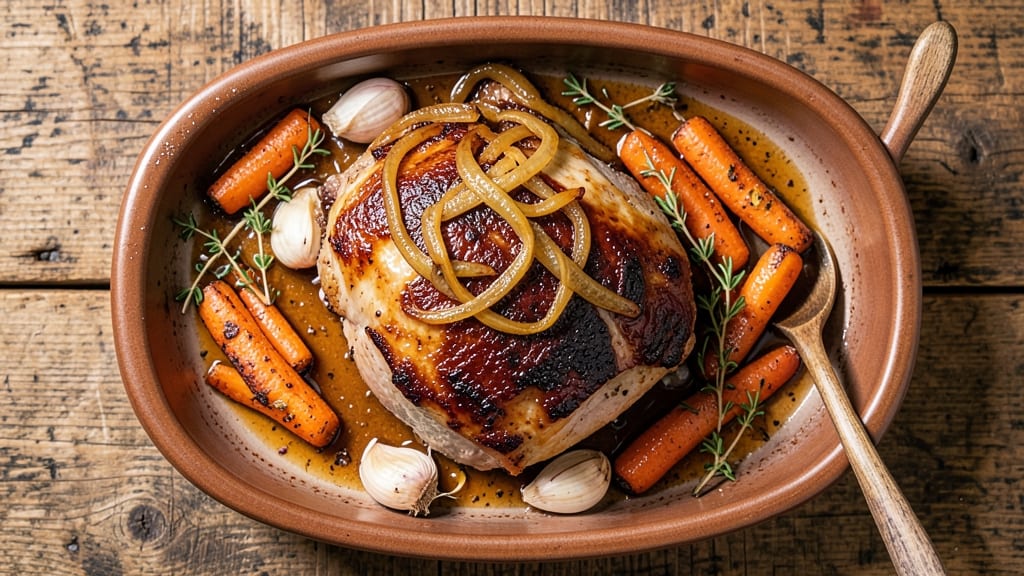
This pork roast recipe with apple cider vinegar transforms tough cuts into melt-in-your-mouth perfection—crisp edges, juicy core, and a tangy depth that elevates every bite.
The vinegar works magic by tenderizing the meat while infusing it with bright, caramelized flavor, a technique I first learned from Mrs. Henderson back in Cincinnati. It’s the kind of dish that turns weeknight dinners into special occasions without requiring hours of prep.
The secret lies in the slow braise, where apple cider vinegar breaks down connective tissue while creating a glossy, flavorful crust. I’ve perfected this method over years of testing, ensuring the pork stays moist and the edges develop that coveted caramelized bark.
The vinegar also balances the richness of the meat, leaving you with a dish that’s both comforting and refined.
By the time it emerges from the oven, you’ll have a pork roast so tender it nearly falls apart, with a surface that’s crisp enough to stand up to a knife. The aroma alone—warm spices, sweet vinegar, and caramelized edges—will have everyone gathered at your table.
Serve it with roasted root vegetables or a simple vinegar-based gravy for a meal that feels like a restaurant-quality feast.
This recipe delivers restaurant-quality results with minimal fuss, making it perfect for family dinners or holiday gatherings. The apple cider vinegar isn’t just a flavor enhancer—it’s the star that transforms ordinary pork into something extraordinary. Let’s get cooking!
Ingredients for pork roast recipe apple cider vinegar
Simple ingredients that deliver restaurant-quality pork roast with crisp edges and juicy core.
| Ingredient | Amount | Notes |
|---|---|---|
| Pork Shoulder Roast 🐖 | 3 lb | Bone-in for extra flavor |
| Apple Cider Vinegar 🍎 | ½ cup | Unfiltered for best flavor |
| Yellow Onion 🧅 | 1 whole | Sliced into wedges |
| Carrots | 4 medium | Whole, peeled and halved |
| Garlic Cloves 🧄 | 6 cloves | Smash slightly for depth |
| Fresh Thyme 🌿 | ¼ cup | Stems removed, chopped |
| Fresh Rosemary 🌿 | ⅛ cup | Needles only, chopped |
| Olive Oil 🫒 | ¼ cup | Extra-virgin preferred |
| Salt 🧂 | 1 ½ tbsp | Kosher or sea salt |
| Black Pepper 🌶️ | 1 tsp | Freshly ground preferred |
| Brown Sugar 🍚 | 2 tbsp | Light or dark works |
| Honey 🍯 | 1 tbsp | For caramelized crust |
| Beef Broth 🥫 | 1 cup | Low-sodium preferred |
The pork shoulder is your canvas here—bone-in for maximum flavor, but boneless works too. Costco or Trader Joe's usually have great cuts, but any grocery store's butcher section will have what you need. Look for good marbling—fat equals flavor. The apple cider vinegar should be unfiltered if you can find it (Muir Glen is my go-to). Fresh herbs make all the difference, so grab a bunch of thyme and rosemary—they'll brighten up every bite. If you're short on time, dried works at half the amount, but fresh is worth the extra minute.
No apple cider vinegar? White vinegar or balsamic vinegar will work in a pinch, though the flavor won't be identical. Swap the honey for maple syrup if you're avoiding it. The beef broth can be subbed with vegetable broth for a vegetarian-friendly version. For the carrots, baby carrots or even parsnips work great—they just need to be roughly the same size so they cook evenly. The garlic cloves should be smashed slightly with the flat side of your knife—this releases more flavor as they cook. If you're feeling fancy, add a bay leaf for extra depth.
This roast tastes even better the next day, so make extra if you can. Store leftovers in the fridge for 4-5 days or freeze for 3 months. The vinegar-based braising liquid makes fantastic gravy—just strain it and reduce on the stove. For serving, I love pairing it with roasted root vegetables or a simple green salad. The crisp edges stay crisp for about 20 minutes after coming out of the oven, so serve it right away if you're going for that perfect texture.
Why You'll Love This Recipe
- One-Pan Magic: I swear by this—just toss the roast, onions, carrots, and garlic into a pan, pour in that apple cider vinegar, and let the oven do the rest. No chopping boards, no extra pots, no stress. (Yes, even on a Tuesday night.)
- Tangy Crispy Perfection: That vinegar doesn’t just flavor—it caramelizes into a glossy, slightly sweet glaze while the pork stays juicy inside. The onions get sweet and jammy, and the garlic? Oh, it’s there—in the best way.
- Leftovers That Don’t Suck: Between us, most pork roasts turn into sad, dry sandwiches. Not this one. The vinegar keeps it tender for days, so you’re pulling out slices for breakfast tacos or reheating for lunch without a second thought.
- Budget-Friendly Crowd-Pleaser: A pork shoulder roast feeds six for under $20, and the veggies stretch it even further. Honestly, I’ve served this at potlucks, game days, and lazy Sundays—no one ever questions why I made it again. (They just ask for the recipe.)
Step-by-step instructions for slow-braised pork roast
Here's how to transform a simple pork shoulder into melt-in-your-mouth perfection with tender edges and a juicy core.
Prepare the Pork and Build the Flavor Base
Start by placing the 3 lb pork shoulder roast in a large Dutch oven. Pat it dry with paper towels—this helps create that crisp exterior we're after. In a small bowl, whisk together the 0.5 cup apple cider vinegar, 2 tbsp brown sugar, and 1 tbsp honey until the sugar dissolves completely. This tangy-sweet mixture will tenderize the meat and create a beautiful caramelized crust.
Next, combine the 1 whole yellow onion (sliced into wedges), 4 medium carrots (peeled and halved), 6 cloves garlic (lightly smashed), 0.25 cup fresh thyme, 0.125 cup fresh rosemary, 1.5 tbsp salt, and 1 tsp black pepper in another bowl. Toss everything together until the herbs and vegetables are well coated in the seasoning. This ensures every bite will be packed with flavor.
Sear the Pork for Maximum Flavor
Heat the 0.25 cup olive oil in the Dutch oven over medium-high heat until shimmering but not smoking. Carefully add the pork shoulder, fat-side down, and let it sear undisturbed for 8-10 minutes until it develops a deep golden-brown crust. This step is crucial—it locks in juices and builds layers of flavor. Flip the pork and sear the other side for another 6-8 minutes until evenly browned.
Once the pork is well-seared, remove it from the pot and set it aside. Pour the vinegar-sugar mixture into the hot oil, scraping up any browned bits from the bottom of the pot. This deglazing step captures all those precious meaty flavors that would otherwise go down the drain. Let it simmer for 2-3 minutes until slightly reduced.
Layer and Braise for Tender Perfection
Return the pork to the Dutch oven, fat-side up, and arrange the onion, carrot, and garlic mixture around it. Pour in the 1 cup beef broth, making sure the vegetables are mostly submerged. The liquid should come about halfway up the sides of the pork. This creates the perfect environment for slow braising—enough moisture to keep everything tender without making it watery.
Cover the Dutch oven with a lid and transfer it to a preheated 300°F oven. Here's where the magic happens: braise the pork for 3-3.5 hours until a meat thermometer inserted into the thickest part reads 200-205°F. You'll know it's done when the meat is fork-tender and the juices run clear. The pork will shrink significantly as it cooks, but that's exactly what we want for that perfect texture.
Rest and Create the Glossy Finish
Once the pork reaches the perfect internal temperature, remove it from the oven and let it rest on a cutting board for 20-30 minutes. This resting period allows the juices to redistribute throughout the meat, ensuring every slice is moist and flavorful. While it rests, carefully strain the braising liquid through a fine-mesh sieve into a saucepan, pressing on the vegetables to extract all their flavor.
Place the saucepan over medium heat and bring the liquid to a gentle simmer. Let it reduce for 5-7 minutes until it thickens slightly and coats the back of a spoon. This creates a beautiful, glossy sauce that will elevate your roast. Skim off any excess fat if desired, then return the pork to the Dutch oven with the reduced sauce, spooning it over the top. Let it sit uncovered for 5 minutes to create a caramelized finish.
Pro Tips For Making Pork Roast Recipe Apple Cider Vinegar
- USE A COLD START: The vinegar and onions need time to work their magic. Toss your pork shoulder in the apple cider vinegar and chopped onion mix at least 4 hours ahead—overnight is even better. I used to rush this and wondered why my roast never got that deep, tangy flavor.
- CHOP CARROTS UNEVENLY: Skip the uniform slices. Cut your carrots into rough chunks—some thick, some thin—so they don’t all cook at the same rate. This way, you’ll have tender, bite-sized pieces mixed with slightly firmer ones, and no sad, mushy bottoms.
- DON’T SKIP THE BROWN: That crust on the pork shoulder? Non-negotiable. Sear it hard in a hot pan or Dutch oven before roasting—even if it means working in batches. The Maillard reaction here is what turns a good roast into a showstopper. (Yes, even if you’re impatient like me.)
- SAVE TIME WITH GARLIC: Peel and smash those garlic cloves flat with the side of your knife before tossing them in. They’ll infuse faster and won’t burn—no need to babysit the pan. I was skeptical until I tried it, and now I never go back.
Regional styles of this dish
Pacific Northwest Twist
In Portland, we love adding local foraged mushrooms like chanterelles or oyster mushrooms to the braising liquid—they absorb the vinegar and add an earthy depth.
I often swap half the beef broth for Portland-made mushroom broth (check New Seasons for their house brand) and finish with a drizzle of local honey from a farmers market stand.
The Pacific Northwest's cool climate also means we prefer unfiltered apple cider vinegar from Washington State orchards, which adds subtle fruit notes. 🍄
Ohio-Inspired Comfort
Back in Cincinnati, Mrs. Henderson always added a dash of cinnamon (about ½ tsp) to the vinegar mixture for warmth, inspired by apple butter traditions.
We'd serve the roast with creamy mashed sweet potatoes instead of regular potatoes, and a side of apple cider-braised cabbage—just slice green cabbage, cook with ¼ cup apple cider vinegar and 1 tbsp brown sugar until tender. The vinegar ties everything together beautifully. 🍠
Southern BBQ Fusion
For a Carolina-style version, I'll add ½ cup BBQ sauce (like Sweet Baby Ray's) to the braising liquid during the last 30 minutes of cooking. The vinegar balances the sweetness perfectly. We also serve it with cornbread and collard greens>—the vinegar's tang cuts through the richness of both.
This fusion works especially well for holidays when I want to blend my Ohio roots with Southern traditions. 🍖
Pacific Northwest Garnish
For a restaurant-worthy finish, I garnish with microgreens from my backyard garden and a sprinkle of crispy fried shallots> (store-bought works fine). The vinegar's acidity makes these garnishes pop, creating visual contrast.
I also serve the reduced braising sauce on the side with local sourdough> from a Portland bakery—it soaks up all the flavor. This presentation feels special without being fussy. 🌱
Winter Comfort Version
During Portland winters, I'll add a splash of bourbon> (about 2 tbsp) to the braising liquid for warmth. The vinegar's acidity balances the boozy notes beautifully. We serve this version with roasted Brussels sprouts> tossed in the reduced vinegar sauce and crusty bread**> for soaking.
The combination feels like a hug in bowl form—perfect for chilly evenings. ❄️
Nutrition facts
Frequently asked questions
Why does apple cider vinegar make pork roast more tender?
The acidity in apple cider vinegar breaks down tough muscle fibers in the pork, making it more tender. It also helps create a perfect caramelized crust while keeping the inside juicy. The vinegar's natural enzymes work like magic during the slow braise!
Can I use this recipe with boneless pork loin instead?
Yes, but reduce cooking time to 2-2.5 hours since boneless cuts cook faster. You'll need to adjust internal temp to 145°F instead of 200-205°F. The vinegar still works great—just expect slightly less shrinkage.
What's the best way to store leftovers?
Store in an airtight container for 4-5 days in the fridge or freeze for 3 months. The vinegar actually helps preserve flavor! Reheat gently in the oven at 300°F until warmed through—this keeps the edges crisp.
How do I make this recipe vegetarian?
Swap the pork for portobello mushrooms or firm tofu marinated overnight in the vinegar mixture. Use vegetable broth instead of beef broth. The same braising method works perfectly—just reduce cooking time to 1.5-2 hours.
Can I use white vinegar instead of apple cider vinegar?
Yes, but expect less depth of flavor. White vinegar works in a pinch and still tenderizes the meat. For best results, add 1 tsp maple syrup to balance the sharpness. The caramelization will still happen—it's just the fruity notes that disappear.