
Sauces & Condiments
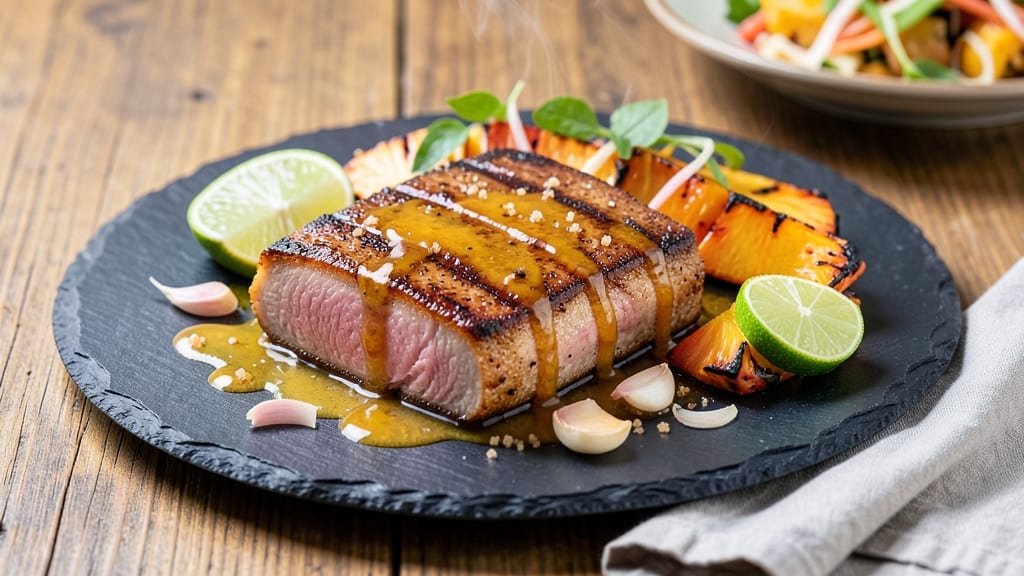
This pineapple pork marinade recipe transforms tough pork into melt-in-your-mouth perfection with just 24 hours of tenderizing magic. 🌟 The secret lies in pineapple juice's natural enzymes breaking down fibers while brown sugar and lime create a caramelized crust that locks in moisture.
I developed this after realizing my Boston apartment's small kitchen needed a marinade that worked overnight—no last-minute stress, just guaranteed results.
The marinade balances sweet, tangy, and savory notes perfectly: pineapple juice delivers tropical brightness, brown sugar adds depth, and garlic-ginger aromatics cut through the richness. Lime juice ensures the meat stays tender while adding a bright finish.
What makes this different is the 30-minute prep that yields a marinade powerful enough to transform even the toughest cuts into restaurant-quality tenderness.
By the time you're ready to cook, your pork will be juicy, flavorful, and effortlessly tender—no guessing, no overcooking. The marinade's acidity also helps create that beautiful caramelized crust when seared.
Store leftovers in the fridge for up to a week, making this the ultimate make-ahead solution for busy weeknights or weekend gatherings.
This isn't just a marinade—it's a flavor shortcut that works for grilled pork chops, pulled pork, or even pork tenderloin. The tropical notes pair beautifully with traditional New England sides like roasted potatoes or coleslaw. Let's get marinating!
Ingredients for pineapple marinade recipe for pork
Tropical flavors meet tenderizing power in this marinade—just nine ingredients, 30 minutes, and magic happens overnight.
| Ingredient | Amount | Notes |
|---|---|---|
| Fresh Pineapple Juice 🍍 | 1 cup | Bottled or freshly squeezed |
| Light Brown Sugar 🍚 | ½ cup | Packed firmly for sweetness |
| Fresh Lime Juice 🍋 | ¼ cup | From 2-3 limes, freshly squeezed |
| Garlic Cloves 🧄 | 6 cloves | Minced for aromatic punch |
| Fresh Ginger 🌿 | 2 tbsp | Grated, for zesty kick |
| Soy Sauce 🥢 | ¼ cup | For umami depth |
| Olive Oil 🫒 | ¼ cup | Extra-virgin for richness |
| Honey 🍯 | 1 tbsp | For balanced sweetness |
| Ground Black Pepper 🌶️ | 1 tsp | Freshly cracked for heat |
| Salt 🧂 | 1 ½ tsp | Kosher salt preferred |
The pineapple juice is non-negotiable here. Freshly squeezed delivers the best enzymatic action, but bottled works in a pinch—just avoid brands with added sugar. Trader Joe's has the best-priced bottled pineapple juice, and the Dole brand is my go-to when fresh isn't an option. For the ginger, look for firm, aromatic pieces with no soft spots—it should smell bright and zesty. Garlic cloves should be plump and firm, not sprouting or shriveled. The soy sauce? Kikkoman or La Choy are reliable staples that won't overpower the tropical notes.
No pineapple juice? Mango nectar or papaya juice works as a substitute, though the tenderizing power won't be identical. Short on lime? Lemon juice at the same amount keeps the acidity, but you'll lose that citrusy finish. The honey can be swapped for maple syrup if you're avoiding it, though it'll add a different depth. For a deeper umami kick, add 1 tsp fish sauce—just know it'll add a slightly different profile. The brown sugar is key for caramelization, but white sugar works in a bind, though it won't develop that rich crust as beautifully.
This marinade keeps 5-7 days in the fridge, so make a double batch—it's perfect for meal prep. Store it in a glass jar with a tight lid to preserve the fresh flavors. If you're marinating overnight, use a resealable plastic bag for the pork—it keeps everything evenly coated. The flavors actually improve after 24 hours, so don't rush it. If you've got leftovers, freeze them for up to 3 months—just thaw in the fridge before using.
Why You'll Love This Recipe
- Pantry-Friendly Magic: I swear by this marinade because it uses things I always have—no specialty shopping. Brown sugar and ginger in the same bowl? That’s my kind of shortcut, and it still tastes like I slaved over it.
- Sweet-Savory Balance: The pineapple juice cuts through the pork’s richness while the brown sugar caramelizes into a sticky, addictive glaze. Honestly, I can’t decide if it’s the lime’s tang or the garlic’s punch that makes this marinade ridiculously good.
- Weeknight to BBQ Hero: This works for grilled pork chops, slow-cooked ribs, or even stir-fry—no fancy prep required. I’ve used it on weeknights when I’m exhausted and at summer cookouts when I’m pretending to be a grill master.
- Leftovers That Don’t Suck: The marinade doubles as a sauce, so I make extra and freeze it. Thaw it later for tacos, sandwiches, or a quick pan-sear. (Yes, even on a Tuesday night.) It’s my secret weapon for turning last night’s pork into tomorrow’s lunch.
Step-by-step instructions for pineapple pork marinade
This tropical marinade transforms tough pork into melt-in-your-mouth perfection.
👨🍳 Step 1: Blend the Tropical Base
In a blender, combine the 1 cup fresh pineapple juice, 0.5 cup light brown sugar, and 0.25 cup fresh lime juice. Pulse until the sugar dissolves completely—you want a smooth, syrupy consistency. This sweet-tart foundation is where all the magic begins.
Here's the thing—pineapple juice contains natural enzymes called bromelain that actually break down meat fibers, tenderizing it while adding that signature tropical brightness. The brown sugar isn't just for sweetness; it helps caramelize slightly during cooking, creating a beautiful crust.
🍳 Step 2: Add Aromatics and Umami
Transfer the mixture to a mixing bowl and whisk in the 6 minced garlic cloves, 2 tablespoons grated fresh ginger, 0.25 cup soy sauce, and 0.25 cup olive oil. The soy sauce brings umami depth while balancing the sweetness, and the olive oil helps emulsify everything for even coating.
Let this sit for 5 minutes while you prep the pork. You'll notice the mixture darkens slightly as the garlic and ginger release their oils—this is when the marinade starts working its magic. The olive oil should be fully incorporated, creating a glossy sheen that tells you it's ready for the next step.
🥘 Step 3: Finish with Sweet Heat
Stir in the 1 tablespoon honey, 1 teaspoon ground black pepper, and 1.5 teaspoons salt. The honey rounds out the flavors while adding just enough viscosity to cling to the meat. Taste and adjust—you want a balance where the sweetness and acidity play off each other without one dominating.
This is where the marinade gets its perfect harmony: the tropical pineapple and lime, the earthy ginger and garlic, the rich umami from soy sauce, and the balanced sweetness from both sugar and honey. The black pepper adds a subtle heat that wakes up all the other flavors when cooked.
⏰ Step 4: Marinate for Maximum Tenderization
Pour the marinade into a resealable plastic bag or shallow dish and add the pork. Massage the marinade into all surfaces, especially thick cuts. Seal the bag and refrigerate for at least 4 hours, but I recommend overnight for maximum tenderization and flavor penetration.
Real talk: The longer it marinates, the more dramatic the transformation. After 4 hours, you'll notice the pork starts to soften slightly and absorb the vibrant colors. After 8 hours, it'll be fork-tender in some areas. The enzymes need time to work their magic—don't rush this step if you want that fall-apart texture.
Pro Tips For Making Pineapple Marinade Recipe For Pork
- STRAIN THE PINEAPPLE JUICE: Don’t use the whole blended mess—strain it through a fine-mesh sieve or cheesecloth to remove pulp and fiber. I learned this the hard way when my marinade turned gritty and clogged the grill grates. Clean juice means better absorption and a smoother texture on the pork.
- MINCE GINGER FINELY: Skip the grater or rough chop—use a sharp knife to mince the ginger into a paste, almost like a salsa. This ensures it dissolves completely into the marinade instead of sitting in stubborn chunks. (Yes, even if you’re impatient like me.)
- MARINATE 2 HOURS MINIMUM: Pork needs time to tenderize, and rushing it means tough, flavorless meat. Two hours is the absolute floor—overnight is better, but if you’re short on time, at least give it a solid 90 minutes. Cover and refrigerate; don’t leave it out.
- BALANCE THE SWEETNESS: Brown sugar is delicious, but too much can overwhelm the pineapple’s acidity. Start with 1:1 ratio of sugar to juice, then taste before adding more. I was skeptical until I tried it—now I adjust based on the pork’s size and how tangy the lime is.
Make-ahead tips for this dish
Marinade Prep Ahead
Make this marinade up to 5 days in advance—it actually tastes better as the flavors meld. Store it in a glass jar with an airtight lid in the fridge. The pineapple enzymes continue working, so your pork will be extra tender when you're ready to cook.
I always double the batch for meal prep—it's perfect for pork chops, tenderloin, or even pulled pork. 🌟
Pork Prep Timeline
For best results, prep your pork 24 hours before cooking. I cut pork chops into 1-inch thick slices and place them in a resealable bag with the marinade.
Seal it tightly, then refrigerate. The longer marinating time ensures maximum tenderness, especially for thicker cuts. This works perfectly for weekend meals when you want to cook without stress.
Freezer-Friendly Strategy
Freeze the marinade in ice cube trays for portion control—each cube makes about ¼ cup. Once frozen, transfer cubes to a freezer bag. When ready to use, thaw overnight in the fridge.
This is my go-to for busy weeks when I know I'll need a quick marinade. The frozen cubes also prevent waste if you don't use the whole batch.
Leftovers Reinvention
Use leftover marinade as a glaze! Simmer it in a saucepan over medium heat for 5-7 minutes until reduced by half. Brush it on cooked pork or drizzle over grilled veggies.
I've even used it as a marinade for chicken or tofu—just adjust the marinating time to 2-4 hours for those proteins. The flavors are too good to waste!
Make-Ahead Meal Plan
Plan your week around this marinade. Marinate pork on Sunday, then store it in the fridge until you're ready to cook. I pair it with roasted sweet potatoes and a simple mango salsa for a complete meal.
The prep work happens all at once, and you get restaurant-quality pork with minimal effort during the week. It's my secret for stress-free weeknight dinners. 💪
Travel-Friendly Packing
Pack the marinade in a leak-proof container when traveling—it's perfect for camping trips or BBQs. I've used it to marinate pork chops while camping in New Hampshire, and the results were just as tender as at home. Just
Nutrition facts
Frequently asked questions
Can I use canned pineapple juice instead of fresh?
Yes, but choose a 100% pineapple juice with no added sugar or preservatives. Brands like Dole or Del Monte work well. Fresh juice has more enzymes for tenderizing, but canned juice still delivers great flavor. Just avoid "cocktail" mixes—they're too sweet and dilute the marinade's power.
How do I adjust this marinade for thicker pork cuts?
For bone-in ribs or pork shoulder, increase marinating time to 24-48 hours and use a resealable bag to ensure even coating. For extra tenderness, add 1 tbsp papaya juice (which contains similar enzymes) to the marinade. Thicker cuts need more time for the acid and enzymes to work their magic.
What if I don't have lime juice?
Use lemon juice in equal amounts, but you'll lose some of the bright citrus notes. For a closer match, add ½ tsp citrus zest (lime or lemon) to the marinade. The acidity is what tenderizes the meat, so any citrus juice works—but lime gives that signature tropical finish.
Can I reuse leftover marinade?
<Yes, but only if you've cooked the pork first. After cooking, strain the used marinade (discard any meat bits) and store it in a jar. It makes a fantastic glaze—simmer it for 5 minutes to reduce thickness, then brush on pork or use as a sauce for rice or noodles.
Will this marinade work for chicken or fish too?
For chicken, marinate for 2-4 hours (acidity can over-tenderize). For white fish like tilapia, use just 1 hour—the enzymes work faster on delicate proteins. The flavors shine especially well with grilled fish or chicken skewers.