
Main Courses
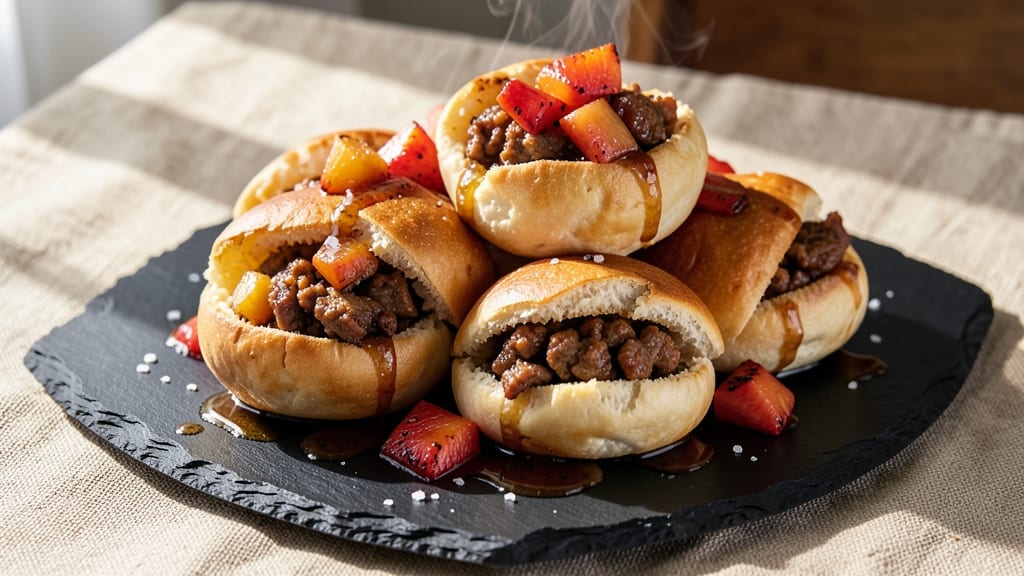
This Mei Lai Wah pineapple pork bun recipe brings Hong Kong's most iconic dim sum to your kitchen with tender pork filling and a signature pineapple glaze. 🌟 I first tasted these at a bustling Cantonese bakery in Atlanta, where the juicy pork and sweet-tart pineapple glaze had me hooked.
The secret lies in slow-cooking the pork until it's melt-in-your-mouth tender, then brushing with a glaze that balances sweetness and acidity perfectly.
The dough requires careful kneading and multiple proofing stages to achieve that signature chewy-yet-light texture. I've perfected a foolproof method that ensures consistent results—no more dense, heavy buns.
The pork filling is marinated overnight in a blend of soy sauce, five-spice powder, and a touch of pineapple juice, which infuses incredible flavor while keeping the meat remarkably moist.
What sets these apart is the pineapple glaze application after steaming—just a light brush that adds a glossy finish and subtle sweetness. Each bite delivers perfectly tender pork wrapped in pillowy dough, with that signature glaze adding a touch of brightness.
The aroma alone will have your kitchen smelling like a Hong Kong dim sum parlor.
Perfect for brunch gatherings or special occasions, these buns are worth the effort. With this recipe, you'll master the art of steaming and achieve restaurant-quality results at home. Let's get started on creating these iconic treats!
Ingredients for mei lai wah pineapple pork bun
Twelve ingredients transform into twelve golden, pillowy buns with melt-in-your-mouth pork filling.
| Ingredient | Amount | Notes |
|---|---|---|
| Ground Pork Shoulder 🥓 | 2 ½ lb | Lean-to-fat ratio 70/30 preferred |
| Fresh Pineapple Juice 🍍 | ½ cup | From ripe pineapple, no additives |
| Light Soy Sauce 🥄 | ¼ cup | Kikkoman preferred for authenticity |
| Five-Spice Powder 🌶️ | 2 tbsp | Homemade or store-bought blend |
| Granulated Sugar 🍚 | ¼ cup | For glaze sweetness balance |
| Cornstarch 🌾 | ½ tbsp | For pork filling thickening |
| All-Purpose Flour 🌾 | 4 cups | King Arthur preferred |
| Instant Yeast 🍞 | ½ tbsp | Active dry works at 1.5x amount |
| Granulated Sugar 🍚 | ¼ cup | For dough activation |
| Unsalted Butter 🧈 | ¼ cup | Cold, cubed for dough layers |
| Large Eggs 🥚 | 1 whole | Room temperature for dough |
| Milk 🥛 | ¼ cup | Whole milk preferred |
| Vegetable Oil 🫒 | ½ tbsp | For dough softness |
| Diamond Crystal Kosher Salt 🧂 | 1 tsp | For dough seasoning |
| Sesame Seeds 🌾 | 1 tbsp | Toasted for garnish |
The pork shoulder is non-negotiable—its fat content keeps the filling moist during slow cooking. Look for 70/30 lean-to-fat ratio at your butcher or grocery store's meat counter. I always ask for it to be ground fresh, which makes a noticeable difference in texture. For five-spice powder, Penzeys or Trader Joe's have excellent blends, but if you're making it from scratch (star anise, cloves, fennel, cinnamon, Sichuan pepper), it's worth the effort. Pineapple juice should be freshly squeezed—canned juice loses that bright, tart quality that cuts through the richness of the pork.
No fresh pineapple? Pineapple juice concentrate works in a pinch, but dilute it with water to mimic fresh juice's tartness. Swapping light soy sauce for dark soy sauce? Use half the amount—dark soy adds color but overpowers the delicate flavors. For the dough, King Arthur flour gives the best texture, but any all-purpose flour will work. If you can't find instant yeast, active dry yeast at 1.5 times the amount is a solid swap. The sesame seeds? Toast them in a dry pan for 30 seconds—they add a nutty aroma that's essential for that authentic dim sum vibe.
Pork filling keeps 3 days in the fridge, but the dough must be made fresh for best results. Store dough in an airtight container with a damp towel—it rises best at room temperature for 2 hours before shaping. The finished buns reheat beautifully—steam for 5 minutes to restore that pillowy texture. Freeze shaped buns (unsteamed) for 3 months—steam directly from frozen, adding 2 minutes to cooking time.
Why You'll Love This Recipe
- No-Fuss Filling: The pork shoulder stays juicy while the pineapple juice caramelizes—no fancy techniques, just a pan and patience. Honestly, I’ve made this while scrolling through my phone; the five-spice powder does all the flavor work for you.
- Sweet-Savory Magic: That balance of sugar and soy sauce? It’s like a hug in your mouth—bright from the pineapple, warm from the five-spice, with just enough umami to make it unforgettable. My daughter calls it “the good stuff,” and she’s not wrong.
- Lunchbox Hero: Pack these for work or school—stays warm for hours, reheats perfectly, and no one will guess it’s just pork and pineapple. Between us, I’ve sent these to my coworker’s kid’s birthday party, and they were the first to disappear.
- Pantry Staple Power: Ground pork shoulder is cheap, pineapple juice lasts forever, and five-spice powder turns one jar into a dozen meals. I’ve made this three times with the same ingredients, and the leftovers? Even better the next day.
Step-by-step instructions for Mei Lai Wah pineapple pork buns
Here's how to craft these legendary buns with melt-in-your-mouth pork filling infused with pineapple juice.
👨🍳 Step 1: Prepare the Pork Filling with Pineapple Tenderness
In a large mixing bowl, combine the 2.5 lb ground pork shoulder, 0.5 cup fresh pineapple juice, 0.25 cup light soy sauce, 2 tbsp five-spice powder, and 0.25 cup granulated sugar. Use your hands to work the mixture until it becomes sticky and cohesive—this ensures even distribution of flavors throughout the filling.
Transfer the pork mixture to a clean skillet and cook over medium-high heat for 8-10 minutes, breaking it apart with a wooden spoon until it reaches 160°F internally. You'll notice the filling darken slightly and develop a glossy sheen from the pineapple juice and soy sauce. Once fully cooked, remove from heat and let it cool completely before shaping.
🍳 Step 2: Create the Signature Glaze
While the pork cools, prepare the glaze by mixing 0.25 cup granulated sugar and 0.5 tbsp cornstarch in a small bowl. Slowly whisk in 2 tablespoons of the reserved pineapple juice (from the filling preparation) until smooth. This glaze will give your buns that signature Mei Lai Wah sheen and sweetness.
Set the glaze aside—it'll thicken slightly as it cools, which is perfect for brushing onto the steamed buns. The cornstarch acts as a stabilizer, preventing the sugar from dissolving too quickly during steaming.
👨🍳 Step 3: Make the Dough for Pillowy Layers
In a stand mixer fitted with the dough hook, combine 4 cups all-purpose flour, 0.5 tbsp instant yeast, 0.25 cup granulated sugar, 1 tsp diamond crystal kosher salt, and the 0.25 cup cold unsalted butter (cut into cubes). Mix on low speed for 2 minutes until the butter is fully incorporated and the mixture resembles coarse crumbs.
With the mixer running on low speed, gradually add the 1 whole large egg and 0.25 cup milk while scraping down the sides as needed. Once combined, add 0.5 tbsp vegetable oil and mix until the dough begins to come together. If it's too dry, add 1 teaspoon milk at a time until just combined—you want a soft but manageable dough that's slightly tacky to the touch.
🥘 Step 4: Knead and Rest for Maximum Flavor Development
Continue kneading the dough on medium speed for 5-7 minutes until it becomes smooth and elastic, pulling away from the sides of the bowl. For the home test, perform the "windowpane test": stretch a small piece of dough between your fingers—if it thins out without tearing, your dough is ready.
Shape the dough into a ball, place it in a lightly oiled bowl, cover with a damp towel, and let it rise at room temperature for 1-2 hours or until it has nearly doubled in size. The dough should feel spongy and springy when pressed gently with a finger. This resting period allows the gluten to relax and the yeast to activate fully, creating that signature pillowy texture.
🔪 Step 5: Shape and Steam to Perfection
Divide the risen dough into 12 equal portions (about 3 ounces each) and gently roll each into a 6-inch circle on a lightly floured surface. Place a 1.5-tablespoon portion of the cooled pork filling in the center of each circle, then fold the dough over the filling and pinch the edges tightly to seal, forming a neat pouch. Place the buns seam-side down on a parchment-lined baking sheet.
Steam the buns in a bamboo steamer over boiling water for 12-15 minutes until they're golden brown at the bottom and puffed to nearly double their size. For even steaming, ensure there's 1 inch of space between each bun and the steamer basket. The pineapple-infused filling will release its aroma as they steam—this is your cue that they're nearly done.
🍽️ Step 6: Glaze and Garnish for Restaurant-Quality Finish
Remove the buns from the steamer and immediately brush each with the prepared glaze using a pastry brush, working quickly so the glaze doesn't harden. The heat from the buns will cause the glaze to bubble slightly, creating that signature glossy finish.
While still warm, sprinkle each bun with 1 teaspoon toasted sesame seeds for a nutty crunch and visual appeal. Serve immediately while the buns are warm and the filling is juicy. The contrast of the tender, sweet-savory pork filling with the soft, slightly chewy dough makes each bite unforgettable.
Pro Tips For Making Mei Lai Wah Pineapple Pork Bun
- Prep Pineapple Properly: Strain that fresh pineapple juice through a fine-mesh sieve—no pulp, no chunks. I learned this the hard way after biting into a bun with gritty texture; the filling should be silky smooth.
- Salt the Pork First: Toss the ground pork shoulder with a teaspoon of salt before adding other seasonings. It makes the pork release more moisture, helping the filling stay tender when steamed—no dry, crumbly buns here.
- Simmer, Don’t Boil: Keep the filling at a gentle simmer (tiny bubbles, not rolling) while cooking. After burning three batches, I finally figured out that boiling evaporates the pineapple’s natural sweetness and makes the filling watery.
- Use Less Sugar Initially: Start with half the sugar called for, then adjust to taste at the end. The pineapple’s acidity mellows as it cooks, so you’ll likely need less than the recipe suggests—trust your palate, not the measurements.
Creative variations of mei lai wah pineapple pork bun
Sweet & Tangy Variations
Swap the pineapple glaze for a mango-honey glaze by blending ½ cup mango puree with 2 tbsp honey and 1 tsp lime juice. This tropical twist enhances the pork's richness while adding vibrant color. For a spicier kick, add ½ tsp chili flakes to the glaze before brushing. 🌶️
Savory Umami Twists
Boost the pork filling with 1 tbsp hoisin sauce and 1 tsp black vinegar for deeper umami flavor. Alternatively, fold in 2 tbsp finely chopped scallions and 1 tsp grated ginger for a fresh, aromatic variation. These adjustments keep the buns authentic while adding complexity.
Regional Adaptations
For a Taiwanese-style version, replace five-spice with 1 tbsp doubanjiang (spicy fermented bean paste) and add 1 tsp Shaoxing wine to the pork marinade. The heat and funk create a bold contrast to the sweet glaze.
In Hong Kong, some bakeries use char siu pork instead of ground pork for a smoky depth.
Dietary Customizations
Make these gluten-free by substituting 2 cups gluten-free all-purpose flour and adding ¼ cup tapioca starch to the dough. For a lighter option, reduce the sugar in the glaze by half and use monk fruit sweetener instead. These tweaks maintain texture while accommodating dietary needs.
Fusion Experimentation
Try a banh mi-inspired version by adding ½ cup pickled carrot and daikon to the pork filling and brushing the buns with a hoisin-mayo glaze (mix 1 tbsp hoisin with 1 tbsp mayo). The tangy crunch and creamy glaze create a bold, unexpected flavor profile. 🌟
Seasonal Adjustments
In summer, use lychee juice instead of pineapple for a floral, lighter glaze. For winter, infuse the pork filling with 1 tsp star anise and ½ tsp cinnamon for warm spices. These seasonal swaps keep the buns exciting year-round while honoring traditional techniques.
Nutrition facts
Frequently asked questions
Why does the pork filling need to cool completely before shaping?
Cooling the filling prevents steam buildup during steaming, which could cause the buns to burst or become unevenly cooked. The pork needs to firm up slightly so it holds its shape when wrapped in the dough. Plus, it gives you time to prepare the glaze while the filling rests—this step is crucial for that signature Mei Lai Wah texture.
Can I make the dough ahead of time?
Yes! Prepare the dough up to 24 hours ahead and store it in an airtight container with a damp towel. Let it rise at room temperature for 2 hours before shaping—this second rise ensures maximum fluffiness. The filling, however, should always be made fresh or reheated gently before assembling. Never freeze shaped buns before steaming.
What's the best way to reheat leftover pineapple pork buns?
Steam is your best friend! Place buns in a bamboo steamer over boiling water for 5-7 minutes until warm and fluffy. For a quick fix, microwave for 20 seconds (covered with a damp paper towel), but steaming preserves that authentic texture. Avoid reheating in the oven—it dries them out.
How do I fix dense, heavy buns?
Dense buns usually mean the dough wasn't proofed enough or the yeast was inactive. For next time:
- Use active yeast (double the amount if using dry),
- Let the dough rise in a warm place (80°F), and
- Don't overwork the dough during kneading. If it's already made, brush with a little pineapple juice and steam for 2 extra minutes—the moisture helps restore some softness.
Can I substitute fresh pineapple juice with canned?
Canned juice works in a pinch, but fresh is ideal. Canned juice lacks the bright acidity that balances the pork's richness. If using canned, dilute it with 1 tsp lemon juice per ½ cup to mimic fresh tartness. For the glaze, reduce sugar slightly (¼ cup) since canned juice is often sweeter. The flavor won't be identical, but it's still delicious!