
Sauces & Condiments
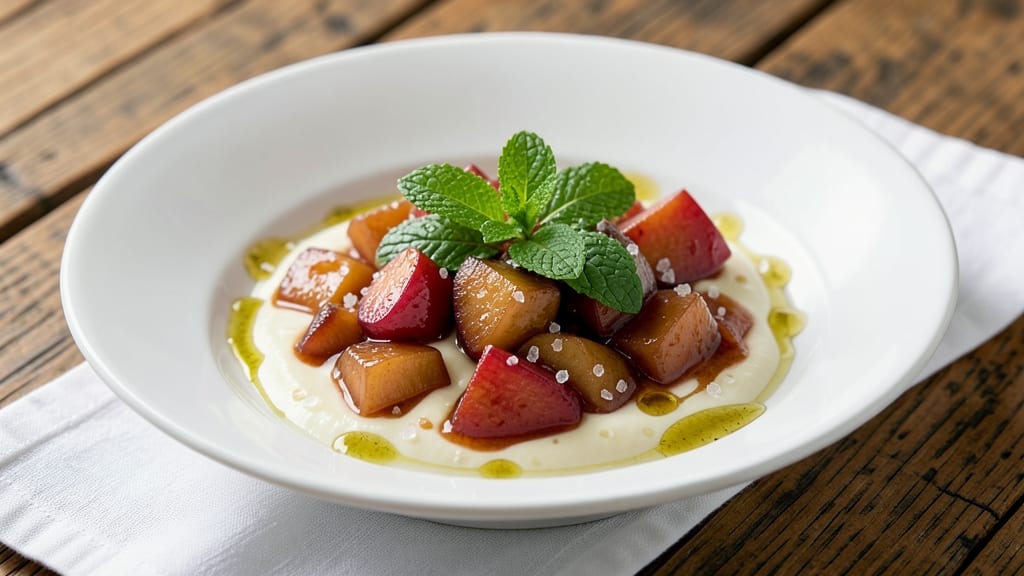
This apple mint sauce recipe transforms simple ingredients into a vibrant glaze that elevates roasted pork, complements desserts, and brightens cocktails with its refreshing balance of sweet and herbal notes.
The secret lies in simmering apples and apple cider with fresh mint, creating a naturally thickened sauce that’s both elegant and foolproof. I developed this recipe after struggling to find a store-bought version that didn’t taste overly sweet or lack depth—this one delivers on both fronts.
The sauce begins with a quick reduction of apples, apple cider, and vinegar to build a rich, tangy base, then incorporates fresh mint for its signature brightness.
A touch of sugar balances the acidity, while optional cornstarch or gelatin ensures the perfect consistency—whether you prefer a glossy glaze or a spoonable spread.
What makes this sauce truly versatile is its ability to shine in savory and sweet applications, from drizzling over roasted pork to pairing with vanilla ice cream.
By the time you’re done, you’ll have a sauce that’s effortlessly bright, with a fragrant aroma and a flavor profile that’s both complex and approachable. The mint’s freshness cuts through richness, making it ideal for balancing hearty dishes or adding a sophisticated touch to desserts.
Best of all, it keeps beautifully in the refrigerator for up to a week, ready to transform ordinary meals into something extraordinary.
Whether you’re hosting a dinner party or simply craving a flavor upgrade, this apple mint sauce delivers restaurant-quality results with minimal effort. Let’s make it—your taste buds will thank you.
Ingredients for apple mint sauce
Nine simple ingredients create a vibrant sauce that brightens roasted meats and desserts effortlessly.
| Ingredient | Amount | Notes |
|---|---|---|
| Honeycrisp Apples 🍎 | 2 medium | Peeled, cored, diced small |
| Fresh Mint Leaves 🌿 | 1 cup | Packed, stems removed |
| Apple Cider 🍏 | 1 cup | Unfiltered preferred |
| White Vinegar 💧 | 2 tbsp | For tangy balance |
| Granulated Sugar 🍚 | 2 tbsp | Adjust to taste |
| Extra-Virgin Olive Oil 🫒 | 1 tbsp | For richness |
| Cornstarch 🌾 | 1 tsp | Optional for thickening |
| Unflavored Gelatin 🍬 | 1 tsp | Alternative thickener |
| Diamond Crystal Kosher Salt 🧂 | ¼ tsp | For seasoning |
| Lemon Juice 🍋 | 1 tbsp | Freshly squeezed |
The apples are the foundation—Honeycrisp for sweetness, but any crisp variety works. Trader Joe's or local orchards often have them in season, or grab Fuji or Gala if Honeycrisp isn't available. Fresh mint is non-negotiable here; the grocery store's sad plastic containers won't cut it. Local farmers markets or specialty grocery stores carry the good stuff—look for vibrant green leaves with no brown spots. The apple cider should be unfiltered for deeper flavor; Woodchuck or Angry Orchard are solid choices. If you can't find unfiltered, regular cider still works, but you might want to add an extra splash of vinegar to compensate.
No cornstarch? Arrowroot powder works 1:1. Want a vegan option? Gelatin substitute like agar-agar (use 1 tsp dissolved in 2 tbsp water) thickens beautifully. Short on mint? Substitute half with fresh basil—it changes the flavor profile but still delivers that fresh herb punch. The vinegar is crucial for balancing sweetness; if you prefer a milder tang, apple cider vinegar works perfectly. And if you're worried about the apples browning during prep, toss them with lemon juice immediately—it preserves their color and adds a nice brightness to the sauce.
This sauce keeps beautifully in the fridge for up to 1 week, sealed in an airtight container. For longer storage, freeze in ice cube trays—perfect for single-use portions. If it thickens too much after refrigeration, just stir in a splash of warm water or apple cider. The flavor actually improves overnight as everything melds together. I like to make a big batch and keep it on hand for spontaneous drizzling over roasted pork, grilled chicken, or even vanilla ice cream—trust me, it's a game-changer.
Why You'll Love This Recipe
- Five-Ingredient Magic: I swear by this combo—just apples, mint, cider, vinegar, and sugar. No fancy gadgets, no stress, and honestly? The only prep is peeling an apple and tearing mint leaves. That’s it.
- Bright & Balanced: The Honeycrisp apples add that sweet-tart crunch, while the vinegar cuts through it just right. Fresh mint? It’s like a cool breeze after a spicy meal—refreshing and impossible to resist.
- Party in a Jar: This sauce is my go-to for holiday appetizers, picnic spreads, or even drizzled over grilled chicken. (Yes, even on a Tuesday night.) It’s the kind of thing that makes you look like you slaved away when you really just stirred a pot.
- No-Waste Winner: Use up those overripe apples instead of tossing them. The sauce keeps for days in the fridge, so you’re not scrambling for last-minute sides. Plus, a little goes a long way—perfect for stretching your budget without sacrificing flavor.
Step-by-step instructions for apple mint sauce
This vibrant sauce transforms simple ingredients into a versatile glaze that elevates everything from roasted pork to fruit tarts.
Cook the Apple Base
In a medium saucepan, combine the 2 medium peeled, cored, and diced Honeycrisp Apples with the 1 cup Apple Cider and 2 tbsp White Vinegar. Bring to a boil over medium-high heat, then immediately reduce to medium-low and simmer uncovered for 10-12 minutes until the apples soften and the liquid reduces by about half. You'll see the mixture darken slightly and smell that perfect apple-cider aroma.
While simmering, stir occasionally to prevent sticking. If the mixture starts to caramelize too quickly, add 1-2 tablespoons of water to maintain gentle cooking. The apples should break down into a chunky purée—this is the foundation of your sauce, so don't rush this step. The reduced liquid will intensify the flavors and create that glossy finish you want.
Sweeten and Add Herb Infusion
Once the apples are tender, stir in the 2 tbsp Granulated Sugar and 1 tbsp Lemon Juice. Let the mixture simmer for another 3-4 minutes until the sugar dissolves completely. This is where the sauce starts to come together—you'll notice the sweetness balances the vinegar's tang and the lemon brightens everything up.
Remove the pan from heat and let it cool slightly for 2 minutes. Then, add the 1 cup packed Fresh Mint Leaves and the 1 tbsp Extra-Virgin Olive Oil. Using an immersion blender or regular blender, purée until smooth. If you prefer a slightly textured sauce, leave it slightly chunky. The mint will infuse its fresh aroma and vibrant green color into the sauce, creating that signature apple-mint harmony.
Thicken the Sauce
Return the sauce to medium heat and choose your thickening method. For a cornstarch-thickened version, whisk together the 1 tsp Cornstarch with 1 tablespoon of cold water to create a slurry. Slowly pour it into the sauce while stirring constantly. Simmer for 2-3 minutes until the sauce thickens to a glossy, coatable consistency—it should leave a trail on the back of a spoon.
For a gelatin-thickened version, sprinkle the 1 tsp Unflavored Gelatin over 2 tablespoons of cold water in a small bowl and let it bloom for 5 minutes. Then, whisk it into the warm sauce and stir continuously for 3-4 minutes until fully dissolved and thickened. This method creates a more stable sauce, ideal for drizzling over desserts or chilled dishes.
Season and Finish
Taste the sauce and adjust the seasoning as needed. Add 0.25 tsp Diamond Crystal Kosher Salt if it needs more depth, or a touch more Granulated Sugar if it's too tart. The sauce should balance sweet, tart, and herbal notes perfectly. For a final touch, strain the sauce through a fine-mesh sieve if you prefer a completely smooth texture, pressing gently on the mint leaves to extract every bit of flavor.
Let the sauce cool to room temperature before using. It will thicken further as it cools, so you can adjust the consistency with a splash of water or apple cider if needed. This versatile sauce keeps well in the refrigerator for up to 5 days, making it perfect for meal prep. Use it as a glaze for roasted meats, a drizzle for pancakes, or a dip for fresh fruit—your creativity is the only limit.
Pro Tips For Making Apple Mint Sauce
- STRAIN THE MINT FIRST: Tear the mint leaves, then press them through a fine-mesh strainer with a spoon—this extracts the oils without the bitterness of crushed stems. I learned this the hard way after serving a sauce that tasted like a mouthful of grass.
- COOK THE CIDER LOW: Simmer the apple cider on medium-low heat—too high, and it reduces too fast, turning bitter. Keep it at a gentle bubble, and taste as you go. (Yes, even if you’re impatient like me.)
- PEEL APPLES AFTER COOKING: Raw Honeycrisp skin stays tough and weirdly bitter when raw. Peel them after simmering—the cooked flesh releases easier, and you avoid the texture fight.
- BALANCE THE VINEGAR: White vinegar cuts through sweetness, but too much makes the sauce taste like a science experiment. Start with 1 tablespoon, then add another only if the sauce feels cloying. (Your taste buds will thank you.)
Essential equipment for this recipe
Small Batch Tools
For this recipe, a small saucepan (2-quart) is ideal—it gives you enough room to stir and simmer without boiling over. I use my Calphalon stainless steel saucepan because it heats evenly and prevents scorching.
If you're making a larger batch, a 3-quart saucepan works well, but keep an eye on the sauce to avoid over-reduction. A fine-mesh strainer is also handy for removing any unwanted apple bits or mint stems if you prefer a silky texture. 🍎
Blending Essentials
An immersion blender is my go-to for this sauce because it keeps everything contained in the saucepan—no transferring hot liquids to a blender. The Ninja QS700 handles small batches perfectly. If you don’t have one, a standard blender works, but let the sauce cool slightly first to avoid splattering.
For a smoother finish, strain through a fine-mesh sieve—I love the OXO Good Grips for its sturdy handle and durability. 🌿
Thickening Gear
For cornstarch thickening, a small mixing bowl and whisk are all you need to create the slurry. If you’re using gelatin, a small ramekin works perfectly for blooming it in cold water.
A flexible silicone spatula helps scrape every last bit of thickened sauce from the pan. Pro tip: A digital kitchen scale ensures precise measurements for gelatin—it blooms best with exact water ratios. ✨
Storage Containers
An airtight glass container is best for storing your sauce—it keeps flavors fresh and prevents absorption of fridge odors. I use Le Creuset stoneware jars for their heat resistance and elegant look. For freezing, silicone ice cube trays are perfect for portion control.
Label your containers with the date to track freshness—this sauce stays vibrant for up to 1 week in the fridge or 3 months in the freezer. ❄️
Nutrition facts
Frequently asked questions
Can I use dried mint instead of fresh?
Fresh mint is essential for that bright, vibrant flavor, but if you must use dried, reduce it to 1/4 cup (about 1/8 the amount of fresh mint). Dried herbs lose much of their potency when dried, so you'll need less. For best results, try to find fresh mint leaves—even the grocery store's plastic containers work better than dried. The aroma difference is noticeable!
How can I make this sauce vegan?
Swap the gelatin for 1 tsp agar-agar powder dissolved in 2 tbsp water (heated to dissolve completely). Let it cool slightly before adding to the warm sauce. For extra thickness, you can also use 1 tsp arrowroot powder mixed with 1 tbsp water instead of cornstarch. The texture will be slightly different but still delicious!
What's the best way to store leftover sauce?
Transfer to an airtight glass container and refrigerate for up to 1 week. If it thickens too much, simply stir in a splash of warm water or apple cider. For longer storage, freeze in ice cube trays—thaw overnight in the fridge before using. The flavor actually improves after a day or two as the ingredients meld together!
Can I make this sauce without sugar?
Yes, but you'll need to balance the flavors differently. Use 1 tbsp lemon juice instead of sugar and add 1/4 tsp cinnamon for warmth. The sauce will be more tart, but the mint and apple flavors will still shine. For a naturally sweet option, try 1 tbsp maple syrup instead of granulated sugar.
What are the best uses for this sauce?
This versatile sauce excels as a glaze for roasted pork, grilled chicken, or lamb chops. It also pairs beautifully with desserts like vanilla ice cream, cheesecake, or apple tarts. Try drizzling it over fresh berries or using it as a cocktail sauce for gin or vodka martinis!