
Main Courses
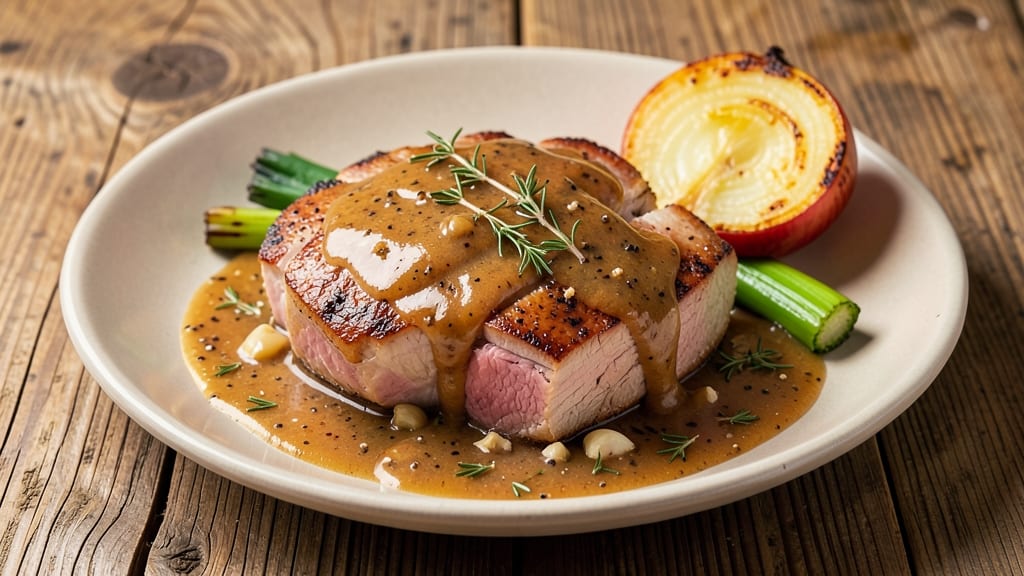
This apple gravy recipe for pork transforms a simple roast into a showstopping centerpiece—where tender pork meets a silky-sweet sauce with crisp celery crunch. 🍏 The secret lies in slow-braising pork shoulder until fork-tender, then reducing apple cider, onions, and celery into a velvety gravy thickened with cornstarch.
It’s the kind of dish that feels like a Sunday supper but works for weeknights too.
The magic happens in two parts: perfectly seasoned pork that stays juicy, and a gravy that balances sweet-tart apple with savory depth. You’ll start with a simple salt-and-pepper rub on the pork, then braise it low and slow until it nearly falls apart.
Meanwhile, the gravy builds from scratch—no shortcuts here—using a roux to bind the flavors while keeping the sauce glossy and clingy.
By the time you plate it, you’ll have golden-brown pork slices swimming in a glossy apple gravy, where each bite delivers tender meat and a hint of crisp celery.
The sauce clings perfectly to roasted potatoes or crusty bread, turning an ordinary meal into something memorable. This is comfort food at its finest—warm, inviting, and impossible to resist.
Pair it with mashed potatoes, roasted carrots, or a simple green salad to round out the plate. The gravy even reheats beautifully, making leftovers just as delicious as the first serving. Ready to elevate your pork dinner? Let’s get started.
Ingredients for apple gravy recipe for pork
Six ingredients transform pork into a showstopper with apple gravy's crisp celery crunch and sweet-savory sauce.
| Ingredient | Amount | Notes |
|---|---|---|
| Pork Shoulder 🍖 | 3 lb | Bone-in for flavor, cut into 2-inch chunks |
| Apple Cider 🍎 | 2 cups | Unsweetened, preferably homemade |
| Yellow Onion 🧅 | 1 whole | Medium size, diced small |
| Celery Stalk 🥬 | 4 whole | For crisp crunch, chopped fine |
| Garlic Cloves 🧄 | 4 cloves | Minced for depth of flavor |
| All-Purpose Flour 🌾 | ½ cup | For roux, sifted if lumpy |
| Unsalted Butter 🧈 | ½ cup | Cold, cubed for roux |
| Cornstarch 🌽 | 2 tbsp | For silky thickening |
| Salt 🧂 | 1 tbsp | Kosher or sea salt |
| Black Pepper 🌶️ | 1 tsp | Freshly cracked |
| Fresh Thyme 🌿 | ¼ cup | Leaves only, chopped |
| Apple Cider Vinegar 🍶 | 1 tbsp | For tangy brightness |
| Granulated Sugar 🍬 | 1 tbsp | Balances tartness |
The pork shoulder is the star here—bone-in for extra flavor, and you'll want to grab a well-marbled cut from Costco or your butcher. Look for a piece with good fat distribution; it'll keep the meat juicy during the long braise. For the apple cider, homemade is ideal—it's got more depth than store-bought—but any unsweetened variety works. The celery? Fresh is non-negotiable—those canned or frozen stalks just won't give that satisfying crunch. Chop it finely so it blends into the gravy without chunks. And if you're feeling fancy, grab organic apples from the farmers market to make your own cider—it's worth the effort for that homemade touch.
No apple cider? Substitute with a mix of apple juice and a splash of vinegar—just keep the total liquid at 2 cups. Ran out of fresh thyme? Dried thyme at half the amount works in a pinch, though fresh gives that extra brightness. The butter in the roux should be cold and cubed—this prevents it from cooking too fast and burning. If you're worried about the roux breaking, keep the heat low and stir constantly. For the celery, if you can't find fresh, frozen chopped celery works too—just thaw and drain it well before using. And if you're serving this to a crowd, double the gravy ingredients—it disappears fast!
Pork shoulder keeps 3-4 days in the fridge, wrapped tightly in foil. The gravy reheats beautifully—just warm it gently on the stove, stirring often to prevent lumps. For make-ahead magic, braise the pork and make the gravy a day ahead, then reheat everything together. The flavors actually improve overnight as everything melds. Store leftovers in airtight containers, and the gravy can be frozen for up to 3 months. Pro tip: Save the pork fat from the braising liquid—it's pure gold for future gravies or roasted veggies!
Why You'll Love This Recipe
- One-Pot Magic: I swear by this recipe when I’m too tired to scrub pots. Toss everything—pork, onion, celery, garlic—into one Dutch oven, let it braise, then stir in that apple cider for gravy. Cleanup? Just a wipe-down and a sigh of relief.
- Sweet-Savory Balance: The apple cider cuts through the pork’s richness like a cool breeze, while the garlic and onion mirepoix build depth. It’s not too sweet, not too heavy—just that perfect harmony where every bite feels like a hug.
- Leftovers for Days: This dish actually improves the next day. The pork gets tender enough to shred, and the gravy thickens into something restaurant-worthy. Pack it for lunches or freeze portions—no one will guess it’s the same meal.
- Budget-Friendly Feast: Pork shoulder and apples stretch across multiple meals without breaking the bank. Honestly, I’ve fed six people for under $20 with this, and the leftovers keep us full for another week. That’s a win in my book.
Step-by-step instructions for apple gravy with pork
Here's how to create a rich, velvety apple gravy that perfectly complements pork shoulder.
🍳 Step 1: Sear the Pork Shoulder for Maximum Flavor
Pat the 3 lb pork shoulder dry with paper towels and season generously with 1 tablespoon salt and 1 teaspoon black pepper. Heat a large Dutch oven over medium-high heat and add 2 tablespoons of the unsalted butter (save the rest for later). Once the butter foams, add the pork shoulder in a single layer and sear for 4-5 minutes per side until deeply browned.
Don't crowd the pan—this is where all that meaty flavor develops. You'll know it's ready when the pork releases easily from the pan and the bottom has a rich brown crust. Remove the pork and set it aside on a plate, leaving all the browned bits in the pot. These flavor-packed bits are the foundation of your gravy.
👨🍳 Step 2: Build the Flavor Base with Aromatics
In the same Dutch oven, add 2 tablespoons of the remaining unsalted butter and let it melt over medium heat. Add the diced yellow onion and chopped celery stalk (from the 4 whole celery stalks), cooking for 5-6 minutes until softened. Stir in the minced garlic cloves and cook for another 30 seconds until fragrant.
Here's where the magic happens: add the 0.25 cup fresh thyme and cook for 1 minute until the thyme releases its aromatic oils. You should smell that earthy, herbal goodness—this is what makes your gravy taste homemade and special. If the vegetables start to brown too quickly, reduce the heat slightly to medium-low.
🍳 Step 3: Create the Roux for Thickening
Sprinkle the 0.5 cup all-purpose flour evenly over the vegetables and stir vigorously for 1-2 minutes until the mixture turns a rich, golden brown color. This is your roux, and it's what will give your gravy that silky, velvety texture. Keep stirring constantly—if it burns, your gravy will taste bitter.
Once the roux reaches a deep golden color (not dark brown), immediately pour in the 2 cups apple cider all at once. Stir constantly with a wooden spoon to prevent lumps from forming. The mixture will bubble vigorously—this is normal. Let it simmer for 5 minutes until it thickens slightly and reduces by about half.
🥘 Step 4: Finish with Sweet-Tart Balance
Add the 1 tablespoon apple cider vinegar and 1 tablespoon granulated sugar to the simmering mixture. Stir well and let it cook for another 3-4 minutes until the flavors meld together. The vinegar adds a bright tang that cuts through the richness, while the sugar balances the apple's natural tartness.
In a small bowl, whisk together the 2 tablespoons cornstarch with 2 tablespoons cold water to make a slurry. Slowly pour this into the gravy while stirring constantly. The gravy should thicken dramatically within 1-2 minutes. If it's too thick, add 1-2 tablespoons water to reach your desired consistency—it should coat the back of a spoon but still be pourable.
⏰ Step 5: Rest and Serve with Pork
Return the pork shoulder to the Dutch oven and spoon the gravy generously over the top. Cover and let it cook on low heat for 10 minutes to allow the flavors to meld together. This resting period is crucial—it lets the pork absorb some of the gravy's rich flavors.
Serve the pork shoulder sliced thickly, with generous ladles of the apple gravy spooned over each portion. The gravy should be silky smooth with a perfect balance of sweet, tangy, and savory flavors. Each bite should deliver that crisp celery crunch from the aromatics and the deep, meaty richness from the pork. Enjoy immediately while the gravy is still warm and the pork is juicy!
Pro Tips For Making Apple Gravy Recipe For Pork
- Brown the Pork First: Skip straight to braising, and you’ll end up with bland pork. Sear the shoulder in batches over medium-high heat until it’s deep golden—about 5-6 minutes per side. The crust locks in flavor and keeps the meat from turning mushy when it hits the apple cider later.
- Deglaze with Apple Cider: After removing the pork, don’t just splash in water for the gravy. Use the same pan, add the apple cider right away while it’s still hot, and let it simmer until reduced by half. This pulls all the caramelized pork bits into the gravy, making it richer than a watered-down sauce.
- Strain the Gravy: Celery and onion bits in gravy make it look messy, but they also make it gummy. After simmering, strain the sauce through a fine-mesh sieve into a clean pot. If you’re lazy, at least skim out the biggest chunks—your gravy will still taste better.
- Finish with Butter: The last step isn’t just about fat—it’s about silkiness. Stir in 2 tablespoons of cold butter off the heat, and the gravy will coat the back of a spoon like liquid gold. (Yes, even if you’re impatient like me.)
Pro cooking tips for this dish
Low-and-Slow Braising
For perfectly tender pork, braise it at 300°F for 3-4 hours until it reaches 203°F internal temperature. I use a slow cooker on low for 8 hours if I'm short on time—just add ½ cup apple cider and 1 cup water to the Dutch oven after searing.
The key is patience: this slow cooking breaks down collagen into gelatin, making every bite melt-in-your-mouth. 🌡️
Roux Perfection
Your roux is the gravy's backbone—don't rush it! Cook the ½ cup flour and ½ cup butter until it's a deep golden color (about 3-4 minutes at medium heat). If it darkens too quickly, reduce heat to medium-low.
A burnt roux will make your gravy taste bitter, so keep stirring constantly. I like to use a wooden spoon for better heat distribution.
Celery Crunch Secret
For that signature crisp texture, add 2 tbsp finely chopped celery to the gravy just before serving. The celery should be raw and chopped into ⅛-inch pieces—this creates the perfect contrast against the silky sauce.
Pro tip: Use a microplane for ultra-fine celery bits that disappear into the gravy without chunks. 🥬
Gravy Thickening Hacks
If your gravy is too thin, whisk in 1 tbsp cornstarch mixed with 1 tbsp cold water until thickened. For a quicker fix, use 1 tbsp cold butter—it thickens instantly.
Too thick? Thin with 1 tbsp apple cider or water. I always taste-test as I go, adjusting until it coats the back of a spoon but still flows smoothly. 💡
Apple Cider Substitutes
No apple cider? Use 1 cup apple juice + 1 tbsp apple cider vinegar for similar sweet-tart balance. For a deeper flavor, try ½ cup chicken stock + ½ cup apple juice.
If you're in a pinch, even white grape juice works—just add ½ tsp cinnamon for warmth. The key is maintaining that liquid volume for proper gravy consistency.
Make-Ahead Magic
Braise the pork and make the gravy a day ahead—it tastes even better! Store the pork and gravy separately in airtight containers. Reheat the pork in the oven at 350°F for 20 minutes, then warm the gravy on the stovetop over low heat, stirring often.
The flavors meld beautifully overnight, making this dish perfect for meal prep. ⏰
Nutrition facts
Frequently asked questions
Can I use pork chops instead of pork shoulder?
Pork chops work differently—they're best pan-seared or grilled for 4-5 minutes per side until 145°F internal temp. For apple gravy, make a quick pan sauce with the same apple cider and cornstarch method, but reduce cooking time to 10-12 minutes total. The gravy will be thinner since chops release less liquid than braised pork.
How do I adjust this for a slow cooker?
Sear the pork first, then transfer to a slow cooker with ½ cup apple cider and 1 cup water. Cook on low for 8 hours or high for 4-5 hours. After removing pork, strain the liquid and make gravy by adding 2 tbsp cornstarch to the cooking liquid, stirring until thickened. The slow cooker makes the pork incredibly tender!
What if my gravy gets lumpy?
Lumps happen when cornstarch or flour doesn't dissolve properly. Immediately whisk in 1 tbsp cold water and stir vigorously over low heat until smooth. For prevention, always whisk cornstarch with cold water first to make a slurry before adding to hot gravy. A fine-mesh strainer can also help remove any stubborn lumps.
Can I make this vegetarian?
Swap pork for mushrooms or tempeh—sauté 1 lb portobello mushrooms or 1 block tempeh with the same seasoning until browned. Use the same apple gravy recipe, but reduce cooking time to 15-20 minutes since there's no meat to braise. The gravy will still be rich and flavorful!
How do I reheat leftovers without drying out the pork?
Reheat pork in the oven at 350°F for 20 minutes with a splash of apple cider in the pan to keep it moist. Warm gravy separately on the stovetop over low heat, stirring constantly. For microwave reheating, cover with a damp paper towel and heat in 30-second bursts until warmed through.