
Sauces & Condiments
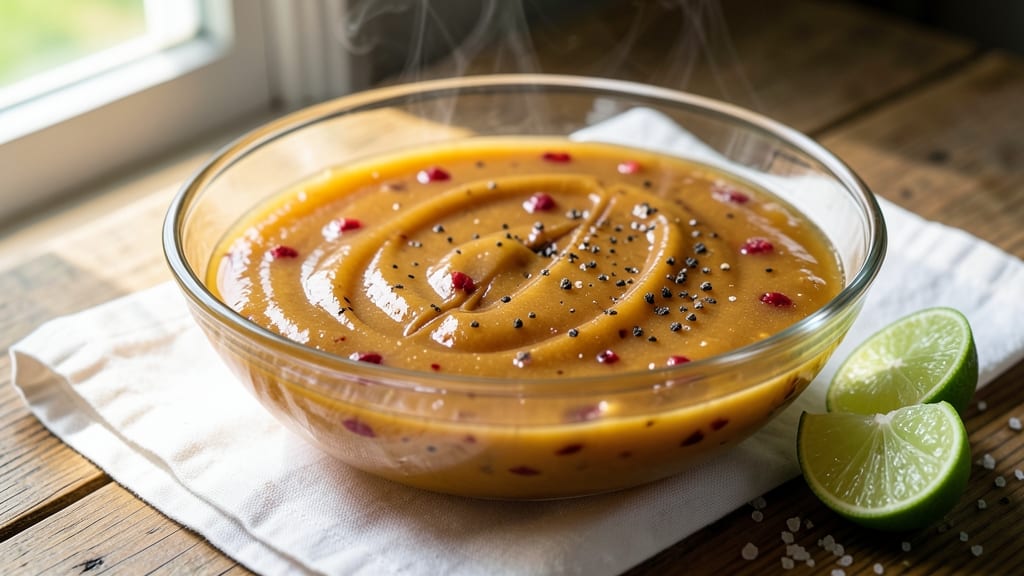
This sweet pineapple sauce recipe transforms humble canned pineapple into a versatile condiment that bridges tropical sweetness with unexpected celery-pepper zing. The secret lies in balancing natural fruit sugars with a touch of cornstarch for perfect thickness, creating a sauce that works as a glaze, dipping companion, or cocktail mixer.
I developed this after craving something bright enough to cut through rich meats but sweet enough to satisfy dessert cravings—without tasting like syrup.
The magic happens in the simmering process, where pineapple's acidity mellows while developing complex caramel notes. A pinch of celery salt and cracked black pepper adds depth that elevates it beyond basic fruit syrup territory.
What you'll end up with is a glossy, medium-thick sauce that coats proteins beautifully or drizzles over vanilla ice cream with surprising sophistication.
Perfect for grilled chicken, pork tenderloin, or even as a tangy topping for churros, this sauce keeps well in the fridge for up to 10 days. The cornstarch thickening ensures it maintains its velvety texture even after reheating.
I've tested it in both savory and sweet applications—it's the one pantry staple that always delivers.
For those who prefer it extra-sweet, simply reduce the sugar by 2 tablespoons. The celery-pepper element might sound unusual, but trust me—it transforms this from basic syrup to something truly special. Let's make it!
Ingredients for sweet pineapple sauce
Eight simple ingredients transform canned pineapple into a velvety sauce with tropical brightness and savory depth.
| Ingredient | Amount | Notes |
|---|---|---|
| Canned Pineapple Juice 🍍 | 2 cups | Fresh or canned, unsweetened preferred |
| Granulated Sugar 🍚 | ¾ cup | White or brown, adjust to taste |
| Cornstarch 🌾 | 2 tbsp | For perfect velvety thickness |
| Celery Salt 🧅 | ½ tsp | Key for savory depth |
| Freshly Cracked Black Pepper 🌶️ | ¼ tsp | Coarse grind preferred |
| Fresh Lime Juice 🍋 | 1 tbsp | Brightens the sauce |
| Vanilla Extract 🍯 | 1 tsp | Pure vanilla preferred |
| Water 💧 | ½ cup | For thinning if needed |
The pineapple juice is your foundation—unsweetened canned gives the cleanest flavor, but fresh works too if you're willing to strain it. Sugar is where you can play: reduce by 2 tbsp if you prefer it extra-sweet, or add more for caramelized richness. Cornstarch is non-negotiable for that restaurant-quality thickness—Arrowhead brand dissolves best without clumping. I always grab mine from the bulk section at Whole Foods or Trader Joe's for freshness. Celery salt might sound odd, but it's the secret weapon that bridges sweet and savory—Lawry's is my go-to for consistent flavor.
No celery salt? Substitute 1/4 tsp each of onion powder and salt—it won't be identical, but close enough. Running low on cornstarch? Arrowroot powder at half the amount works in a pinch. Fresh lime juice is ideal, but bottled works if you've got it—just add a pinch of sugar to compensate for the lower acidity. The vanilla extract can be imitation, but pure Madagascar bourbon vanilla takes this sauce to the next level. Want extra depth? Add a 1/4 tsp ground cinnamon with the spices—it plays surprisingly well with the tropical flavors.
This sauce keeps beautifully—up to 10 days in the fridge sealed tightly. The cornstarch helps it reheat smoothly, so just warm it gently on the stove or microwave. For longer storage, freeze in ice cube trays—perfect for glaze portions. I always make a double batch because it disappears fast: drizzled over grilled chicken, spooned over vanilla ice cream, or mixed into cocktails. The pepper and celery notes mellow slightly after chilling, so let it sit for 30 minutes before serving if you're using it immediately.
Why You'll Love This Recipe
- Pantry Magic: I swear by this sauce—just three ingredients (plus a splash of juice) and you’ve got something that tastes homemade but couldn’t be simpler. No fresh fruit to chop, no waiting for it to ripen, just open, measure, and simmer. That celery salt? Trust me, it’s the secret that makes it taste like a fancy dessert glaze.
- Sweet Heat Balance: The sugar and pineapple juice caramelize into something rich and glossy, but the black pepper and celery salt cut through the sweetness like a whisper. It’s not cloying—it’s bright, with just enough kick to make it feel special, not saccharine.
- BBQ’s Best Friend: Slather it on grilled chicken, drizzle it over pork chops, or toss it with roasted veggies—this sauce turns ordinary meals into something that feels like a celebration. Honestly, I’ve used it for everything from weeknight dinners to holiday ham, and it never lets me down.
- Lasts All Week: A single batch keeps in the fridge for days, and it only gets better as the flavors meld. I make a double batch on Sundays so I can grab it for quick weeknight meals without thinking. Plus, the cornstarch thickens it just enough to stay smooth, not sticky.
Step-by-step instructions for sweet pineapple sauce
This velvety tropical sauce comes together in minutes with just a few simple techniques.
Whisk Together the Base Ingredients
In a medium saucepan, combine the 2 cups canned pineapple juice, 0.75 cup granulated sugar, 0.5 tsp celery salt, and 0.25 tsp freshly cracked black pepper. I always use a whisk for this step to ensure the sugar dissolves completely—stirring with a spoon can leave grainy bits. Place the pan over medium-high heat and bring the mixture to a gentle boil.
Watch for small bubbles forming at the edges—this tells you the liquid is heating through. Once boiling, reduce the heat to medium-low to maintain a steady simmer. The reason for this gradual heat is to prevent scorching while allowing the flavors to meld together. Let it simmer uncovered for 5-7 minutes until the mixture thickens slightly and reduces by about 25%.
Create the Thickening Slurry
While the sauce simmers, create a thickening slurry in a small bowl by whisking together the 2 tbsp cornstarch with the 0.5 cup water. This mixture should be smooth with no lumps—if you see any, press the cornstarch through a fine-mesh sieve to break them up. The cornstarch-water ratio is crucial; too much water will make the sauce runny, while too little can create a gluey texture.
Once the sauce has simmered for 5 minutes, slowly pour in the cornstarch slurry while whisking constantly. The sauce will thicken immediately—this is where attention to detail matters. If you add it too quickly, you'll risk lumps forming. Keep whisking for 1-2 minutes until the sauce reaches a glossy, velvety consistency that coats the back of a spoon.
Finish with Aromatics and Adjust Seasoning
Remove the saucepan from heat and stir in the 1 tbsp fresh lime juice and 1 tsp vanilla extract. The lime juice adds that bright, tangy contrast that balances the sweetness, while the vanilla deepens the tropical flavor profile. Let the sauce sit off heat for 2-3 minutes—this resting period allows the flavors to fully integrate without cooking further.
Taste the sauce and adjust the seasoning if needed. You might want to add a pinch more celery salt for savory depth or a splash more lime juice if it needs more brightness. The sauce should be sweet but not cloying, with a subtle peppery warmth from the celery salt. For a smoother texture, strain the sauce through a fine-mesh sieve to remove any residual cornstarch grit.
Cool and Serve
Transfer the sauce to a clean bowl or jar and let it cool to room temperature. The sauce will thicken further as it cools—this is normal and actually improves the texture. I like to cover it with plastic wrap pressed directly onto the surface to prevent a skin from forming. This sauce keeps well in the refrigerator for up to 5 days, making it perfect for meal prep.
Serve the sauce warm over grilled meats, as a dipping sauce for fruit, or drizzled over vanilla ice cream for a tropical twist. The balance of sweet, tangy, and savory flavors makes it incredibly versatile. If the sauce thickens too much when reheated, simply whisk in a splash of water or pineapple juice to reach your desired consistency.
Pro Tips For Making Sweet Pineapple Sauce
- STIR CONSTANTLY AT FIRST: The first 2 minutes of simmering are where the sauce either thickens smoothly or turns into glue. I learned this the hard way—skipping the stir leads to scorched bits that ruin the whole batch. Use a wooden spoon and keep it moving until the sugar fully dissolves and the mixture bubbles steadily.
- USE COLD CORNSTARCH: Mix your cornstarch with cold water first (about 1 tablespoon water per 1 tablespoon cornstarch), then whisk it into the hot juice. Adding dry cornstarch straight to the pot? You’ll get lumps—trust me, I’ve turned this sauce into a science experiment. A smooth slurry is the only way.
- SALT AFTER THICKENING: Celery salt and black pepper taste best when added after the sauce has thickened and cooled slightly. Dumping them in too early can mute their flavors, and you’ll end up guessing how much to add. Wait until the sauce is off the heat—your taste buds will thank you.
- SKIP THE BOIL-OVER: Once the sauce reaches a gentle simmer, reduce the heat to medium-low. I used to let it boil hard, and it’d either burn or splatter everywhere—messy and frustrating. A controlled simmer keeps the texture silky and the pineapple flavor bright. (Yes, even if you’re impatient like me.)
Essential equipment for this dish
Saucepan Essentials
Start with a medium-sized saucepan—I recommend 3-quart capacity—for even heat distribution without boiling over. A stainless steel pan like All-Clad is ideal because it heats quickly and prevents scorching.
If you're on a budget, a heavy-bottomed enamel pan from Le Creuset works perfectly too. Avoid nonstick pans—they can react with the acidity in pineapple juice. 🔥
Whisk & Slotted Spoon
Your whisk is non-negotiable for dissolving sugar and incorporating the cornstarch slurry smoothly. I use a Balloon whisk from OXO—it’s lightweight but powerful. Pair it with a slotted spoon for stirring while maintaining control over the simmering process.
A heatproof silicone spatula also comes in handy for scraping up any thickened bits from the pan’s edges.
Fine-Mesh Sieve
For that silky-smooth finish, a fine-mesh sieve is essential to strain out any cornstarch grit or fruit pulp. My go-to is a stainless steel mesh sieve from Rubbermaid Commercial Products—it’s durable and easy to clean.
If you don’t have one, a cheesecloth works in a pinch, but it might require extra pressing to extract all the liquid. 💫
Measuring Tools
Precision matters with this sauce, so invest in a set of stainless steel measuring spoons (I love KitchenAid’s precision set) and a liquid measuring cup with clear markings.
For the cornstarch slurry, a small mixing bowl (like a Ramekin) ensures you can whisk it smoothly before adding to the saucepan. A digital kitchen scale is optional but helpful for adjusting sugar to taste—just 1 gram can make a difference!
Storage Containers
Transfer your finished sauce to airtight glass containers for storage—I prefer mason jars or glass storage bowls with tight-sealing lids. For freezing, use ice cube trays to portion out individual servings. If you’re gifting the sauce, small glass bottles with cork stoppers add a festive touch.
Label everything with the date—this sauce keeps for up to 10 days in the fridge or 3 months in the freezer. ✨
Nutrition facts
Frequently asked questions
Can I use fresh pineapple instead of canned juice?
Yes! For fresh pineapple, blend 2 cups of chopped pineapple (about 1 medium pineapple) and strain through a fine-mesh sieve to remove pulp. The texture will be slightly smoother, but you'll lose some natural sweetness since fresh pineapple contains more water. Add 1-2 tbsp extra sugar if needed to balance the flavor.
Why does my sauce turn out too thin or too thick?
Sauce consistency depends on simmering time and cornstarch ratio. For thinner sauce, whisk in 1 tbsp water or pineapple juice while warm. For thicker sauce, simmer uncovered for 2-3 extra minutes or add 1/2 tsp more cornstarch mixed with 1 tsp water. Always stir constantly when adding cornstarch to prevent lumps.
What are the best ways to use this tropical sauce?
This versatile sauce works beautifully as a glaze for grilled pork tenderloin or chicken thighs, a dipping sauce for fresh fruit, or a cocktail mixer in piña coladas. For desserts, drizzle over vanilla ice cream or churros. The celery-pepper notes also make it perfect for pairing with spicy Asian dishes like satay or pad thai.
Can I make this sauce without cornstarch?
Yes! For a cornstarch-free version, replace it with 2 tbsp arrowroot powder or 1 tbsp tapioca starch. Alternatively, simmer the sauce uncovered for 10-15 minutes to reduce it naturally—just monitor closely to avoid burning. The texture will be slightly less glossy but still delicious. For a smoother finish, strain through a fine-mesh sieve.
How do I fix a sauce that's too sweet or tart?
For overly sweet sauce, balance it with 1/2 tsp lemon juice or 1/4 tsp celery salt. If it's too tart, stir in 1 tsp honey or maple syrup while warm. The celery-pepper combination helps mask sweetness, so don't be afraid to adjust gradually—taste as you go! For extra depth, a pinch of ground cinnamon can enhance both sweet and savory versions.