
Sauces & Condiments
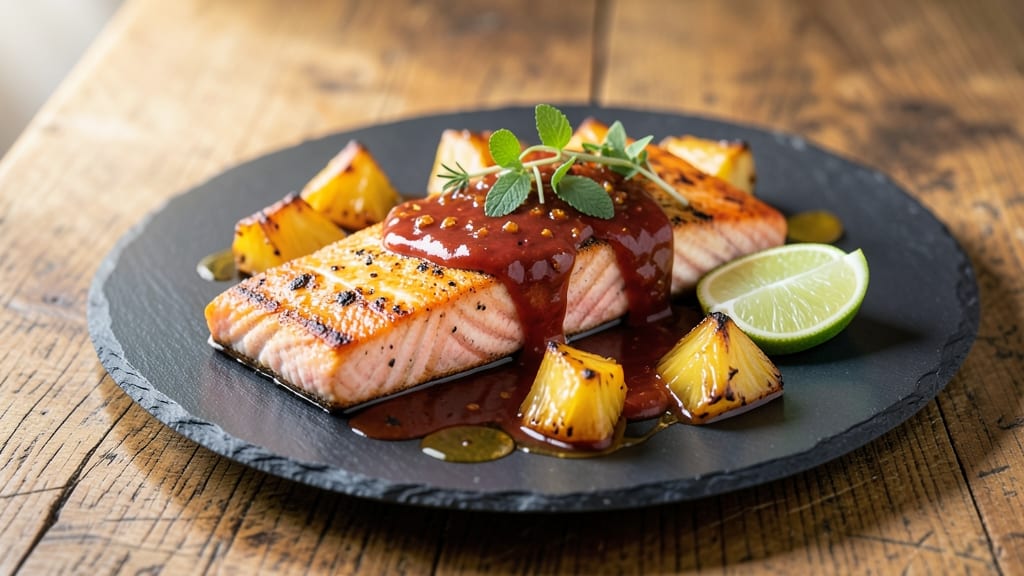
This roasted pineapple habanero sauce transforms salmon into a restaurant-worthy dish with just 30 minutes of effort. The caramelized sweetness of roasted pineapple meets habanero's fiery kick, creating a glaze that clings to every flake of perfectly cooked salmon.
I developed this recipe during a summer cookout when I needed a dish that would impress without requiring hours in the kitchen.
The secret lies in balancing the flavors—roasting the pineapple until it's tender and slightly caramelized intensifies its natural sweetness, while the habanero adds a controlled heat that doesn't overpower.
The sauce isn't just a topping; it's a flavor bridge that enhances the natural richness of the salmon, making each bite a harmonious blend of sweet, spicy, and savory. This method ensures the salmon stays moist and flaky, never dry.
By the time you serve this dish, your guests will be reaching for seconds—golden, glistening salmon with a glossy glaze that's both vibrant and irresistible. The aroma alone will draw everyone to the table, and the first bite delivers that perfect balance of flavors.
This recipe is designed to elevate your weeknight dinners into something special without sacrificing simplicity.
Perfect for summer gatherings, date nights, or when you want to impress with minimal fuss. The roasted pineapple habanero sauce can also be made ahead and reheated, giving you even more flexibility. Let's get cooking!
Ingredients for roasted pineapple habanero sauce salmon
Sweet caramelized pineapple meets fiery habanero in this restaurant-worthy salmon dish.
| Ingredient | Amount | Notes |
|---|---|---|
| Wild-Caught Salmon Fillets 🐟 | 4 pieces | Skin-on, 6-8 oz each, center-cut |
| Fresh Pineapple 🍍 | 1 whole | Yellow variety, ripe but firm |
| Habanero Peppers 🌶️ | 2 whole | Fresh, seeds removed for mild heat |
| Extra-Virgin Olive Oil 🫒 | ½ cup | Light fruity variety for balance |
| Fresh Lime Juice 🍋 | ¼ cup | Strain seeds for smooth texture |
| Honey 🍯 | 2 tbsp | Wildflower preferred for depth |
| Minced Garlic Cloves 🧄 | 4 cloves | Freshly minced for aromatic punch |
| Fresh Ginger 🌿 | 1 tbsp | Finely grated, peel removed |
| Diamond Crystal Kosher Salt 🧂 | 1 ½ tsp | For seasoning and sauce balance |
| Fresh Cilantro 🌿 | ¼ cup | Chopped, stems removed for garnish |
| Sesame Seeds 🌰 | 1 tbsp | Toasted for nutty crunch |
| Avocado Oil 🫒 | 1 tbsp | High smoke point for salmon searing |
The pineapple is the star—look for golden-yellow fruit that gives slightly when pressed, but isn't mushy. Trader Joe's carries perfect pineapples year-round, or grab one from the produce section at Whole Foods for that extra-sweet flavor. Habaneros are trickier; ask your grocer for the freshest ones, or pick up a frozen pack at Costco if fresh isn't available. The salmon should be center-cut fillets—thicker cuts stay moist better, and the skin helps hold everything together. For extra insurance, pat the fillets dry before cooking—this ensures maximum caramelization when they hit the pan.
No habanero? Scotch bonnet peppers work in a pinch, but reduce to 1 pepper for similar heat. Fresh pineapple not in season? Canned pineapple rings (drained well) add sweetness, though they lack the caramelized depth. The honey is crucial for balancing the heat—avoid artificial sweeteners here. For a vegan version, swap honey for maple syrup. The avocado oil is non-negotiable for searing—it handles high heat without burning. If you're short on time, pre-minced garlic from the jar works, but fresh always tastes better. The sesame seeds can be swapped for toasted pumpkin seeds if you're avoiding gluten.
This sauce reheats beautifully—store it in a sealed jar in the fridge for up to 5 days, or freeze portions for 3 months. The salmon itself keeps for 2 days in the fridge, but it's best served fresh. For meal prep, cook the salmon and sauce separately, then assemble just before serving to keep the texture perfect. The pineapple caramelizes best when roasted ahead, so plan to roast it 1 hour before cooking the salmon. If you're making this for a crowd, double the sauce—it's that good.
Why You'll Love This Recipe
- One-Pan Magic: I swear by this—just toss the salmon, pineapple chunks, and habanero slices on a sheet pan, drizzle with olive oil, and roast. No chopping boards, no extra bowls, just hands-off flavor while you sip your wine (or coffee, no judgment).
- Sweet Heat Balance: That caramelized pineapple meets the smoky habanero in the sauce, and the lime cuts through like a bright summer breeze. The salmon stays tender but flakes apart—honestly, I’ve never had a dish where every bite feels like a little vacation.
- Weeknight to Dinner Party: Make a double batch on Sunday, and you’ve got lunch, dinner, and a showstopper for guests. The sauce thickens beautifully when reheated, so it’s ready whether you’re feeding yourself or a crowd. (Between us, it’s also my lazy date-night go-to.)
- Budget-Friendly Luxury: Wild-caught salmon feels fancy, but pineapple and habanero stretch the meal without breaking the bank. Plus, the leftovers? Even better the next day—cold salmon with that tangy sauce over rice? My secret weapon for busy mornings.
Step-by-step instructions for roasted pineapple habanero sauce salmon
Here's how to transform wild-caught salmon into a masterpiece with caramelized sweetness and fiery habanero heat.
Roast the Pineapple and Habanero Peppers
Preheat your oven to 425°F and line a baking sheet with parchment paper. Cut the whole pineapple into 1-inch chunks, removing the core and any tough skin. Toss the pineapple chunks with 2 tablespoons of the extra-virgin olive oil, 1 tablespoon of honey, and 0.5 teaspoon of kosher salt. Spread them evenly on the baking sheet.
Slice the habanero peppers in half lengthwise, remove seeds and membranes (to reduce heat), and place them cut-side down on the same baking sheet. Roast for 20-25 minutes until the pineapple is caramelized with golden edges and the peppers are slightly blistered and aromatic. The pineapple should release its natural juices, creating a sticky glaze.
Create the Sweet Heat Sauce
While the pineapple and peppers roast, heat 1 tablespoon of avocado oil in a medium saucepan over medium heat. Add the 4 cloves minced garlic and 1 tablespoon fresh ginger, cooking for 1-2 minutes until fragrant but not browned. Add the roasted pineapple chunks and habanero peppers to the pan, scraping up any caramelized bits from the baking sheet.
Pour in the 0.25 cup fresh lime juice and remaining 0.5 cup extra-virgin olive oil. Stir in the 2 tablespoons honey and remaining 1 teaspoon kosher salt. Simmer for 5-7 minutes until the sauce thickens slightly and the flavors meld. The sauce should coat the back of a spoon with a glossy, vibrant hue—deep orange from the habanero and golden from the caramelized pineapple.
Season and Sear the Salmon
Pat the 4 pieces wild-caught salmon fillets dry with paper towels, removing any moisture from the skin. Place the fillets skin-side down on a clean baking sheet. Rub each fillet with a light layer of the remaining 1 tablespoon avocado oil, then sprinkle evenly with the remaining 0.5 teaspoon kosher salt. Let the salmon sit at room temperature for 10 minutes while you finish the sauce.
Heat a skillet over medium-high heat until very hot. Add the salmon fillets skin-side down and sear for 3-4 minutes until the skin is crispy and golden brown. Flip carefully and cook for another 2-3 minutes until the salmon reaches 135°F internally. The flesh should appear opaque and flake easily with a fork.
Assemble and Garnish
Divide the roasted pineapple habanero sauce among four plates, spooning 2-3 tablespoons over each fillet. The sauce should glaze the salmon beautifully, with visible chunks of caramelized pineapple and habanero peppers. Garnish each plate with 1 tablespoon toasted sesame seeds and 1 tablespoon chopped fresh cilantro, adding a final touch of texture and color.
Serve immediately with a squeeze of extra lime juice if desired. The contrast of crispy salmon skin, tender flakes, and the vibrant, balanced sauce creates a dish that's both elegant and bold. The sweetness of the pineapple and honey perfectly balances the habanero's heat, while the avocado oil adds a subtle richness that ties everything together.
Pro Tips For Making Roasted Pineapple Habanero Sauce Salmon
- CHAR THE PINEAPPLE FIRST: I used to toss raw pineapple chunks straight into the roasting pan, thinking it’d caramelize nicely—wrong. Char the pineapple over direct heat (or under a broiler) for 5-7 minutes until blackened in spots first. This deepens the sweetness and balances the habanero’s heat when you blend it into the sauce. (Yes, it looks dramatic, but the flavor pays off.)
- SALMON SKIN CRUST: Leave the skin on the salmon and pat it bone-dry with paper towels before roasting. The skin crisps into a perfect edible shield that protects the fish from overcooking while adding texture. If you’re nervous about peeling it later, score the skin lightly with a knife first—it’ll slide off easier.
- DILUTE THE HABANERO: Habaneros are sneaky—one extra seed or a misjudged slice can turn your sauce into a spicy regret. After blending the roasted peppers with pineapple, lime, and olive oil, taste and dilute with a splash of water or fish stock if needed. You’re aiming for a bright kick, not a mouth-on-fire warning.
- ROAST SALMON SEPARATELY: The salmon and pineapple/habanero sauce have different cooking times—don’t try to do them together. Roast the salmon at 400°F (200°C) for 12-15 minutes (depending on thickness) while the sauce simmers on the stovetop. Crowding the pan will steam the salmon instead of searing it, and you’ll end up with sad, gray fish.
Troubleshooting perfect results
Sauce Too Thin?
If your sauce isn't thickening enough, simmer it uncovered for an extra 3-5 minutes to reduce the liquid. For immediate thickening, mix 1 teaspoon cornstarch with 1 tablespoon cold water, then stir into the sauce. Let it simmer for 1 minute until it reaches your desired consistency. 💡
Heat Too Intense?
Reduce the habanero quantity to 1 pepper (halved) for a milder heat. If you've already added the full 2 peppers, balance it with 1 extra tablespoon honey or 1 teaspoon sugar to mellow the spice. For extra cooling, add 1 tablespoon plain yogurt at the end.
Salmon Overcooking?
Salmon cooks fast—watch for 135°F internal temp and remove it immediately when it reaches that. If it's overcooked, try this fix: Place the fillets on a plate, cover with a damp paper towel, and let rest for 5 minutes.
The residual heat will finish cooking while keeping the texture tender. 🍽️
Pineapple Not Caramelizing?
For deeper caramelization, increase oven temp to 450°F and roast for 15 minutes instead of 20-25 minutes. Brush the pineapple with an extra ½ teaspoon honey halfway through roasting. If using frozen pineapple, thaw and pat dry before roasting.
Sauce Separating?
Stirring vigorously while simmering can cause separation. Instead, use a handheld immersion blender to blend the sauce for 10-15 seconds until smooth. If it separates later, whisk in 1 teaspoon cold water to re-emulsify. For extra insurance, simmer on low heat when not stirring.
Skin Not Crispy?
Ensure your skillet is smoking hot before adding salmon. Pat the skin completely dry—even a little moisture prevents crispiness. For extra crunch, press the fillets gently with a fish spatula while searing. If using nonstick, opt for a cast-iron skillet for better heat conduction. 🔥
Nutrition facts
Frequently asked questions
Can I use frozen pineapple instead of fresh?
Yes, but with adjustments! Thaw frozen pineapple chunks completely, then pat them very dry before roasting. For best results, increase roasting time by 5 minutes to compensate for moisture loss. The texture won't be identical to fresh, but it still adds great sweetness to the sauce.
How do I adjust the spice level?
For milder heat, reduce habanero to 1 pepper (halved) or remove seeds completely. For extra kick, add ½ teaspoon cayenne pepper to the sauce. If you've already added too much heat, balance it with 1 extra tablespoon honey or 1 tablespoon plain yogurt at the end.
What's the best way to reheat leftovers?
Reheat salmon gently in a skillet over low heat for 2-3 minutes with a splash of water to prevent drying. For the sauce, warm it in a saucepan over medium-low heat for 3-4 minutes, stirring occasionally. Never microwave salmon—it makes the flesh rubbery.
Can I make this sauce ahead of time?
The sauce keeps in the fridge for 5 days and freezes well for 3 months. Store it in airtight containers. When reheating, add 1 teaspoon water per ½ cup sauce to restore consistency. The salmon is best served fresh, but you can cook it ahead and reheat gently.
What sides pair well with this dish?
Try coconut rice, grilled asparagus, or a mango avocado salad to complement the tropical-spicy flavors. For a heartier meal, serve with crispy sweet potato fries or quinoa pilaf. The acidity in sides helps balance the richness of the salmon.