
Sauces & Condiments
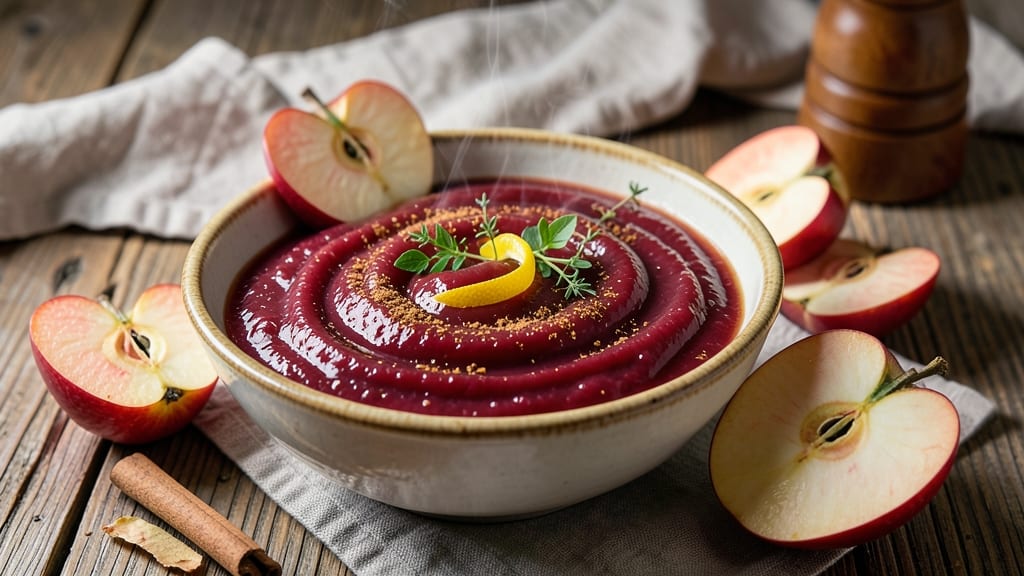
This red apple sauce recipe transforms tart apples into a velvety, naturally sweetened condiment that elevates everything from pork chops to oatmeal. The secret lies in simmering apples with cinnamon and a touch of lemon until they break down into a silky-smooth sauce—no added sugar required.
I developed this version after years of testing, perfecting the balance between tartness and sweetness while keeping the texture luscious, not grainy.
The process is simpler than it sounds: core, peel, and slice apples, then simmer them with warm spices until tender. A splash of apple cider vinegar brightens the flavor, while cinnamon and nutmeg add warmth.
For a chunkier texture, leave some apples whole; for smoothness, blend until flawless. The result? A versatile sauce that works as a glaze, topping, or even a vegan dessert filling.
What makes this recipe stand out is its adaptability—skip the sugar entirely for a low-sugar option, or add a pinch of salt to enhance natural sweetness. It keeps beautifully in the fridge for up to a week, making it perfect for meal prep.
Whether drizzled over roasted meats or stirred into yogurt, this sauce delivers restaurant-quality depth with minimal effort.
Ready to make it? The ingredients are simple, but the flavor transformation is nothing short of magical. Let’s get simmering—your taste buds will thank you.
Ingredients for red apple sauce
Eight simple ingredients transform tart apples into a velvety, naturally sweetened sauce perfect for glazes or toppings.
| Ingredient | Amount | Notes |
|---|---|---|
| Red Apples 🍎 | 4 medium | Firm, tart variety like Granny Smith |
| Apple Cider Vinegar 🍏 | ¼ cup | For brightness and balance |
| Ground Cinnamon 🌿 | 1 ½ tsp | Freshly ground preferred |
| Ground Nutmeg 🌿 | ¼ tsp | Freshly grated for warmth |
| Lemon Juice 🍋 | 1 tbsp | Freshly squeezed for acidity |
| Water 💧 | ½ cup | For simmering apples |
| Salt 🧂 | ¼ tsp | Kosher or sea salt |
| Unsalted Butter 🧈 | 1 tbsp | For richness (optional) |
The apples are the foundation—Granny Smith or Honeycrisp work best for that perfect tartness. Local farmers markets often have the freshest varieties, but any firm red apple will do. Look for ones that aren’t too soft, as they’ll hold up better during simmering. I usually buy a mix of organic and conventional since the sauce’s texture is more important than pesticide residue here. The apple cider vinegar might seem like an odd addition, but it’s what brightens the flavor without needing sugar—Bragg is my go-to brand, but any good-quality vinegar works.
No cinnamon? Cardamom or allspice can add warmth, though the flavor will shift slightly. Want to skip the butter? Coconut oil or olive oil adds richness without dairy. The lemon juice is non-negotiable for balancing sweetness—freshly squeezed is best, but bottled works in a pinch. For a vegan version, simply omit the butter. If you prefer a chunkier texture, leave some apples whole while others break down. The salt enhances natural sweetness, so don’t skip it—Diamond Crystal kosher salt dissolves perfectly.
This sauce keeps beautifully in the fridge for up to 1 week, though it tastes even better the next day as flavors meld. For longer storage, freeze in ice cube trays—perfect for single-use portions. The texture thickens as it cools, so stir in a splash of water if it’s too thick when reheating. I always double the batch—one for immediate use, one to freeze for later. The butter, if used, can be added back after reheating for extra creaminess.
Why You'll Love This Recipe
- Five-Ingredient Magic: Honestly, I swear by this recipe—just apples, vinegar, cinnamon, nutmeg, and lemon. No fancy gadgets, no stress, just peel, chop, and simmer. The kind of recipe that makes me feel like I actually cooked something when I know I didn’t overthink it.
- Warm Spice Hug: That cinnamon-nutmeg combo? It’s like autumn in a jar—cozy, slightly sweet, with just enough tang from the vinegar and lemon to keep it bright. The apples soften into a velvety texture that’s ridiculously satisfying, especially when drizzled over pancakes or stirred into oatmeal.
- Pantry to Plate: Between us, this sauce is my secret weapon for lazy Sundays, quick breakfasts, or even as a glaze for roasted chicken. Store it in the fridge for up to a week, or freeze it in ice cube trays for instant single-serving portions. I’ve used it on toast, in smoothies, and even as a salad dressing—it’s that versatile.
- Budget-Friendly Staple: Apples and spices don’t break the bank, and this recipe stretches easily. Double the batch, split it, and still have leftovers for days. I’ll be real: my grocery bill stays sane because this sauce turns basic meals into something special without costing extra. Plus, it’s way cheaper than store-bought sauces with weird additives.
Step-by-step instructions for spiced red apple sauce
Here's how to transform tart apples into a velvety, naturally sweetened sauce with perfect spice balance.
Prepare and Core the Apples
Start by peeling the 4 medium red apples if you prefer a smooth texture, or leave the skin on for rustic character. Using a sharp knife, carefully cut the apples in half from top to bottom, then remove the cores with a paring knife. I slice each half into 4-6 wedges, keeping them roughly the same size for even cooking.
Real talk: don't worry if the pieces aren't perfect. Uneven shapes still work as long as they're roughly similar in size. You want wedges that are about 1-inch thick at their widest point. This ensures they'll soften completely during simmering without turning to mush.
Combine Apples with Liquid and Spices
In a medium saucepan, combine the apple wedges, 0.5 cup water, 0.25 cup apple cider vinegar, 1 tbsp lemon juice, 0.25 tsp salt, 1.5 tsp ground cinnamon, and 0.25 tsp ground nutmeg. Stir gently to distribute the spices evenly throughout the mixture. I like to use a wooden spoon for this—it won't scratch your pan like metal utensils might.
This balance of vinegar and lemon juice is crucial. The acidity helps prevent the apples from turning bitter during cooking while enhancing the natural sweetness. The spices should be fully dissolved in the liquid at this stage, not clinging to the apples.
Simmer Until Apples Are Tender
Place the saucepan over medium-high heat and bring the mixture to a gentle boil. Once boiling, immediately reduce the heat to medium-low and let it simmer uncovered for 15-20 minutes. You'll know it's ready when the apples are fork-tender—they should collapse easily when pierced with a fork but still hold their shape.
Here's the thing—don't walk away during this step. You want to stir occasionally (about every 5 minutes) to prevent the apples from sticking to the bottom. If the mixture looks like it's reducing too quickly and the apples might burn, add 1-2 tablespoons of water to keep everything moist.
Process Until Silky Smooth
Remove the saucepan from heat and let the mixture cool slightly for 5 minutes. This cooling period prevents splattering when you begin processing. Using an immersion blender, carefully blend the mixture until completely smooth. I work in batches if needed, blending until no visible apple pieces remain.
If you don't have an immersion blender, you can transfer the mixture to a regular blender. Just be cautious—apple mixtures can be hot and may splatter. For extra smoothness, I strain the sauce through a fine-mesh sieve to remove any remaining skin or fiber. This step ensures that silky texture we're aiming for.
Finish with Butter and Adjust Seasoning
Return the sauce to the saucepan and stir in the 1 tbsp unsalted butter over low heat until fully melted and incorporated. This adds richness without adding sweetness. Taste the sauce and adjust the seasoning if needed—you might want to add a pinch more cinnamon or a splash more lemon juice to balance the flavors.
The sauce should be naturally sweet from the apples, with bright acidity from the vinegar and lemon, and warm spice notes. If it's too thick, thin it with a little water or apple juice. If it's too thin, simmer uncovered for another 5-10 minutes to reduce. Serve warm or chilled over pancakes, waffles, or as a topping for yogurt.
Pro Tips For Making Red Apple Sauce
- Use Medium Heat: I learned this the hard way—simmering apple sauce on high heat turns it into glue. Keep it at a gentle bubble, and stir every 2-3 minutes to prevent sticking. The sauce will thicken evenly without burning, and the spices won’t overpower the apples.
- Core Apples First: Peeling and coring apples is tedious, but skipping it means a gritty, uneven texture. Use a small knife to cut out the core in one piece—it’s faster than scraping—and save time by leaving the skin on if you’re in a rush (just scrub them well).
- Balance the Vinegar: Apple cider vinegar brightens the sauce, but too much makes it tart. Start with 1 tablespoon per 4 apples, then taste before adding more. If it’s still sharp, a splash of lemon juice (½ teaspoon) smooths it out without overpowering the cinnamon.
- Strain for Smoothness: If you want a silky sauce, strain it through a fine-mesh sieve after cooking. The pulp adds texture, but if you’re serving it with creamy dishes (like mashed potatoes), the smooth version plays better. Press the pulp with a spoon—it releases more flavor than just dumping it in.
Essential equipment for red apple sauce
Saucepan Essentials
A medium-sized saucepan with sloped sides is ideal for this recipe—it prevents spills while simmering and makes blending easier later. I use my All-Clad stainless steel 3-quart saucepan because it distributes heat evenly and won’t react with acidic ingredients like vinegar or lemon.
If you don’t have stainless steel, a heavy-bottomed enamel pan works just as well. Avoid thin, flimsy pans—they can cause hot spots and burn your sauce. 🌡️
Blending Tools
An immersion blender is my go-to tool for this recipe—it keeps everything contained in the saucepan and makes cleanup a breeze. The Ninja QC1201 is my top recommendation because it handles hot liquids safely and blends smoothly.
If you prefer a traditional blender, use a high-powered model like the Vitamix 5200 to avoid overheating the motor. Always let the sauce cool slightly before blending to prevent splattering. For extra smoothness, strain through a fine-mesh sieve or cheesecloth.
Measuring Tools
Precision matters when balancing flavors, so invest in a stainless steel measuring set—they’re durable and accurate. I use OXO Good Grips for their ergonomic design and clear markings. For spices, a small spice scoop ensures you get the exact 1.5 tsp cinnamon or ¼ tsp nutmeg without overdoing it.
A microplane is perfect for grating fresh nutmeg if you prefer a more aromatic texture. Don’t skip the fine-mesh strainer—it removes any lingering apple bits for that silky finish. ✨
Heat Control
Consistent heat is key to preventing scorching, so a kitchen torch or induction burner gives you precise control. If you’re using gas, a diffuser burner evens out the flame for gentle simmering. I avoid high heat entirely—medium-low is perfect for breaking down the apples without burning them.
A digital thermometer (like the Thermoworks Thermapen) helps monitor the sauce’s temperature, ensuring it stays between 180-200°F during simmering. This keeps the texture velvety, not grainy.
Storage Containers
For short-term storage, glass mason jars are my favorite—they’re airtight, microwave-safe, and easy to label. The Ball 16-ounce jars hold the perfect portion for meal prep. For freezing, silicone ice cube trays are a game-changer—they let you portion the sauce into single-use servings.
If you’re storing leftovers, a wide-mouth glass container with a tight seal keeps the sauce fresh for up to 1 week in the fridge. Label everything with the date to track freshness!
Nutrition facts
Frequently asked questions
Can I use green apples instead of red apples?
Green apples like Granny Smith work beautifully—they're naturally tart and hold their shape well during cooking. The result will be slightly more tangy than red apples, but the spice balance will still shine. For a milder flavor, mix green and red apples in equal parts.
How do I adjust this recipe for a chunkier apple sauce?
Skip the blending step entirely! After simmering, simply mash the apples with a potato masher or fork until you reach your desired texture. For extra rustic appeal, leave some whole apple pieces while mashing others. The spices will distribute evenly through the mixture during simmering.
What can I do if my sauce is too thick?
Thin it with 1-2 tablespoons of warm water or unsweetened apple juice while stirring constantly. For a smoother consistency, simmer uncovered for an additional 5-10 minutes to reduce the sauce naturally. Always taste as you go—you want it to coat the back of a spoon but still be pourable.
Is this sauce vegan-friendly?
Yes! Simply omit the butter and use 1 tablespoon coconut oil or olive oil instead. The sauce will still be rich and flavorful while maintaining its vegan status. The spices and apple cider vinegar provide all the depth you need without dairy.
Can I make this sauce ahead of time?
This sauce actually tastes better after resting. Store it in an airtight container in the fridge for up to 1 week or freeze in ice cube trays for single-serving portions. Reheat gently in a saucepan over low heat, stirring occasionally until warmed through.