
Main Courses
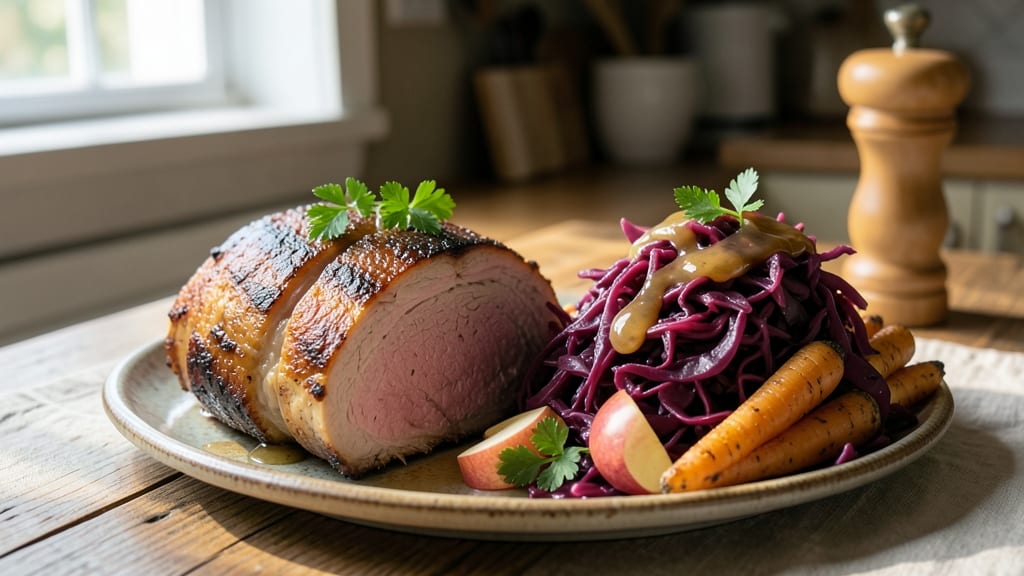
This German-inspired pork with red cabbage and apples recipe delivers a harmonious blend of savory, sweet, and tangy flavors that feels like a cozy European meal.
The secret lies in balancing the natural sweetness of apples with the earthy depth of red cabbage, all braised alongside tender pork until perfectly tender. I developed this recipe during a particularly chilly autumn weekend when I wanted to recreate the comforting flavors of my grandmother's kitchen.
The beauty of this one-pan dish is its simplicity—just a few quality ingredients that work together to create restaurant-quality results.
You'll start with a pork roast that develops a beautiful caramelized crust while staying juicy inside, while the red cabbage and apples soften into a sweet-tart sauce that coats every bite. The key is patience; letting everything braise slowly allows the flavors to meld and develop that signature depth.
By the time you serve this dish, you'll have a meal that's rich with tradition yet approachable for any home cook. The pork emerges fork-tender with a crisp exterior, the cabbage has softened into tender morsels, and the apples contribute just the right amount of sweetness to balance everything.
This is the kind of dish that tastes even better the next day, making it perfect for meal prep or a special Sunday dinner.
Pair it with crusty bread to soak up that delicious braising liquid, or serve alongside roasted potatoes for a complete meal. The technique is straightforward, but the results are undeniably impressive—proof that sometimes the most comforting meals are the simplest to make. Let's get cooking!
Ingredients for pork with red cabbage and apple
Six core ingredients plus pantry staples—this German-inspired feast comes together like a warm hug.
| Ingredient | Amount | Notes |
|---|---|---|
| Pork Roast 🥩 | 2 lb | Bone-in for best flavor |
| Red Cabbage 🥬 | 1 ½ lb | Shredded, about 8 cups |
| Apples 🍎 | 4 medium | Firm, like Honeycrisp |
| Carrots 🥕 | 4 medium | Whole, peeled and sliced |
| Onion 🧅 | 1 whole | Yellow, sliced |
| Garlic Cloves 🧄 | 4 cloves | Minced for depth |
| Apple Cider Vinegar 🍏 | ½ cup | For tangy brightness |
| Dijon Mustard 🌶️ | 1 tbsp | For richness |
| Brown Sugar 🍚 | ¼ cup | Packed, for caramelization |
| Dried Thyme 🌿 | 1 tsp | Or 1 tbsp fresh |
| Salt 🧂 | 1 ½ tsp | Kosher or sea salt |
| Black Pepper 🌶️ | ½ tsp | Freshly ground |
| Vegetable Oil 🫒 | 2 tbsp | For searing pork |
| Beef Broth 💧 | 1 ½ cups | Low-sodium preferred |
The pork is everything here. Bone-in cuts stay juicier, but boneless works too if you're in a hurry. I grab pork shoulder from Costco when I can—it's cheaper per pound and has that perfect marbling. If you're buying a whole roast, ask the butcher to cut it into 2-pound pieces for even cooking. The red cabbage? Look for heads that feel heavy for their size—that means they're packed with moisture. I usually find the best at Trader Joe's or my local German market, but the regular grocery store stuff works fine if it's firm and vibrant.
No apple cider vinegar? White wine vinegar at the same amount gets you close. Honeycrisp apples are ideal, but Granny Smith or Fuji work too—just adjust sweetness to taste. Carrots can be baby carrots if that's what's in the fridge, but whole carrots add better texture. The beef broth matters—low-sodium is key so you can control the salt level. Making your own? Use vegetable broth instead. And if you're short on time, canned chicken broth works in a pinch (just remember to reduce it later).
This dish tastes even better the next day—plan ahead. Store leftovers in the fridge for 4-5 days or freeze for 3 months. I like to portion it into containers so I can grab a serving for lunch without reheating the whole pan. The braising liquid reduces beautifully, so if you want extra sauce, just simmer it down longer. And if you've got crusty bread on hand, save some of that liquid to drizzle over it—trust me, it's worth it
Why You'll Love This Recipe
- One-Pot Magic: I swear by this when I’m too tired to scrub three pots. The cabbage and apples caramelize right in the same pan as the pork—no extra dishes, just layers of flavor building together.
- Sweet-Savory Crunch: That first bite? Crisp-tender cabbage, juicy apples, and pork so tender it falls apart. Honestly, the apples add this bright, almost cider-like sweetness that cuts through the richness—it’s the kind of balance that makes you go back for seconds.
- Leftovers That Shine: Between us, my lunchbox gets jealous of this. The flavors only get better the next day—pork stays moist, cabbage softens into something almost saucy, and I’ll often toss it into sandwiches or grain bowls. (Yes, even on a Tuesday night.)
- Budget-Friendly Feast: You’re getting a whole roast, a whole cabbage, and apples that stretch across multiple meals. I’ve fed six people for under $20 with this, and the leftovers? They’re my secret weapon for quick dinners all week.
Step-by-step instructions for German-inspired pork with red cabbage
Here's how to create a hearty, flavorful one-pan feast that brings German comfort food to your table.
Sear the Pork Roast for Maximum Flavor
Pat the 2 lb pork roast dry with paper towels—this ensures a perfect sear. Heat 2 tablespoons vegetable oil in a large Dutch oven over medium-high heat until shimmering. Place the pork roast in the pan and sear on all sides for 5-6 minutes total, pressing down gently with a spatula to prevent curling. You'll see golden brown patches forming—this is where all the flavor develops.
Once seared, remove the pork and set it aside on a plate. Don't clean the pan yet—those browned bits are pure flavor gold. This initial sear creates a delicious crust that'll hold up beautifully through the long cooking process ahead. The pork will continue cooking gently in the oven, so don't worry about fully cooking it on the stovetop.
Build the Savory Cabbage and Apple Mixture
In the same Dutch oven, add the sliced 1 whole onion and cook for 3-4 minutes until softened. Add the 4 cloves minced garlic cloves and cook for 30 seconds until fragrant—you should smell that wonderful garlic aroma wafting through your kitchen. This step forms the aromatic base for your entire dish.
Add the shredded 1.5 lb red cabbage, sliced 4 medium carrots, and 4 medium peeled and sliced apples to the pan. Stir everything together and cook for 5 minutes, letting the vegetables soften slightly. Then add the 0.5 cup apple cider vinegar, 1 tablespoon Dijon mustard, 0.25 cup packed brown sugar, 1 teaspoon dried thyme, 1.5 teaspoons salt, and 0.5 teaspoon black pepper. Stir well to coat all the vegetables in this flavorful mixture.
Combine and Simmer the One-Pan Feast
Return the seared pork roast to the Dutch oven, placing it on top of the vegetable mixture. Pour in the 1.5 cups beef broth, making sure the liquid reaches about halfway up the sides of the pork. Bring everything to a gentle simmer over medium heat, then cover the pot with a tight-fitting lid. This creates a steamy environment that'll cook the pork perfectly while tenderizing the vegetables.
Transfer the Dutch oven to a preheated 325°F oven and cook for 2 hours. Here's the thing—you want to let the pork cook low and slow. This ensures it stays juicy and tender rather than drying out. About halfway through cooking, give everything a stir to distribute the flavors evenly and prevent the vegetables from sticking to the bottom of the pan.
Finish with Crispy Edges and Perfect Doneness
After 2 hours, remove the lid and increase the oven temperature to 375°F. Return the pork to the oven uncovered for 20-25 minutes. This final step creates those beautiful caramelized edges on the vegetables and ensures the pork reaches a perfect internal temperature of 145°F. You'll know it's ready when the pork is fork-tender and the cabbage has softened but still maintains some bite.
Let the pork rest for 10 minutes before carving. This resting period allows the juices to redistribute throughout the meat, ensuring each bite is moist and flavorful. During this time, you can spoon the delicious cabbage and apple mixture over the sliced pork to serve. The combination of tender pork with sweet apples, slightly tangy cabbage, and savory broth creates a perfect balance of flavors in every bite.
Pro Tips For Making Pork With Red Cabbage And Apple
- Sear the Pork First: High heat. Seriously, crank it up to medium-high and sear that pork roast for 5-6 minutes per side before adding anything else. I learned this the hard way—skipping the sear means a bland, gray slab of pork instead of rich, caramelized flavor that carries through the whole dish.
- Core the Apples: Remove the cores and slice the apples thin—about 1/4-inch thick—so they cook through without turning to mush. I used to chop them roughly, and they’d either stay crunchy or dissolve into the sauce. Thin slices guarantee they’ll soften just enough to sweeten the cabbage but still hold shape.
- Don’t Overcrowd the Pan: If you’re braising the pork and veggies together, work in batches. Toss the onions, carrots, and half the cabbage in first, let them sizzle for 2-3 minutes, then pull them out to make space. Crowding steams the veggies instead of browning them, and you’ll end up with a watery, dull sauce instead of deep, caramelized flavor.
- Salt the Cabbage Early: Toss the shredded red cabbage with 1 teaspoon of salt and let it sit for 10 minutes before cooking. Sounds weird, but it works—it draws out the bitterness and makes the cabbage tender faster. I skip this when I’m lazy, but the dish is noticeably better when I don’t.
Perfect pairings for this recipe
Crusty Bread Pairing
Nothing complements this dish like a warm, crusty loaf of sourdough or rye bread. I recommend a fresh German-style pretzel bread from your local bakery—its dense texture soaks up the braising liquid beautifully while adding a delightful contrast.
For extra authenticity, try dark rye with caraway seeds, which pairs perfectly with the sweet-tart flavors of the cabbage and apples. 🥖
Wine Pairings
A medium-bodied red wine like German Spätburgunder (Pinot Noir) from the Mosel region cuts through the richness of the pork while complementing the apple's sweetness. The acidity in these wines balances the dish's caramelized notes beautifully.
For white wine lovers, a crisp Riesling with its slight tartness enhances the cabbage's tangy profile. I keep a bottle of Dr. Loosen Blue Slate Riesling on hand specifically for this recipe—it's a game-changer. 🍷
Beer Complements
For beer enthusiasts, a German-style Märzen with its malty sweetness and moderate hop bitterness creates an excellent contrast. I love pairing this dish with Weihenstephaner Original, Germany's oldest brewery's signature amber ale.
The maltiness in the beer mirrors the caramelized flavors in the pork, while the hops cleanse the palate between bites. For a lighter option, a Pilsner works well too—just avoid overly hoppy IPAs that might overpower the dish. 🍺
Seasonal Garnishes
Fresh chopped parsley or thyme sprigs add a bright, herbal note that elevates the dish's natural flavors. I also love sprinkling toasted hazelnuts over the top for a satisfying crunch, especially during autumn months.
For a touch of acidity, a squeeze of lemon juice just before serving brightens the entire plate. These finishing touches make the dish feel restaurant-quality without extra effort. 🌿
Side Dish Suggestions
If you want to round out the meal, roasted baby potatoes tossed with rosemary and garlic make a perfect companion. Their crispy edges contrast nicely with the tender pork. For a lighter option, a simple mixed greens salad with a light vinaigrette keeps the meal balanced.
I often serve this dish with sauerkraut on the side—its tangy flavor complements the sweetness of the apples wonderfully. 🥔
Dessert Pairings
After such a hearty meal, a light dessert like apple strudel or dark chocolate-dipped strawberries works beautifully. The apple theme ties everything together while providing a sweet finish.
For something simpler, a scoop of vanilla bean ice cream with a drizzle of caramel sauce lets the flavors of the main dish shine through. 🍏
Nutrition facts
Frequently asked questions
Can I substitute bone-in pork for boneless in this recipe?
Yes, but bone-in pork stays juicier and more flavorful. If using boneless, trim excess fat to prevent greasiness. The cooking time remains the same, but boneless cuts may dry out faster if overcooked. For best results, use pork shoulder or loin roast—both work beautifully.
How do I adjust the sweetness if I don't like apples?
Swap apples for pears or dried cranberries (soaked in water first) to keep the sweet-tart balance. For a savory twist, omit fruit entirely and add 1 extra tablespoon of Dijon mustard or 1 teaspoon of smoked paprika. The cabbage's natural sweetness will still shine through.
Why does the cabbage sometimes come out mushy?
Overcooking or too much liquid causes mushy cabbage. Reduce the beef broth to 1 cup instead of 1.5 cups, and cook uncovered for the last 15 minutes to evaporate excess moisture. Stirring halfway through also prevents sticking. The cabbage should be tender but still hold its shape.
Can I make this recipe in a slow cooker?
Sear the pork first, then combine all ingredients in your slow cooker. Cook on low for 6-7 hours or high for 4-5 hours. The pork will be fork-tender, and the cabbage will soften perfectly. Just add 1 extra tablespoon of broth if it looks dry. Slow cooking enhances the flavors even more!
What's the best way to reheat leftovers?
Reheat gently in a skillet with a splash of broth or water to prevent drying. Cover and warm on low heat for 10-15 minutes, stirring occasionally. For oven reheating, cover with foil and bake at 300°F for 20 minutes. Leftovers taste even better the next day—just add a squeeze of lemon juice for brightness.