
Main Courses
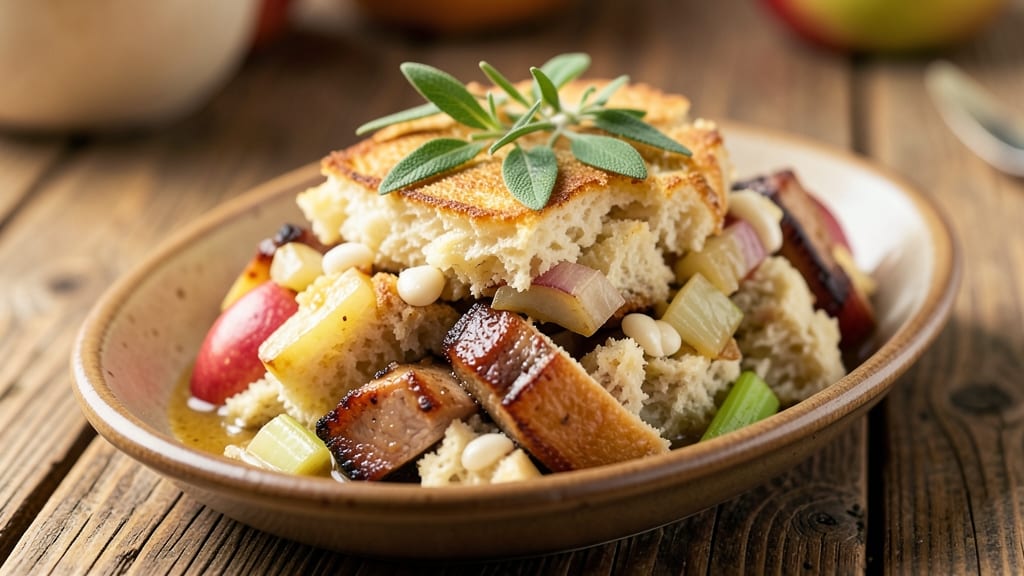
This pork sage apple stuffing recipe transforms classic holiday comfort into a showstopping centerpiece—where crispy bread meets tender pork and sweet apples in perfect harmony. 🌟 I developed it during a particularly chilly Thanksgiving when I wanted something that balanced rich flavors with a touch of autumnal brightness.
The secret lies in slow-cooking the pork until it becomes fork-tender, then folding it into toasted bread and caramelized apples for texture that's both rustic and refined.
The technique starts with a proper aromatic base—sautéing onions, celery, and garlic until golden—before adding dried sage and thyme for that classic herbed depth. Pork shoulder breaks down beautifully during baking, infusing the stuffing with savory richness, while crispy breadcrumbs add structure.
What makes this version stand out is the apple: I use a mix of tart Granny Smith and sweet Honeycrisp, diced small to distribute throughout without overwhelming the dish.
By the time it emerges from the oven, you'll have stuffing with golden, crispy edges and a moist, flavorful interior—where each bite delivers tender pork, sweet apple, and herbed bread in perfect balance.
The aroma alone will have guests gathering at the table, and the texture holds up beautifully even when reheated. This isn't just stuffing; it's a centerpiece that elevates any holiday meal.
Pair it with a robust red wine like Cabernet Sauvignon or a spiced apple cider to complement the dish's rich and sweet notes. The recipe scales effortlessly for crowds, and leftovers reheat perfectly for sandwiches the next day. Here's how to make it—your table is about to get an upgrade.
Ingredients for pork sage apple stuffing
Rich pork, herbed bread, and sweet apples create a stuffing that's crispy outside, tender inside.
| Ingredient | Amount | Notes |
|---|---|---|
| Pork Shoulder 🐖 | 1 ½ lb | Bone-in, cut into 1-inch cubes |
| Day-Old French Bread 🍞 | 12 slices | Crusts removed, torn into chunks |
| Yellow Onion 🧅 | 1 medium | Diced, about 1 cup |
| Celery Stalks 🥬 | 3 whole | Diced, about 1 cup |
| Garlic Cloves 🧄 | 4 cloves | Minced, about 1 tbsp |
| Granny Smith Apple 🍎 | 1 medium | Diced, about 1 cup |
| Honeycrisp Apple 🍎 | 1 medium | Diced, about 1 cup |
| Dried Sage 🌿 | 1 ½ tbsp | Crumbled, not powdered |
| Dried Thyme 🌿 | 1 tsp | Crumbled, not powdered |
| Unsalted Butter 🧈 | ½ cup | Cold, cubed |
| Chicken Broth 💧 | 1 ½ cups | Low-sodium preferred |
| Salt 🧂 | 1 ½ tsp | Diamond Crystal kosher |
| Black Pepper 🌶️ | ½ tsp | Freshly ground |
| Apple Cider Vinegar 🍎 | 1 tbsp | For brightness |
The pork shoulder is the flavor backbone—bone-in for extra richness. Look for cuts with good marbling at Whole Foods or your local butcher; pre-cut cubes from Costco work too. For the apples, Granny Smith adds tartness while Honeycrisp brings sweetness—both should be firm, not mealy. Fresh bread is key; Brioche or sourdough add extra depth if you want to splurge. The dried herbs? Penzeys or bulk bins at natural markets have the freshest, most aromatic options.
No pork shoulder? Chicken thighs work beautifully—just reduce the cooking time by 20 minutes. Substitute pear for apple if you prefer milder sweetness, or swap Bosc pears for extra texture. Running low on chicken broth? Vegetable broth plus 1 tsp soy sauce mimics the umami. The bread? Stale baguette slices are perfect, but if you're in a pinch, toasted white bread works. For extra crunch, toast your breadcrumbs separately in the oven at 375°F for 5 minutes before mixing.
This stuffing reheats beautifully—350°F for 20 minutes covered with foil, then uncovered for 5 minutes to crisp. Store leftovers in an airtight container for 4 days or freeze for 3 months. I always make double batches because it disappears faster than expected. For serving, transfer to a baking dish and broil for 3-5 minutes at the end to restore crispiness. Pair with a Cabernet Sauvignon or spiced cider for the full experience.
Why You'll Love This Recipe
- No Chopping Chaos: I swear by this recipe because the onions and celery go in whole—no fancy dicing, no tears. The bread soaks up all the juices from the pork and apples, so you’re basically just mixing and baking. Honestly, it’s the kind of dish where you can multitask and still feel like a hero.
- Pork Meets Magic: That crispy, caramelized pork shoulder? It’s the star here, but the sage and apples turn it into something special—like a Thanksgiving side and a hearty pork dish had a baby. The garlic cloves roast until they’re sweet and mellow, tying everything together in one rich, savory bite.
- Leftovers That Shine: Between us, this stuffing is better the next day. The flavors meld overnight, and it reheats like a dream—perfect for packed lunches or a lazy Sunday brunch. I’ve even turned it into a breakfast hash by frying it up with eggs. (Yes, even on a Tuesday night.)
- Budget-Friendly Crowd-Pleaser: You’re using day-old bread, affordable pork shoulder, and basic veggies—no specialty ingredients, no markup. It feeds a houseful of people without breaking the bank, and everyone will ask for the recipe. Not the prettiest, but the taste makes up for it every time.
Step-by-step instructions for pork sage apple stuffing
Here's how to transform day-old bread and pork into a stuffing so flavorful it'll steal the show.
👨🍳 Step 1: Prepare the Bread Base
Preheat your oven to 350°F and spread the 12 slices of day-old French bread (crusts removed) on a baking sheet. Toast for 10-12 minutes until lightly golden and crisp at the edges. This step is crucial—it prevents a soggy stuffing later.
While the bread toasts, chop the 1 medium yellow onion and 3 whole celery stalks into ¼-inch dice. The onion should yield about 1 cup when chopped. I like to use a sharp chef's knife for this—it gives you more control than a food processor. Set these aside in a bowl.
🍳 Step 2: Sauté the Vegetable Base
In a large skillet, melt 0.5 cup of cold, cubed unsalted butter over medium heat. Add the diced onion and celery, stirring occasionally for 8-10 minutes until softened but not browned. You want them to become translucent and tender—this ensures they'll blend seamlessly into the stuffing.
Add the 4 cloves of minced garlic and cook for another 30 seconds until fragrant. Here's where it gets good—sprinkle in the 1.5 tbsp of crumbled dried sage and 1 tsp of crumbled dried thyme. Stir for 1 minute to toast the herbs lightly—they'll release their essential oils and deepen the flavor profile.
🥘 Step 3: Cook the Pork Shoulder
Push the vegetable mixture to one side of the skillet and add the 1.5 lb of pork shoulder cubes (cut to 1-inch pieces). Sear for 3-4 minutes per side until browned on all sides. This step builds deep, meaty flavor that carries through the stuffing.
Once browned, add the 1.5 cups of chicken broth and 1 tbsp of apple cider vinegar to the skillet. Bring to a simmer, then reduce heat to low and let it cook uncovered for 15-20 minutes until the pork is tender and the liquid reduces by about half. This creates a rich, concentrated base for the stuffing.
🍏 Step 4: Add Apples and Seasonings
While the pork cooks, dice the 1 medium Granny Smith apple and 1 medium Honeycrisp apple into ¼-inch pieces. The Granny Smith adds tartness, while the Honeycrisp brings natural sweetness—together they create the perfect balance.
Add the apple dice to the pork mixture along with 1.5 tsp of salt and 0.5 tsp of freshly ground black pepper. Stir gently and cook for another 5 minutes until the apples soften slightly but still retain some texture. You want them to add bite and moisture without turning mushy.
🥘 Step 5: Combine and Bake to Perfection
Remove the skillet from heat and transfer the pork mixture to a large bowl. Add the toasted bread chunks and gently fold everything together until well combined. The bread should absorb the juices from the pork mixture—if it looks dry, add 1-2 tablespoons of the reserved cooking liquid to moisten.
Transfer the stuffing to a greased 9x13-inch baking dish and spread it evenly. Bake at 375°F for 25-30 minutes until the top is golden brown and crispy, and the internal temperature reaches 165°F. The stuffing should be hot and bubbly in the center when done.
Pro Tips For Making Pork Sage Apple Stuffing
- Sear the Pork First: I learned this the hard way—skipping the sear means bland, stringy pork in your stuffing. Pat the shoulder dry, then hit it with a hot pan (no oil needed) until deep brown on all sides. That crust locks in flavor and keeps it juicy when it bakes.
- Cube the Bread Small: Sure, you can eyeball it, but aim for 1-inch cubes—no bigger, no smaller. Oversized chunks stay dry; tiny crumbs turn to mush. Toss the cubes in a single layer on a baking sheet and dry them out at 300°F for 15 minutes first. Trust me, this is the thing that matters most for texture.
- Sweat the Onions Low: Crank the heat to medium-low and walk away for 10 minutes while the onions cook. They should be translucent, not golden—save that color for the pork. If they brown too fast, you’re killing their sweetness, and that’s the base flavor of your stuffing. (Yes, even if you’re impatient like me.)
- Toast the Celery: This isn’t the prettiest method, but it works: After chopping the celery, spread it on a dry pan and toast it over medium heat for 3–4 minutes until the edges darken slightly. The bitterness mellows, and the stuffing gets a deeper, nuttier note. Skip this, and the celery just tastes like wet cardboard.
Best sauces and condiments for these flavors
Apple Cider Glaze
This sweet-tart glaze elevates the stuffing by adding a glossy finish and extra apple flavor. Simmer ½ cup apple cider with 1 tbsp brown sugar and ½ tsp cinnamon in a small saucepan until reduced by half (5-7 minutes).
Brush over the baked stuffing just before serving for a restaurant-worthy touch. 🍎
Sage-Infused Gravy
Use the pork drippings from the skillet to make a rich gravy that ties everything together. After removing the pork, whisk 2 tbsp flour into the remaining juices, then slowly add 1 cup chicken broth.
Gradually thicken over medium heat, then stir in 1 tbsp crumbled sage. Serve warm alongside the stuffing for dipping.
Honey Butter Drizzle
For a luxurious finish, mix ¼ cup melted butter, 2 tbsp honey, and ½ tsp fresh thyme. Drizzle over the stuffing after baking and broil for 2 minutes. This caramelized honey butter adds a delicate sweetness that complements the pork and apples beautifully.
Spiced Apple Compote
Create a quick compote by simmering 1 cup diced apples, 1 tbsp apple cider vinegar, 1 tsp cinnamon, and 1 tsp brown sugar. Cook for 10 minutes, then mash slightly. Spoon over the stuffing before serving for extra moisture and flavor contrast.
Herbed Whipped Cream
For a lighter option, whip 1 cup heavy cream, 2 tbsp powdered sugar, and ½ tsp dried sage. Fold in 1 tbsp chopped pecans. Pipe rosettes over the stuffing or serve on the side for a creamy, herbed accent that balances the richness.
Smoked Maple Syrup
Add depth with a smoky twist by combining ¼ cup pure maple syrup, ½ tsp smoked paprika, and a pinch of salt. Warm gently and drizzle over the stuffing before serving. This works especially well if you have leftover smoked pork from your main course.
Nutrition facts
Frequently asked questions
Can I make this stuffing ahead of time?
This stuffing actually tastes better when made a day ahead. Store it in an airtight container in the refrigerator for 24 hours before baking. The flavors meld beautifully overnight, and reheating at 350°F for 20 minutes restores that perfect crispy texture. Pro tip: Cover with foil for the first 15 minutes to prevent over-browning.
What's the best way to crisp up the top?
For that golden, crispy finish, broil the stuffing for 3-5 minutes at the very end. First, remove it from the oven and spread an extra 1 tbsp of butter over the top, then place under the broiler. Watch closely—it can go from perfect to burnt in seconds! For extra crunch, sprinkle with 1 tbsp breadcrumbs before broiling.
Can I substitute chicken for the pork?
Yes, but adjust the cooking time! Use 1.5 lbs of boneless, skinless chicken thighs instead of pork shoulder. Cook them for 12-15 minutes (instead of 20) until fully tender, then proceed with the recipe. Chicken will make the stuffing slightly lighter, but the flavor profile remains rich and satisfying. For extra depth, add ½ tsp smoked paprika to the chicken while cooking.
Why does my stuffing turn out soggy?
Soggy stuffing usually means one of two things: either the bread wasn't toasted enough or the liquid wasn't reduced properly. First, always toast your bread until crisp—it should hold its shape when squeezed. Second, reduce the pork mixture until it's thick and syrupy before combining with bread. If it still looks dry, add just 1-2 tbsp of broth at the end, not more!
How do I scale this recipe for a crowd?
Double or triple the recipe easily! For 16 servings, use 3 lbs pork, 24 slices bread, 2 cups apples, and 3 cups broth. Bake in two 9x13-inch pans or one large 10x15-inch pan. Increase baking time by 5-10 minutes—check at 350°F for 30 minutes and adjust as needed. For extra hands-free prep, assemble the stuffing in a disposable roasting pan.