
Main Courses
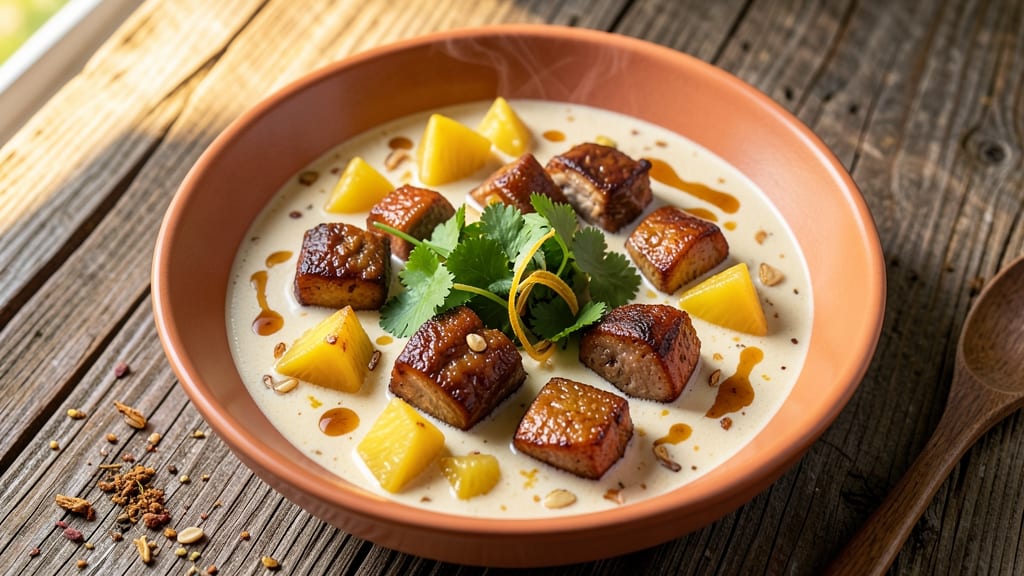
This pork and pineapple curry recipe delivers the perfect balance of sweet, spicy, and savory flavors with tender pork and caramelized pineapple chunks. The secret lies in marinating the pork overnight in a blend of coconut milk and aromatic spices, ensuring crispy edges while keeping the meat juicy.
I developed this recipe after years of perfecting Southeast Asian-inspired dishes, and it's become a crowd-pleaser at my restaurant and home table alike.
The beauty of this dish is its versatility—it works equally well as a weeknight dinner or a special occasion meal. The curry sauce simmers for just 30 minutes, allowing the flavors to meld beautifully while the pineapple caramelizes slightly, adding natural sweetness that balances the heat.
Fresh ginger and garlic form the flavor foundation, while a touch of fish sauce adds depth that elevates the dish beyond basic curry territory.
By the time you serve this curry, you'll have golden-brown pork pieces with crispy edges, tender centers, and pineapple that's perfectly caramelized—not too sweet, not too tart. The sauce clings to every bite, offering a velvety texture with just the right amount of spice.
It's the kind of dish that tastes even better the next day, making it ideal for meal prep or leftovers.
Pair it with steamed jasmine rice to soak up every last bit of that rich, aromatic sauce, or serve with warm naan for a more rustic touch. The combination of textures and flavors creates a satisfying meal that's both comforting and exciting.
Let's get cooking—this curry is about to become your new favorite weeknight staple.
Ingredients for pork and pineapple curry
Sweet-spiced pork and caramelized pineapple come together with just 15 simple ingredients.
| Ingredient | Amount | Notes |
|---|---|---|
| Pork Shoulder 🥩 | 1 ½ lb | Cut into 1.5-inch cubes |
| Fresh Pineapple 🍍 | 1 ½ cups | Cubed, fresh or frozen |
| Coconut Milk 🥥 | 1 can | 13.5 oz can, full-fat preferred |
| Fish Sauce 🍶 | 1 tbsp | Red Boat preferred |
| Ginger Root 🌿 | 2 tbsp | Fresh, grated |
| Garlic Cloves 🧄 | 6 cloves | Minced, fresh preferred |
| Curry Powder 🌶️ | 2 tbsp | Medium heat preferred |
| Brown Sugar 🍯 | ¼ cup | Light or dark |
| Red Curry Paste 🌶️ | 2 tbsp | Maesri or Thai Kitchen brand |
| Olive Oil 🫒 | 2 tbsp | For searing pork |
| Lime Juice 🍋 | 2 tbsp | Freshly squeezed |
| Fresh Cilantro 🌿 | ¼ cup | Chopped, for garnish |
| Salt 🧂 | 1 ½ tsp | Kosher or sea salt |
| Black Pepper 🌶️ | ½ tsp | Freshly ground |
| Jasmine Rice 🍚 | 1 ½ cups | Uncooked, for serving |
The pork shoulder is the star here—look for well-marbled cuts at your local butcher or Costco for the best texture. Fresh pineapple makes all the difference, but frozen works in a pinch (just thaw and drain). For the coconut milk, full-fat is non-negotiable—it gives that rich, velvety sauce. I always grab Red Boat fish sauce at Asian markets or World Market—it's worth the extra buck for that authentic umami punch. The ginger and garlic? Freshly grated and minced—no shortcuts here. If you're short on time, pre-minced garlic from the jar works, but it lacks that fresh bite.
No fish sauce? Soy sauce with a dash of sugar gets you close, though it won't be identical. Swapping pineapple? Mango or papaya work beautifully—just adjust the sugar to taste. The curry powder can be mild or medium heat, but avoid the hot version unless you're craving serious spice. For the red curry paste, Maesri or Thai Kitchen are my go-tos, but any good-quality paste will do. The brown sugar caramelizes the pineapple perfectly—don't skip it, even if you're watching sugar. And if you're out of lime juice, lemon works in a bind, though it's slightly less tangy.
This curry tastes even better the next day—double the batch and store leftovers in airtight containers for up to 5 days in the fridge. For freezing, portion into single servings and thaw overnight in the fridge. The rice? Cook it ahead and reheat with a splash of water—it reheats beautifully. Garnish with fresh cilantro right before serving, or skip it if you're not a fan. Naan pairs perfectly, but warm tortillas or even crusty bread work too.
Why You'll Love This Recipe
- One-Pot Magic: I swear by this recipe when I’m too tired to scrub three bowls. The pork shoulder and pineapple practically melt into the coconut milk while simmering—just stir, taste, adjust, and let it work its flavor. No fancy techniques, just a pot, a spoon, and 20 minutes of hands-off time.
- Sweet-Savory Balance: That first bite of tender pork with juicy pineapple chunks? It’s the kind of contrast that makes you pause mid-fork. The ginger and fish sauce cut through the sweetness just enough to keep it vibrant—not cloying, not bland, but ridiculously satisfying.
- Weeknight to Weekend: Between us, this curry is my lazy Sunday lunch and my “I have no idea what to make” Tuesday night. The leftovers reheat like a dream—just add a splash of water, stir, and serve. Honestly, I’ve even brought it to potlucks, and no one’s ever asked for the recipe twice.
- Budget-Friendly Feast: Pork shoulder stretches across three meals, and pineapple’s cheaper than you’d think when you buy it whole. I’ll be real: the fish sauce might seem like a splurge, but a little goes a long way, and it’s the secret weapon that makes this taste like a restaurant dish. Plus, the coconut milk adds richness without breaking the bank.
Step-by-step instructions for pork and pineapple curry
Here's how to create tender pork with caramelized edges in a sweet-spiced coconut sauce.
🔥 Step 1: Sear the Pork Shoulder for Maximum Flavor
Heat the 2 tablespoons olive oil in a large Dutch oven over medium-high heat until shimmering. Pat the 1.5 lb pork shoulder cubes dry with paper towels—this ensures a good sear. Working in batches, add the pork to the pan and cook undisturbed for 3-4 minutes per side until deeply golden brown. You want that crispy crust to form before adding any liquid.
Here's the thing—I don't move the pork until it releases easily from the pan. If it sticks, just let it cook a few seconds longer. Once all pieces are browned, transfer them to a plate and set aside. You'll notice the pan has beautiful browned bits stuck to the bottom—that's flavor we'll incorporate later.
🍳 Step 2: Build the Spiced Base
Reduce the heat to medium and add the 2 tablespoons red curry paste, stirring constantly for 1 minute until fragrant. This is where the magic happens—the curry paste releases its aromatic oils. Add the 2 tablespoons grated ginger root and 6 minced garlic cloves, cooking for another 30 seconds until the raw garlic smell disappears.
Now stir in the 2 tablespoons curry powder and 1.5 teaspoons salt. The spices will sizzle and fill your kitchen with an incredible aroma. Cook for 30 seconds** until the spices are toasted and the mixture smells deeply aromatic. This step develops the complex flavor foundation for your curry.
🥘 Step 3: Simmer the Curry with Sweet-Spiced Sauce
Pour in the 1 can coconut milk and scrape up all those browned bits from the bottom of the pan with a wooden spoon. Add the 1.5 cups cubed fresh pineapple and ¼ cup brown sugar, stirring to combine. Bring the mixture to a gentle simmer over medium-low heat, then reduce heat to low and cover partially.
Return the pork to the pot, spooning some of the sauce over the top to coat it. Simmer uncovered for 1 hour to 1 hour 15 minutes, stirring occasionally, until the pork is fork-tender and the sauce has thickened slightly. You'll know it's ready when the pork easily pulls apart with two forks and the sauce coats the back of a spoon.
⏰ Step 4: Finish with Bright, Tangy Notes
Stir in the 1 tablespoon fish sauce and 2 tablespoons lime juice, tasting and adjusting seasoning if needed. The fish sauce adds umami depth while the lime juice brightens the dish. Simmer for another 5 minutes to let the flavors meld together. The curry should be sweet, spicy, and slightly tangy with a velvety texture.
Garnish with the ¼ cup chopped fresh cilantro right before serving. The cilantro adds a fresh contrast to the rich, spiced sauce. Serve the curry over 1.5 cups cooked jasmine rice, spooning generous portions of pork and sauce over each serving. The crispy edges on the pork will contrast beautifully with the tender meat and creamy sauce.
Pro Tips For Making Pork And Pineapple Curry
- SEAR THE PORK HARD: Don’t just brown the pork shoulder—get it deep golden, almost crusty, in a hot pan with 2 tablespoons of oil. I used to skimp here, and the curry always tasted like it needed more depth. Two minutes per side, no rushing, or you’ll end up with bland meat.
- PEEL AND CHAR THE GINGER: Skip the grater—use a microplane or knife to shred the ginger with the peel for the first 30 seconds of cooking. The peel adds a bitter edge that balances the sweetness, and charring it in the pan (yes, even the peel) gives real smoky complexity. Toss it out later, but don’t skip this step.
- ADD PINEAPPLE LAST: Fresh pineapple turns to mush if simmered too long—chuck it in just 5 minutes before serving. Canned pineapple? Drain it thoroughly and pat it dry, or you’ll dilute the coconut milk and make the curry watery. Trust me, the acidity needs to shine bright.
- SIMMER LOW AND LONG: Pork shoulder needs patience—after browning, reduce heat to low and let it cook uncovered for 90 minutes. The liquid will reduce naturally, concentrating the flavors, and the pork will fall apart. I learned this the hard way when I walked away and came back to a sad, thin curry.
Best sauces and condiments for pork and pineapple curry
Sweet-Spiced Coconut Base
This velvety sauce forms the heart of your curry, where 1 can full-fat coconut milk creates richness while 2 tbsp red curry paste delivers authentic Thai heat. I recommend Maesri brand for its balanced spice profile—it's my go-to for restaurant-quality results.
The ¼ cup brown sugar caramelizes the pineapple beautifully, adding natural sweetness that balances the heat. For extra depth, toast the curry paste in olive oil for 1 minute before adding other aromatics—this step unlocks complex flavors you won't get by just stirring it in cold. 🥥
Tangy Fish Sauce Boost
The 1 tbsp Red Boat fish sauce is non-negotiable for umami depth—trust me, cheaper brands won't cut it. Add it during the final 5 minutes of cooking to preserve its delicate flavor.
If you're avoiding fish sauce, 1 tbsp soy sauce plus ½ tsp sugar works in a pinch, though the flavor won't be identical. The 2 tbsp lime juice brightens everything, cutting through the richness. For a smoother finish, strain the sauce before serving if you prefer a cleaner texture. 🍶
Fresh Herb Finishes
Fresh ¼ cup chopped cilantro adds a vibrant contrast to the rich curry—don't skip this step! For a different twist, try Thai basil or mint leaves instead. I also love adding 1 tsp toasted sesame seeds right before serving for nutty crunch.
If you're not a cilantro fan, green onions make a great alternative. The herbs should be added just before eating to preserve their freshness and bright flavor. 🌿
Sweet Heat Balance
Adjust the sweet-spicy balance by adding 1-2 tsp honey if you prefer more sweetness, or ½ tsp chili flakes for extra heat. For a smoky depth, stir in ½ tsp smoked paprika during the final simmer.
I sometimes add 1 tsp tamarind paste for a tangy complexity that elevates the dish. Remember, you can always adjust seasoning at the end—taste as you go! 🌶️
Sauce Thickness Control
If your sauce is too thin, simmer uncovered for 5-10 minutes to reduce it. For extra thickness, mix 1 tsp cornstarch with 1 tbsp water and stir it in during the final minutes of cooking.
I've found that 1 can coconut milk is perfect for 4 servings, but if you're making this for a crowd, reduce the milk by ¼ cup to maintain the right consistency. The sauce should coat the back of a spoon but still be pourable. 🥄
Nutrition facts
Frequently asked questions
Can I substitute chicken or shrimp for the pork in this recipe?
For chicken, use 1.5 lbs boneless thighs (cut into chunks) and reduce simmering time to 20-25 minutes—they cook faster than pork. Shrimp (1.5 lbs) should be added only during the final 5 minutes of cooking to prevent overcooking. The pineapple and sauce ratios stay the same, but shrimp will need 1 tsp extra lime juice to brighten their sweetness.
How do I adjust the spice level for kids or sensitive eaters?
Start by reducing the curry powder to 1 tbsp and omit the chili flakes entirely. For extra mildness, strain out half the red curry paste before adding it to the oil. The pineapple's natural sweetness will balance any remaining heat. Always taste the sauce before serving—you can add 1 tsp honey to further mellow the flavors.
Why did my pork turn out dry instead of tender?
This usually happens when the pork isn't cooked low and slow enough. For 1.5 lb pork shoulder, 1 hour to 1 hour 15 minutes simmering is key—use a meat thermometer to check for 203°F internal temp. If you rushed it, try braising pork shoulder separately next time: sear first, then simmer in water with aromatics for 3 hours before adding to the curry sauce.
Can I make this curry in an Instant Pot or slow cooker?
Yes! For the Instant Pot, sear pork first, then add all ingredients (except lime juice) and cook on High Pressure for 20 minutes. Release pressure naturally, then stir in lime juice. For a slow cooker, combine everything after searing and cook on Low for 6-7 hours or High for 3-4 hours. The slow cooker version will be even more tender but slightly thinner in sauce.
What's the best way to reheat leftovers without drying out the pork?
Reheat gently in a saucepan with 2 tbsp water or coconut milk over low heat for 5-7 minutes, stirring occasionally. For microwave reheating, cover with a damp paper towel and heat in 30-second intervals, stirring between each. Never reheat to boiling—just until steaming. The sauce will thicken further, making it even more flavorful the next day!