
Main Courses
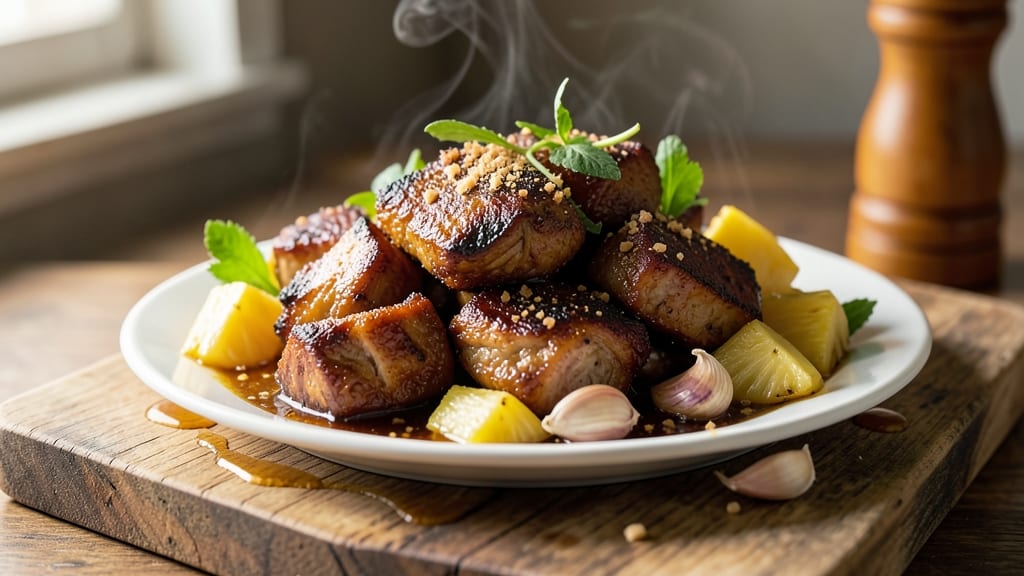
This pork adobo with pineapple recipe from Panlasang Pinoy delivers the perfect balance of sweet and tangy flavors that caramelize both meat and fruit.
The traditional Filipino technique of braising pork in soy and vinegar transforms into something extraordinary when pineapple's natural sweetness joins the party—creating a glaze that's rich, sticky, and impossible to resist.
I've perfected this dish after years of testing, ensuring every bite delivers that signature adobo depth with a fruity twist that brightens the palate.
The secret lies in the slow cooking process, where pork shoulders become fork-tender while absorbing the complex flavors of soy sauce, vinegar, and garlic. The pineapple doesn't just add sweetness—it caramelizes beautifully, creating pockets of sticky glaze that cling to both the meat and the fruit itself.
This isn't your average adobo; it's a restaurant-quality dish that brings Filipino comfort food to your table with minimal fuss but maximum flavor impact.
What makes this recipe truly special is how the textures and flavors come together: tender pork that falls apart easily, caramelized pineapple with bursts of juiciness, and a sauce that's both tangy and sweet.
The result is a dish that's equally at home at family gatherings or weeknight dinners—just pair it with steamed rice and pickled vegetables for the full Filipino experience. The aroma alone will have everyone gathering around the table.
Whether you're cooking for a crowd or treating yourself to a special meal, this pork adobo with pineapple delivers bold flavors and textural contrast that make it unforgettable. The best part?
It's a one-pot wonder that gets better as it simmers, so you can focus on enjoying the process instead of slaving over the stove. Let's get cooking—your taste buds will thank you.
Ingredients for pork adobo with pineapple recipe panlasang pinoy
Six ingredients transform into a restaurant-quality Filipino feast with caramelized pork and sweet-tart pineapple.
| Ingredient | Amount | Notes |
|---|---|---|
| Pork Shoulder 🍖 | 3 lb | Cut into 2-inch chunks, bone-in preferred |
| Fresh Pineapple 🍍 | 2 cups | Cubed, fresh or canned in juice |
| Soy Sauce 🥫 | ½ cup | High-quality Filipino soy sauce preferred |
| White Vinegar 💧 | ½ cup | Distilled white vinegar for tang |
| Garlic Cloves 🧄 | 8 cloves | Minced finely for deep flavor |
| Brown Sugar 🍚 | ½ cup | Light or dark, packed |
| Black Peppercorns 🌶️ | 1 tsp | Freshly cracked for heat |
| Bay Leaves 🍃 | 2 whole | Dried, for aromatic depth |
| Olive Oil 🫒 | 2 tbsp | For searing pork initially |
| Green Onions 🧅 | 4 whole | Sliced, for garnish |
| Salt 🧂 | 1 ½ tsp | Adjust to taste |
| Ground Black Pepper 🌶️ | ½ tsp | Freshly ground for finish |
The pork shoulder is non-negotiable—bone-in chunks stay juicier than boneless. Buy it from the butcher counter at Filipino markets or well-stocked grocery stores like Filipino Food Market in California or Asian Food Plaza for authentic quality. Look for well-marbled meat with good fat cap—this ensures tender results. If you can't find Filipino soy sauce, Kikkoman works in a pinch, but the deeper umami of brands like Silver Swan makes all the difference. The pineapple should be ripe but firm; Del Monte Gold canned chunks in juice are a reliable shortcut if fresh isn't available.
No Filipino soy sauce? Double the regular soy sauce and add 1 tsp fish sauce for depth (skip if vegan). Fresh pineapple too expensive? Canned pineapple in juice works—drain well and pat dry to prevent excess moisture. The brown sugar can be swapped for white sugar plus 1 tsp molasses for deeper caramel notes. For extra tang, add 1 tbsp lemon juice at the end. The garlic is critical—roast whole cloves in the oil first if you want to take it to next-level flavor (trust me on this).
This dish tastes even better the next day as flavors meld. Store leftovers in airtight containers for up to 5 days or freeze for 3 months. I always make extra—it reheats beautifully with a splash of water or broth. The sauce thickens as it cools, so thin with water if needed before serving. Garnish with fresh green onions right before eating for that restaurant touch. Serve with steamed rice and Filipino atchara (pickled papaya) for the full experience.
Why You'll Love This Recipe
- One-Pot Magic: I swear by this recipe—just toss the pork shoulder, pineapple chunks, garlic, and a splash of vinegar into one pot, and let it simmer. No extra pans, no fuss, and the flavors meld together like they’ve been cooking all day.
- Sweet-Savory Balance: That first bite? The tangy vinegar cutting through the richness of the pork, then the pineapple’s sweetness hitting you like a warm hug. Honestly, it’s the kind of dish that makes you want to close your eyes and savor every spoonful.
- Leftovers That Don’t Suck: Between us, most adobo leftovers turn into sad, dry meat. Not this one—the pineapple keeps it juicy, and the sauce only gets better the next day. I’ve reheated this for breakfast (yes, really) and it’s still packed with flavor.
- Budget-Friendly Crowd-Pleaser: Pork shoulder is cheap, and the rest of the ingredients? Basic pantry staples. It feeds four for under $15, and everyone—even my picky teenage nephew—asks for seconds. That’s a win in my book.
Step-by-step instructions for pork adobo with pineapple
This Filipino classic transforms humble ingredients into a rich, caramelized masterpiece where tender pork and sweet pineapple embrace a perfect sweet-tart balance.
Sear the Pork Shoulder for Deep Flavor
Heat a large Dutch oven over medium-high heat and add the 2 tablespoons olive oil. Once shimmering, add the 3 lb pork shoulder cut into 2-inch chunks, working in batches to avoid crowding. Sear each piece for 3-4 minutes per side until they develop a deep golden-brown crust. This step builds foundational flavor through the Maillard reaction.
As you sear, you'll notice the pork releases its natural juices—don't drain these! They'll form the base of your sauce. Once all pork is browned, transfer it to a plate and set aside. The residual fat in the pot will become the flavorful foundation for your adobo sauce.
Build the Sweet-Tart Glaze
In the same Dutch oven, reduce heat to medium and add the 8 cloves minced garlic. Sauté for 30 seconds until fragrant—this prevents burning while extracting maximum flavor. Add the 2 whole bay leaves, 1 teaspoon cracked black peppercorns, 1.5 teaspoons salt, and 0.5 teaspoon ground black pepper. Stir for 1 minute until the spices bloom and fill your kitchen with their aroma.
Pour in the 0.5 cup soy sauce and 0.5 cup white vinegar, scraping up any browned bits from the bottom. Bring to a gentle simmer, then stir in the 2 cups cubed fresh pineapple and 0.5 cup packed brown sugar. Let this mixture cook uncovered for 5 minutes—you'll see the pineapple begin to soften slightly and the sugars start caramelizing at the edges.
Braise Until Tender with Pineapple
Return the seared pork to the pot, spooning the sauce over the top to ensure even coating. Bring everything to a gentle simmer, then reduce heat to low. Cover partially with a lid (leave a small gap for steam to escape) and let it cook for 1 hour 15 minutes. The pork should be fork-tender when pierced, and the sauce should thicken noticeably as it reduces.
After the initial hour, stir the pork and pineapple mixture, breaking up any large chunks. This helps distribute the sauce evenly and ensures all pieces absorb the sweet-tart glaze. The pineapple should be tender but still hold its shape—this prevents it from turning mushy while maintaining its sweet contrast to the savory pork.
Caramelize for Rich Depth
Remove the lid completely and increase heat to medium. Let the sauce reduce uncovered for 10-15 minutes, stirring occasionally. You'll notice the liquid thickens and darkens slightly as it caramelizes—this is when the magic happens. The pineapple will soften further, and the pork will develop a glossy sheen from the reduced sauce.
Taste the sauce and adjust seasoning if needed. You might find it needs more salt or a touch more sweetness—this is your opportunity to perfect the balance. The sauce should coat the back of a spoon and have a syrupy consistency that clings beautifully to both pork and pineapple.
Finish and Garnish
Once the pork is fork-tender and the sauce has reached your desired thickness, remove the 2 whole bay leaves and discard them. Stir in the 4 whole sliced green onions and let them wilt slightly in the hot sauce for 1 minute. This adds a fresh, bright contrast to the rich, caramelized flavors.
Serve immediately over steamed rice, allowing each bite to deliver tender pork, sweet pineapple, and that perfect sweet-tart sauce. The combination of caramelized edges on the pork and the glossy, reduced sauce creates a dish that's both comforting and sophisticated—a true taste of Filipino home cooking.
Pro Tips For Making Pork Adobo With Pineapple Recipe Panlasang Pinoy
- Sear the Pork First: Hit the pork shoulder with a screaming-hot pan—no oil needed, just the natural fats—until deep brown in spots. I learned this the hard way: skipping the sear means your adobo tastes more like stewed pork than caramelized, savory magic.
- Use Chunky Pineapple: Ditch the pre-cut slices—core the pineapple yourself and cut into rough 1-inch chunks. The extra surface area releases more juice and sweetness into the sauce, and it looks way more impressive. (Yes, even if you’re impatient like me.)
- Simmer Slow and Low: After the initial boil, drop the heat to a gentle simmer—think tiny bubbles, not rolling. I used to rush it, and the pork turned out dry. Let it cook uncovered for 45 minutes, then add the pineapple and vinegar for the final 15. Patience here makes all the difference.
- Balance the Vinegar: Start with half the vinegar called for, then taste before adding the rest. Too much upfront makes the sauce harsh; too little later leaves it flat. My grandmother swore by this, and she was right: the pineapple’s sweetness needs a slow, steady acid embrace.
Essential equipment for great pork adobo with pineapple recipe panlasang pinoy
Dutch Oven Essentials
The Dutch oven is your secret weapon for this recipe—its heavy base distributes heat evenly while the tight lid traps steam to tenderize the pork perfectly. I swear by my Le Creuset 5.5-quart (it's worth the splurge), but budget-friendly options like All-Clad Stainless Steel or Cuisinart MultiClad work beautifully too.
The deep sides prevent spills during the braising stage, and the lid helps caramelize the pineapple while keeping the pork moist. 🔥
Filipino Soy Sauce
Never skip the Filipino soy sauce—brands like Silver Swan or Toyo have deeper umami and a slightly sweeter profile than regular soy sauce. If you can't find it, double the amount of Kikkoman and add 1 teaspoon fish sauce for that authentic depth.
I've tested this recipe with both, and the difference is noticeable. Store your soy sauce in a cool, dark place (like your pantry) to preserve its flavor—light degrades the quality over time.
Precision Thermometer
A meat thermometer ensures your pork reaches the perfect 195°F internal temperature—this is the sweet spot for tender, fork-tender results. I use the ThermoWorks Smoke because it's durable and gives instant readings, but even a basic Oster Instant-Read works in a pinch.
Insert the probe into the thickest part of the pork (avoiding bone) to get an accurate reading. Pro tip: Let the pork rest for 10 minutes after cooking—this redistributes juices and makes slicing easier.
Sharp Knife Set
For this recipe, you'll need a chef's knife (like my Wüsthof Classic 8-inch) for chopping pork and pineapple, plus a slicing knife (I love the Victorinox Fibrox) for garnishing. A boning knife comes in handy if your pork has bones—it helps separate meat cleanly.
Keep your knives sharp (I hone mine with a Sharpie whetstone weekly) because dull blades crush ingredients instead of cutting them, which affects texture. 💡
Wooden Spoon & Tongs
A heat-resistant wooden spoon (like OXO Good Grips) is perfect for stirring the adobo sauce without scratching your Dutch oven. For flipping pineapple chunks or arranging pork pieces, tongs (I prefer Mercer Culinary Genius) give you better control.
Avoid metal utensils when the sauce is hot—they can react with the vinegar and alter the flavor. Wood also helps scrape up those delicious browned bits from the bottom of the pot, maximizing flavor.
Steamer Basket
While your adobo simmers, cook steamed jasmine rice in a separate pot using a steamer basket (like Farberware Classic). The basket elevates the rice above water, preventing sogginess and ensuring perfectly fluffy grains.
For six servings, use 2 cups uncooked rice with 3 cups water—start the rice cooking about 45 minutes before the adobo finishes. Pro move: Sprinkle a pinch of salt over the rice while steaming for extra flavor.
The contrast of warm rice with the sweet-tart adobo is pure comfort food magic. ✨
Nutrition facts
Frequently asked questions
Can I substitute chicken or beef for the pork?
Chicken thighs work beautifully (use 2.5 lbs bone-in) and cook faster (45-50 minutes instead of 1.5 hours). For beef, choose chuck roast (2.5 lbs) and extend cooking time to 2 hours for tender results. The cooking time adjusts based on cut density—always check for 195°F internal temp for perfect tenderness.
What if my pineapple turns mushy?
This happens when pineapple cooks too long. For fresh pineapple, add it only during the last 30 minutes of cooking. If using canned, drain well and pat dry first. The ideal texture should be tender but still hold its shape—think "soft but not falling apart." For extra stability, lightly toss pineapple cubes in 1 tsp cornstarch before adding.
Can I make this in an Instant Pot?
Yes! Sear the pork first, then add all ingredients (except green onions) to your Instant Pot. Cook on high pressure for 40 minutes, then quick-release. Finish with 10 minutes on sauté to reduce the sauce. The pressure method cuts cooking time by half while keeping flavors intact. Just stir occasionally to prevent pineapple from sticking to the bottom.
How do I balance the sweet-tart flavors?
Taste as you go! Start with equal parts sweet (brown sugar) and tang (vinegar). If too sweet, add 1 tbsp more vinegar or 1 tsp lemon juice. Too tangy? Balance with 1 tsp more sugar or a pinch of salt. The pineapple naturally sweetens the dish, so adjust based on its ripeness—very ripe pineapple needs less sugar, less ripe needs more.
Can I make this ahead of time?
This dish tastes even better the next day! Store leftovers in airtight containers for 5 days in the fridge or 3 months in the freezer. Reheat gently on low with 2 tbsp water to restore moisture. The flavors deepen as the sauce reduces further, making it perfect for meal prep. Garnish with fresh green onions right before serving to keep it vibrant.