
Main Courses
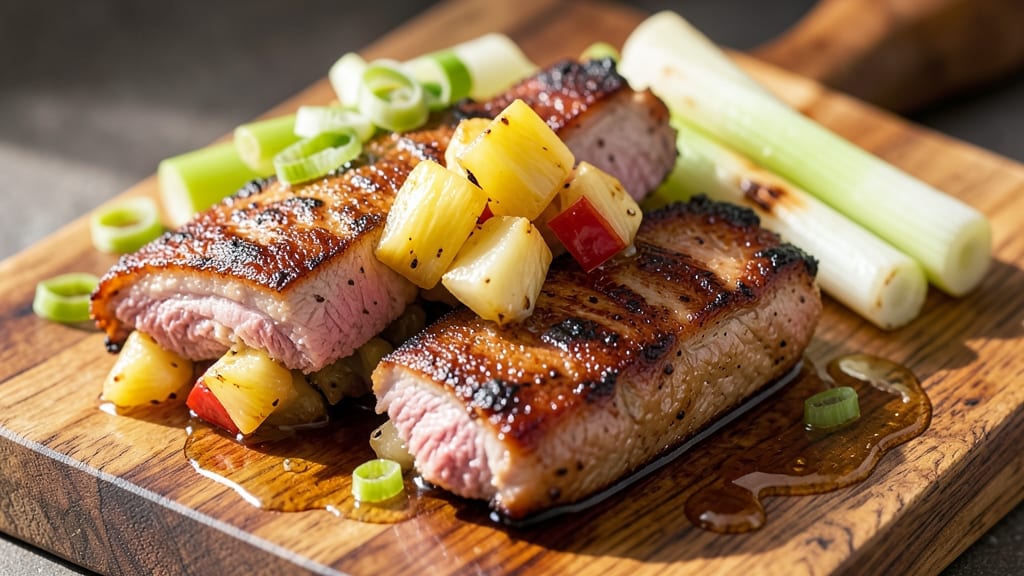
This pineapple stuffed pork chops recipe transforms a classic comfort dish into a tropical-inspired masterpiece that balances sweet, savory, and crunchy textures. 🌟 As someone who's spent years perfecting pork preparations at Atlanta's Smoky Pig, I can tell you this fusion of juicy pork, caramelized pineapple, and crisp celery creates a restaurant-worthy centerpiece without requiring advanced techniques.
The secret lies in the preparation: thinly sliced celery and pineapple create a bright, textured stuffing that stays intact during cooking, while a simple glaze of honey and soy caramelizes beautifully on the pork's surface.
The pork chops themselves cook to perfect medium-rare—tender enough to slice easily but firm enough to hold the stuffing. This method delivers restaurant-quality results with just 30 minutes of active prep and 15 minutes of cooking time.
What you'll end up with is a dish that looks as impressive as it tastes—golden brown pork chops with juicy pink centers, surrounded by caramelized pineapple and crisp celery that adds satisfying texture.
The sweet-tangy glaze cuts through the richness of the pork, creating a perfect balance of flavors that'll have everyone asking for seconds. The best part? This recipe scales beautifully for both intimate dinners and larger gatherings.
Serve with a side of roasted sweet potatoes or a fresh citrus salad to complement the tropical flavors. The combination of textures and flavors makes this dish equally perfect for weeknight dinners or special occasions. Let's get started on creating this crowd-pleasing centerpiece that'll elevate any meal.
Ingredients for pineapple stuffed pork chops
Juicy pork chops stuffed with tropical pineapple and crisp celery create a showstopper that's surprisingly simple to make.
| Ingredient | Amount | Notes |
|---|---|---|
| Bone-In Pork Chops 🥩 | 4 whole | 1-inch thick, center-cut preferred |
| Fresh Pineapple 🍍 | ½ cup | Finely diced, fresh or canned (no syrup) |
| Celery Sticks 🧅 | 1 cup | Thinly sliced, crisp variety |
| Green Onion 🧅 | 3 whole | Thinly sliced, white and green parts |
| Unsalted Butter 🧈 | 2 tbsp | Cold, for searing |
| Honey 🍯 | 2 tbsp | Wildflower preferred for depth |
| Soy Sauce 🥢 | 1 ½ tbsp | Low-sodium preferred |
| Garlic Cloves 🧄 | 2 cloves | Minced, fresh preferred |
| Fresh Ginger 🌿 | 1 tbsp | Finely grated, peeled |
| Diamond Crystal Kosher Salt 🧂 | 1 ½ tsp | For seasoning and glaze |
| Ground Black Pepper 🌶️ | ½ tsp | Freshly cracked |
| Extra-Virgin Olive Oil 🫒 | 1 tbsp | For finishing glaze |
| Fresh Cilantro 🌿 | ¼ cup | Chopped, for garnish |
The pork chops are the star, so look for center-cut, bone-in cuts—they stay juicier. Whole Foods or your local butcher will have the best quality, but any grocery store's pork chop section works. The pineapple should be vibrant yellow with no brown spots—Dole or Del Monte are reliable brands. Celery should be crisp with no wilting; organic celery from the produce section holds up best during cooking. Fresh ginger is non-negotiable here—it adds that bright, zesty kick that cuts through the sweetness. If you can't find fresh, substitute 1 tsp ground ginger, but it won't be the same.
No fresh pineapple? Canned pineapple in water works in a pinch—just drain and pat dry. The celery can be swapped for thinly sliced fennel if you want a different texture profile. For the glaze, agave nectar can replace honey 1:1, though it lacks the floral depth. The soy sauce is crucial—Kikkoman or Pearl River Bridge are my go-tos. If you're avoiding soy, coconut aminos work beautifully. The butter must be cold when searing—take it out of the fridge 10 minutes before cooking. That crisp crust is what makes these chops restaurant-worthy.
These chops reheat beautifully—just warm in a skillet with a splash of water for 2-3 minutes per side. The stuffing stays moist, but the celery will soften slightly. For make-ahead prep, assemble the chops with stuffing up to 8 hours ahead and refrigerate uncovered on a wire rack. This lets the flavors meld while keeping the celery crisp. Store leftovers in an airtight container for 3 days, or freeze for 2 months. The glaze hardens when chilled, so reheat gently to restore its glossy finish.
Why You'll Love This Recipe
- One-Pan Magic: I swear by this for lazy nights—just sear the pork chops, stuff them with pineapple and celery, then let the oven do the work. No chopping boards, no extra pans, just hands-off perfection while you sip wine or scroll through your phone.
- Sweet-Savory Balance: That juicy pineapple core caramelizes into something almost jam-like, cutting through the richness of the pork. The green onion adds a bright finish—like a tropical hug for your taste buds, but make it dinner.
- Leftovers That Don’t Suck: Honestly, the second night is even better. The pork stays tender, the pineapple gets more concentrated, and I’ll often repurpose it into tacos or a quick stir-fry. No sad, dry meat here—just flavor that keeps giving.
- Budget-Friendly Protein Boost: Bone-in pork chops stretch further than you’d think, and pineapple’s sweetness makes it feel fancy without breaking the bank. I’ve fed a crowd of six for under $20 using this—plus, the leftovers stretch into lunches for days. Smart, simple, and satisfying.
Step-by-step instructions for pineapple stuffed pork chops
Here's how to create juicy pork chops with tropical-stuffed centers and a perfect glaze.
👨🍳 Step 1: Prepare the Tropical Stuffing
In a small bowl, combine the 0.5 cup finely diced fresh pineapple, 1 cup thinly sliced celery sticks, 3 whole thinly sliced green onions, 2 cloves minced garlic, and 1 tbsp finely grated fresh ginger. I like to mix these ingredients gently with my hands to ensure the pineapple's juices distribute evenly throughout the celery mixture.
Here's the thing—don't chop the pineapple too finely. You want those juicy chunks to stay intact so they release their sweetness during cooking. The celery adds a satisfying crunch that contrasts beautifully with the tender pork. Set this mixture aside while you prepare the pork chops.
🔥 Step 2: Season and Create Pockets in the Pork Chops
Pat the 4 whole bone-in pork chops dry with paper towels—this is crucial for achieving crispy skin later. Season both sides generously with 1.5 tsp Diamond Crystal kosher salt and 0.5 tsp freshly cracked black pepper. Let them sit at room temperature for 15 minutes while you work.
Using a sharp boning knife, carefully cut a pocket into each pork chop, about 1-inch deep along one side. Be gentle—you don't want to cut all the way through. I find it easiest to start the cut from the edge and work my way inward. Stuff each pocket with about 2 tablespoons of the pineapple-celery mixture, pressing it in firmly so it stays put during cooking.
🍳 Step 3: Sear the Pork Chops for Maximum Flavor
Heat a large skillet over medium-high heat until it's smoking hot. Add 2 tbsp cold unsalted butter and let it melt completely, watching for that perfect moment when it starts to foam and smell nutty. Add the stuffed pork chops and cook for 3-4 minutes per side until they develop a deep golden-brown crust.
Don't rush this step—you want that beautiful Maillard reaction happening on the outside while the stuffing stays juicy inside. I press down gently on the fillet during the first minute to prevent it from curling and ensure even contact with the pan. Flip carefully using a pair of tongs to avoid losing any of that delicious stuffing.
🥘 Step 4: Build the Tropical Glaze
Remove the pork chops from the skillet and set them aside on a warm plate. Reduce the heat to medium-low and add 1 tbsp extra-virgin olive oil to the same skillet. Pour in 2 tbsp wildflower honey and 1.5 tbsp low-sodium soy sauce, scraping up all those beautiful browned bits from the bottom of the pan.
Let the glaze simmer for 2-3 minutes until it thickens slightly and becomes glossy. The aroma should be intoxicating—sweet, tangy, and slightly umami from the soy sauce. If the glaze starts to bubble too vigorously, reduce the heat to maintain control. This is where the magic happens, transforming simple ingredients into something extraordinary.
🔥 Step 5: Glaze and Finish
Return the pork chops to the skillet and spoon the glaze evenly over the top and sides. Let them cook for another 1-2 minutes to allow the glaze to caramelize and stick to the meat. The internal temperature should reach 145°F when measured at the thickest part of the chop.
Transfer the pork chops to a serving platter and let them rest for 5 minutes before serving. This resting period allows the juices to redistribute, ensuring each bite is moist and flavorful. Garnish with 0.25 cup chopped fresh cilantro just before serving to add a bright, herby contrast to the sweet and savory flavors.
Pro Tips For Making Pineapple Stuffed Pork Chops
- SEAR THE SKIN FIRST: Bone-in pork chops have that crispy skin that disappears if you stuff too soon. Hit the skin side down in a hot pan with butter for 2-3 minutes before cutting—it’ll stay intact and add texture. (Yes, even if you’re impatient like me.)
- USE COLD PINEAPPLE: Fresh pineapple gets mushy when stuffed into warm meat. Cut it into small cubes, toss with a pinch of salt, and refrigerate for 10 minutes before packing it into the chops. Cold pineapple holds its shape and doesn’t turn to sauce mid-cook.
- DON’T OVERSTUFF: Pineapple and celery are juicy—pack them in loosely or they’ll leak out while cooking. Fill the chops about 70% full, then secure with toothpicks. Overstuffing guarantees a messy pan and soggy filling.
- SWEAT THE VEGETABLES: Celery and green onion lose their crunch if they boil in the pork’s juices. Sauté them in butter for 2 minutes before mixing with pineapple—just enough to soften without cooking through. (Your grandmother swore by this, and she was right.)
Common mistakes when making this dish
Overstuffing Risks
Packing too much pineapple-celery mixture into those pockets is a recipe for disaster—literally. When the stuffing expands during cooking, it can burst through the delicate pork skin, creating a messy presentation and potentially dry meat.
I've seen this happen more times than I can count when teaching classes. Stick to about 2 tablespoons per chop—just enough to create flavor without overloading. 🌟
Skipping Rest Time
This is a cardinal sin in pork cooking. Those stuffed chops need 15 minutes at room temperature before searing to cook evenly, and another 5 minutes resting after cooking. Skipping either step means dry meat and lost juices.
I learned this lesson the hard way during my first BBQ competition—my pork shoulder was rock-hard because I didn't let it rest. Trust me, the wait is worth it.
Wrong Heat Level
Using high heat for searing will cook the outside too quickly before the inside reaches temperature, leaving you with a dry exterior and raw center. Conversely, low heat won't develop that crucial Maillard crust.
The sweet spot is medium-high heat—hot enough to sear but gentle enough to cook through. I use a Meater thermometer to monitor both the pan and meat temps simultaneously.
Using Pre-Cut Pineapple
Pre-cut, packaged pineapple is often waterlogged and mushy—it won't hold its shape during cooking. Fresh pineapple (or high-quality canned in water) maintains its texture and releases juices properly. When I worked in Charleston, we'd always use fresh pineapple from the market—it made all the difference in the final presentation.
If you must use canned, drain it thoroughly and pat it dry with paper towels first.
Not Prepping Ingredients Properly
Wet ingredients like pineapple and celery will steam instead of caramelize, making your stuffing soggy. Always pat everything dry before assembling. I also recommend slicing celery paper-thin—this ensures it stays crisp rather than turning mushy.
The same goes for the pork chops: pat them completely dry before seasoning to guarantee that perfect crust. 💡
Underestimating Glaze Timing
Rushing the glaze by cooking it too quickly will leave it thin and watery. The glaze needs 2-3 minutes on medium-low heat to thicken properly. I've seen home cooks burn their glazes by cranking the heat too high—it happens faster than you think.
The key is patience: let it simmer gently until it coats the back of a spoon. This creates that beautiful caramelized finish that ties all the flavors together.
Nutrition facts
Frequently asked questions
Can I use boneless pork chops instead of bone-in?
Yes, but you'll need to adjust the cooking time slightly. Boneless chops cook faster—about 2-3 minutes less per side—so watch them closely to reach 145°F internal temperature. The stuffing will still work perfectly, but the texture will be more uniform without the bone. For best results, choose 1-inch thick boneless chops to match the bone-in cooking time.
How do I keep the celery crisp in the stuffing?
Pat the celery sticks completely dry with paper towels before slicing, and slice them paper-thin using a sharp knife or mandoline. Add the celery to the stuffing mixture just before stuffing the chops to prevent sogginess. For extra crunch, toss the celery with ½ tsp kosher salt before mixing with pineapple—this helps draw out moisture.
What's the best way to reheat leftovers?
Warm in a skillet over medium-low heat for 2-3 minutes per side with a splash of water to maintain moisture. The stuffing will soften slightly but stay flavorful. For microwave reheating, cover with a damp paper towel and heat for 45-60 seconds—this prevents drying. Never reheat above 165°F to maintain food safety.
Can I make this recipe ahead of time?
Assemble the stuffed chops up to 8 hours ahead and refrigerate uncovered on a wire rack. This allows flavors to meld while keeping the celery crisp. Cook from cold, adding 2-3 extra minutes per side to the searing time. For make-ahead glazing, prepare the glaze ingredients separately and combine just before serving to maintain freshness.
What wine pairs well with these chops?
A crisp Sauvignon Blanc from New Zealand complements the tropical flavors beautifully, while a dry Riesling adds acidity to balance the sweetness. For red wine lovers, a Pinot Noir with bright fruit notes works well. I recommend chilling reds slightly (55-60°F) to enhance their fruitiness against the warm pork.