
Main Courses
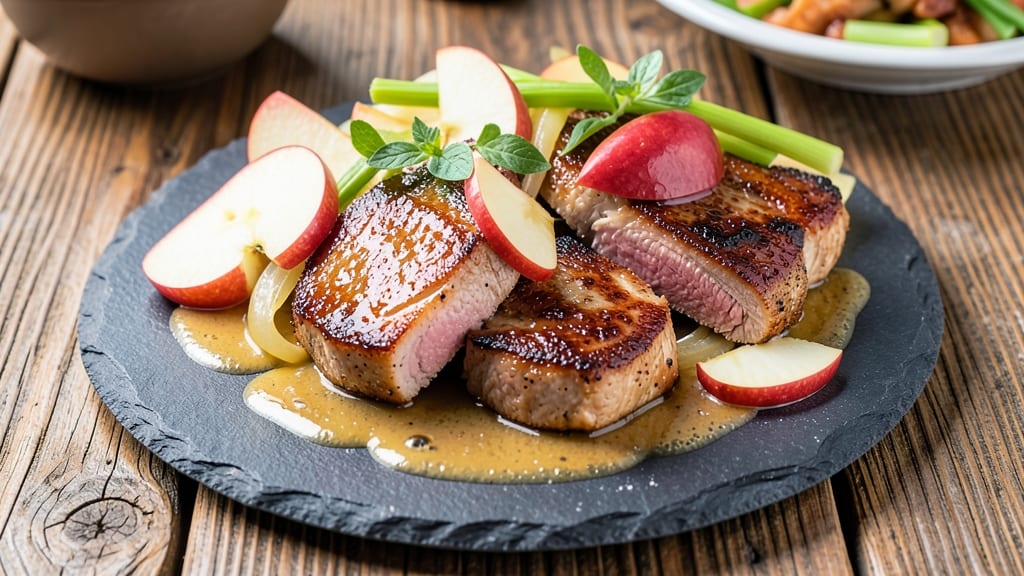
This apple porkchop recipe delivers crispy skin and juicy meat with a sweet-tangy apple-celery glaze that elevates simple pork chops into a restaurant-worthy main course. The secret lies in searing the chops to lock in moisture while building caramelized depth through slow cooking with apples, celery, and aromatic spices.
I developed this technique after years of perfecting the balance between tender pork and a glaze that's rich without being cloying.
The process starts with a quick sear in a hot pan to create that coveted crust, followed by a gentle braise that transforms tough cuts into melt-in-your-mouth perfection.
What makes this recipe special is how the apples caramelize into a glossy glaze that clings beautifully to the chops, while celery adds subtle bitterness to cut through the sweetness. The result is pork that's juicy inside with a crispy exterior, all coated in a sauce that's complex and balanced.
By the time you serve these, your table will be transformed with plates featuring golden-brown pork chops glistening under the apple glaze, their edges perfectly caramelized.
The aroma alone will have everyone anticipating that first bite—tender pork giving way to crispy skin, followed by the sweet-tangy glaze that ties everything together. This is comfort food at its finest, with techniques that ensure success even for home cooks.
Pair with classic sides like mashed potatoes or roasted vegetables to complete the meal. The glaze works beautifully as a drizzle for extra richness, and leftovers reheat wonderfully for quick lunches. Here's how to make these apple porkchops that impress every time.
Ingredients for apple porkchop
Four crispy pork chops and seven simple ingredients transform into restaurant-quality comfort food.
| Ingredient | Amount | Notes |
|---|---|---|
| Bone-In Pork Chops 🍖 | 4 whole | 1-inch thick, center-cut preferred |
| Honeycrisp Apples 🍎 | 2 medium | Peeled, cored, sliced into wedges |
| Celery Stalks 🧅 | 2 whole | Trimmed, chopped into 1-inch pieces |
| Yellow Onion 🧅 | 1 medium | Peeled, cut into 1-inch chunks |
| Unsalted Butter 🧈 | 4 tbsp | Cold, cut into 8 pieces |
| All-Purpose Flour 🌾 | ½ cup | For dredging |
| Granulated Sugar 🍚 | 2 tbsp | Light brown preferred |
| Apple Cider Vinegar 🍶 | 2 tbsp | For tangy depth |
| Fresh Thyme Leaves 🌿 | ¼ cup | Or 1 tsp dried thyme |
| Fresh Rosemary 🌿 | 1 tbsp | Chopped, finely |
| Kosher Salt 🧂 | 1 ½ tsp | Diamond Crystal preferred |
| Ground Black Pepper 🌶️ | ½ tsp | Freshly cracked |
| Chicken or Vegetable Stock 💧 | 1 cup | Low-sodium preferred |
The pork chops are non-negotiable—bone-in, 1-inch thick cuts ensure maximum flavor and moisture retention. Local butchers often carry these, or check the meat counter at Whole Foods for center-cut chops. Honeycrisp apples are ideal for their balance of sweetness and tartness, but Fuji or Gala work too. The celery and onion should be fresh, with crisp stalks and no bruising. For the thyme and rosemary, Penzeys Spices sells high-quality dried herbs if you prefer convenience, but fresh is superior for aroma. Always check your pork for marbling—visible fat means juicier results.
No Honeycrisp apples? Granny Smith or Braeburn add tartness that cuts through the richness. Running short on stock? Water with an extra pinch of salt works in a pinch, though the depth suffers slightly. The apple cider vinegar is essential for that tangy balance—substitute lemon juice at half the amount if needed. For a deeper flavor, toast the thyme and rosemary in a dry pan for 30 seconds before using. The flour is just for dredging; if you're avoiding gluten, cornstarch works equally well. And yes, you can use vegetable stock instead of chicken stock—this is a vegetarian-friendly adaptation.
Pork chops should be used within 2 days of purchase for best texture. Store them in the coldest part of your fridge, wrapped in paper towels. The apples and celery keep 5-7 days in the crisper drawer, while the dried herbs last 6 months in a dark cabinet. The glaze reheats beautifully—simply warm in a saucepan over medium heat, adding a splash of water to loosen. For make-ahead convenience, freeze the cooked chops with glaze for up to 3 months. Thaw overnight in the fridge before reheating.
Why You'll Love This Recipe
- One-Pan Magic: I swear by this recipe because it’s that simple—just sear the pork chops, toss in the diced apples, celery, and onion, then let the butter and oven do the work. No flipping, no fussing, no extra pots to wash.
- Sweet-Savory Balance: The crispy pork meets the tender Honeycrisp apples in every bite, and that caramelized butter? It’s like a hug for your taste buds. Honestly, the first time I made this, I ate a whole chop straight off the pan.
- Weeknight to Dinner Party: Between us, this recipe works everywhere. Toss it together on a Tuesday for a no-stress meal, or serve it at a holiday table—it’s fancy enough to impress without trying. The celery and onion add depth, so it’s never just "apple and pork."
- Budget-Friendly Leftovers: Pork chops on sale? Snap them up. The apples keep well, and the whole dish reheats beautifully for lunches. I’ll be real: I’ve had this for breakfast the next morning, and it’s still a win. (Yes, even on a Tuesday.)
Step-by-step instructions for apple porkchops with apple-celery glaze
Master the balance of crispy skin and tender meat with this precise method.
Prepare the Pork Chops for Perfect Crisp
Pat the four whole bone-in pork chops completely dry with paper towels—this is non-negotiable for crispy skin. I like to press firmly, especially around the edges where moisture tends to linger. Season both sides generously with 1.5 teaspoons kosher salt and 0.5 teaspoon ground black pepper, working the seasoning into the meat so it penetrates slightly.
Place the chops on a wire rack set over a baking sheet and refrigerate uncovered for 30 minutes. This cold exposure helps render fat and creates a better sear. While they chill, prepare your dredging station: place 0.5 cup all-purpose flour in a shallow dish and mix with 2 tablespoons granulated sugar and 0.5 teaspoon black pepper. The sugar will caramelize during cooking, adding depth to the crust.
Sear the Chops Until Golden Brown
Heat a large skillet over medium-high heat until it's smoking hot. Add 2 tablespoons unsalted butter and let it melt completely, then add the chilled pork chops. Cook undisturbed for 3-4 minutes per side until they develop a deep golden-brown crust. You'll know they're ready when the edges release easily from the pan and the internal temperature reaches 140°F on an instant-read thermometer.
During the last minute of cooking, I press down gently on the chops with a spatula—this prevents curling and ensures even contact with the pan. Remove the chops and set them aside on a warm plate, tented loosely with foil to keep warm while you prepare the glaze. Don't skip this resting step; it allows the meat to carryover cook to 145°F, ensuring perfect doneness.
Build the Apple-Celery Glaze
In the same skillet (no need to clean it—the browned bits add flavor), melt the remaining 2 tablespoons unsalted butter over medium heat. Add the 1 medium yellow onion cut into chunks and cook for 5 minutes until softened. Add the 2 whole celery stalks chopped into pieces and cook for another 3 minutes until tender.
Stir in the 2 medium Honeycrisp apples sliced into wedges, 0.25 cup fresh thyme leaves, and 1 tablespoon chopped fresh rosemary. Cook for 4-5 minutes until the apples soften slightly but still hold their shape. Pour in 2 tablespoons apple cider vinegar and 1 cup chicken or vegetable stock, scraping up any browned bits from the bottom of the pan. Bring to a gentle simmer and reduce by half—about 8-10 minutes—until the glaze thickens to a syrupy consistency.
Finish and Serve with Glossy Coating
Return the pork chops to the skillet and spoon the reduced glaze evenly over the top. Cover and let them steam for 2-3 minutes to infuse with the apple-celery flavors. The chops should reach 145°F internally—if not, return them to the skillet uncovered for 1-2 minutes to finish cooking.
Transfer the chops to a warm serving platter and spoon any remaining glaze over the top. The result should be pork chops with deep golden-brown crispy skin that contrasts beautifully with the tender, juicy meat beneath. The glaze should coat each chop in a glossy, slightly caramelized layer that balances sweet apples, tangy vinegar, and herby aromatics. Serve immediately with crusty bread to soak up the delicious sauce.
Pro Tips For Making Apple Porkchop
- SEAR FIRST, BASTE LATER: Start your pork chops in a screaming-hot pan—no butter yet—until they develop a deep brown crust. Once you add the apples, onion, and celery, lower the heat and let the butter melt in slowly. I used to rush this, and the pork always ended up greasy instead of caramelized.
- CORE THE APPLES: Slice the Honeycrisp apples into wedges, but don’t skip cutting out the core—it’s tough and won’t soften. A quick paring knife or melon baller makes this faster than you’d think, and your sauce won’t turn bitter from overcooked apple centers.
- DON’T OVERCROWD THE PAN: Bone-in pork chops need space to brown properly, or you’ll steam them into soggy disappointment. Cook them in batches if needed—even if it means two trips to the stove—so the butter can sizzle and the apples get crispy edges instead of turning to mush.
- USE THE APPLE PEELS: Toss the apple peels into the pan with the rest of the veggies—they’re packed with flavor and add texture. I was skeptical until I tried it, and now I save them instead of tossing them. Just chop them small so they break down evenly.
Troubleshooting your apple porkchop
Undercooked Pork
If your pork chops feel firm or rubbery when sliced, they're likely undercooked. Use an instant-read thermometer to check for 145°F internal temperature—this is the USDA minimum for pork safety.
I recommend searing chops over medium-high heat for 3-4 minutes per side, then finishing in a 350°F oven for 5-7 minutes if needed to reach temperature. Never rush this step—undercooked pork can taste dry and unsafe. 🌡️
Dry, Tough Meat
Overcooking is the #1 cause of dry pork chops. Once your chops hit 145°F, remove them immediately and let them rest for 5-10 minutes before slicing. The residual heat carries them to perfect doneness (150°F) while juices redistribute.
I also recommend using bone-in chops—the bone acts as a natural insulator, keeping the meat moist longer. If your chops are already dry, try reheating them with a splash of apple cider vinegar or stock to restore moisture.
Glaze Too Thin
A watery glaze usually means the reduction wasn't long enough. After adding stock, simmer uncovered for 10-15 minutes, stirring occasionally, until the liquid reduces by at least half. For extra thickness, stir in 1 teaspoon cornstarch mixed with 1 tablespoon water at the end.
I also recommend using Honeycrisp apples—their natural pectin helps thicken the sauce. If your glaze is still too thin, reduce it further over low heat or chill it to thicken slightly before serving.
Pork Chops Curling
Curling happens when chops cook unevenly, usually from moving them too soon. For perfect flat chops, press them gently with a spatula during the last 1-2 minutes of searing. I also recommend using 1-inch thick chops—thinner cuts are more prone to curling.
If your chops do curl, flip them frequently during cooking and use a heavy skillet (like cast iron) to distribute heat evenly. For extra insurance, score the fat cap lightly before searing to help render fat more evenly.
Glaze Too Sweet
If your glaze tastes overwhelmingly sweet, balance it with more apple cider vinegar or a pinch of kosher salt. I like to add 1-2 tablespoons vinegar during reduction to cut sweetness. For a more complex flavor, stir in 1 teaspoon Dijon mustard at the end—it adds tangy depth.
If your apples were particularly sweet (like Fuji), use Granny Smith or Braeburn next time for better tartness. Always taste as you go and adjust gradually.
Skin Not Crispy
For that perfect crispy skin, pat your chops completely dry before seasoning and let them sit uncovered in the fridge for 30 minutes before cooking. Use a hot skillet** (smoking hot) and don't move the chops until you see deep golden-brown crusts forming.
I also recommend dredging them in flour mixed with sugar before searing—the sugar caramelizes for extra crunch. If your skin is still soft, try cooking at a slightly higher heat or adding more butter to the pan for better browning. 🔥
Nutrition facts
Frequently asked questions
Can I use boneless pork chops for this recipe?
Yes, but bone-in chops are ideal for juicier results. If using boneless, reduce cooking time by 1-2 minutes per side since they cook faster. The bone acts as a natural insulator, helping retain moisture. For boneless chops, consider brining them for 30 minutes in 1/4 cup salt per 4 cups water to keep them tender.
What's the best way to store leftovers?
Store cooked pork chops and glaze in an airtight container in the fridge for up to 4 days. Reheat gently in a skillet over low heat with a splash of water or stock to restore moisture. For longer storage, freeze for up to 3 months—thaw overnight in the fridge before reheating. The glaze reheats beautifully when warmed with the chops.
Can I substitute apples with pears or peaches?
Pears add a milder sweetness, while peaches bring a juicier texture. For best results, use ripe but firm fruit (like Honeycrisp apples) and adjust cooking time by 1-2 minutes—peaches soften faster. Tart varieties like Granny Smith apples or green pears work well if you prefer less sweetness.
How do I adjust the recipe for a slow cooker?
Sear the chops first as directed, then transfer to a slow cooker with the apple-celery mixture. Cook on low for 4-5 hours or high for 2-3 hours until the pork reaches 145°F. The glaze will thicken naturally from the slow cooking process. For extra richness, add 2 tablespoons butter at the end of cooking.
Why does my glaze turn out cloudy instead of glossy?
Cloudiness usually means the glaze wasn't reduced enough or contains too much liquid. Simmer uncovered for 10-15 minutes until it reduces by half, stirring occasionally. For extra shine, stir in 1 teaspoon cornstarch mixed with 1 tablespoon water at the end. Using Honeycrisp apples (with natural pectin) helps create a glossier finish. If it's still cloudy, strain through a fine-mesh sieve before serving.